-
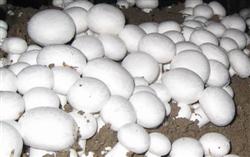
Detailed Explanation of Key Points for Straw Cultivation of Button Mushrooms
Strain Selection The selected strain must have undergone fruiting experiments before it can be used on a large scale. Its appearance must have thick, white, sturdy, and uniform mycelium, with no interrupted growth, no contamination by foreign bacteria, and no pest damage. Mushroom house disinfection Before bringing in the material, clean the mushroom house and indoor items, then disinfect. Disinfection generally uses fumigation, with each cubic...
-
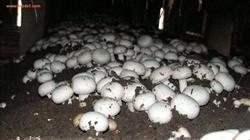
How to Control the Size of White Button Mushrooms? Detailed Explanation of Effective Measures
In recent years, the market's requirements for the quality of white button mushrooms have been continuously rising. Large mushrooms are no longer popular, and some mushroom growers, unable to keep up with market demand for commercial mushrooms of a certain specification, end up with increased production but no increased income. The following measures can be adopted to control their specifications. Replacing the strain The currently widely used strain "2796" is a large-particle type...
-
Methods for making organic fertilizer from spent mushroom substrate of button mushrooms, oyster mushrooms, and similar waste
Haidian District in Beijing has more than 80,000 mu of rice paddies. Aside from a portion of the rice straw that is used, most of it is burned, which both pollutes the environment and wastes resources. In light of this situation, we studied 9 mushroom species and ultimately determined that the straw-decomposing fungus button mushroom (Agaricus bisporus) is one of the ways to utilize rice straw. The key cultivation techniques for button mushrooms are as follows. 1. ...
-
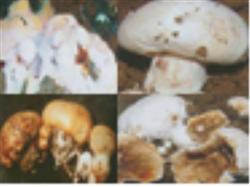
How to prevent and control wet bubble disease in button mushrooms
Disease symptoms: Wet bubble disease is also known as brown rot, white rot, wet bubble, blister disease, etc. The disease is caused by a fungus called Mycogone perniciosa. Mycogone perniciosa is a soil fungus. In button mushroom cultivation, Mycogone perniciosa is mainly introduced into the mushroom house with the casing soil, and it mostly occurs in mushroom sheds with high temperature, high humidity and poor ventilation. Temperatures above 17°C are suitable for this disease to occur.
-
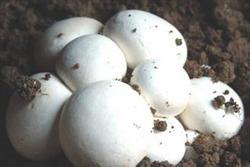
How to prevent and control physiological diseases of button mushrooms during the fruiting period
In button mushroom production, from casing soil onward until fruiting, in addition to routine management, correctly mastering and applying the following four key points on watering plays an important role in ensuring the amount and vitality of mycelium, ensuring the number and uniformity of pinheads, and ensuring the healthy growth of fruiting bodies and their commercial quality. 1. The "mycelium-pressing water" should be...
-
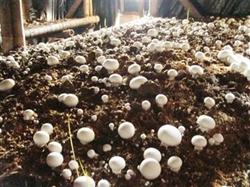
Button Mushroom Fruiting Period Management: Signs Before Fruiting and High-Yield, High-Output Techniques
I. Control temperature and humidity. In button mushroom cultivation, fruiting begins about 20 days after casing. Keep the temperature at 20-24°C and the relative air humidity at 80%-85%. During this period, water generally should not be sprayed on the compost surface; if it is too wet, aeration is poor and the mycelium struggles to grow into the casing layer, while if it is too dry the mycelium becomes sparse. Maintain suitable temperature and humidity so the mycelium stays white and vigorous...
-
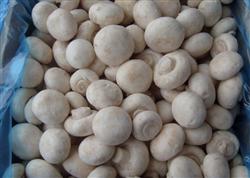
Detailed Explanation of Key Techniques for High-Yield Cultivation of the Button Mushroom
The button mushroom, also known as the white mushroom, cultivated mushroom, or common mushroom, is the most widely artificially cultivated species. Its flesh is tender and delicious, rich in protein and a variety of essential amino acids and trace elements, and it has certain medicinal value, which is why it is increasingly popular. 1. Cultivation season...
-
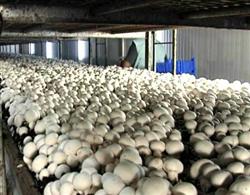
High-Yield Bed-Rack Cultivation Techniques for Button Mushrooms in Mushroom Houses
1. Mushroom house and bed rack structure. The mushroom house is 19.6 m long from east to west, 9 m wide from north to south, with front and rear walls 2.5 m high and gable walls 3.5 m high. The walls are built of bricks with lime mortar. The outside is pointed with cement; the inside is first coated once with lime mortar, then whitewashed once with lime mortar. The front and rear walls have 4 ventilation windows each of 25 cm x 20 cm, positioned above and below facing the walkways, with the first ventilation window 20 cm from the ground. Doors are set at both ends of the front wall, 1.0 m wide and 1.8 m high; the floor is paved with bricks and joints filled with cement. The roof is constructed with bamboo poles and plastic film. The bed racks are 7.8 m long, 1.5 m wide and 2.3 m high, with 5 tiers in total. The first tier is 10 cm from the ground, and the spacing between the tiers above is 55 cm. There is 1 east-west walkway against the front wall, 0.7 m wide; and 10 north-south walkways, each 0.65 m wide. The total cultivation area is 500 sq m.
-
How can button mushrooms be cultivated to produce mushrooms in two flushes and achieve high yields?
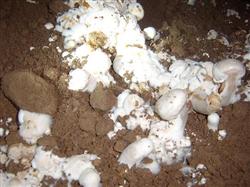
Brown rot, also known as white rot, wet bubble disease, blister disease, etc., infects mushroom buttons when they are young, and the disease is caused by a fungus called Mycogone perniciosa. In the later stage, it forms irregular grayish-white "lumps" or deformed mushrooms, and a layer of "white fuzz" grows on the surface. That is, when the temperature of its pathogenic mycelium is above 20°C, in just 4-5 days...
-
Autumn Fruiting Management Methods and Technical Key Points for Button Mushrooms
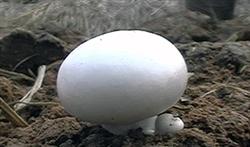
Button mushrooms (Agaricus bisporus) are a medium-to-low temperature type of mushroom. Their fresh mushrooms have a protein content of 35%-38%, and their nutritional value is 4-12 times that of vegetables and fruits. They enjoy the reputation of "health food" and "king of vegetarian foods," and are highly favored by domestic and international markets. When button mushrooms are cultivated in the Beijing area, September-November and April-May of the following year are the fruiting periods. Double...
条件筛选