Detailed Explanation of Key Points for Straw Cultivation of Button Mushrooms
Strain Selection The selected strain must have undergone fruiting experiments before it can be used on a large scale. Its appearance must have thick, white, sturdy, and uniform mycelium, with no interrupted growth, no contamination by foreign bacteria, and no pest damage. Mushroom house disinfection Before bringing in the material, clean the mushroom house and indoor items, then disinfect. Disinfection generally uses fumigation, with each cubic...
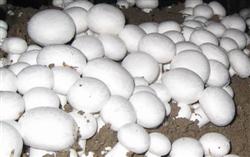
Strain Selection The selected strain must have undergone fruiting experiments before it can be used on a large scale. Its appearance must have thick, white, sturdy, and uniform mycelium, with no interrupted growth, no contamination by foreign bacteria, and no pest damage.
Mushroom House Disinfection Before bringing in the material, clean the mushroom house and indoor items, then disinfect. Disinfection generally uses fumigation: use 10 milliliters of formaldehyde and 5 grams of potassium permanganate per cubic meter, keep it sealed for 24 hours, then open the windows to release the gas. When there is no odor in the mushroom house, the compost can be moved in. If the house is not well sealed, spray the surrounding walls and mushroom beds with 50-fold lime sulfur mixture.
Compost Preparation For compost stacking, pay attention to: the quality of raw materials and a reasonable formula, and the use of fermentation technology so that the compost is fully decomposed by actinomycetes. The raw materials used for cultivating mushrooms must be fresh, dry, and free from mold. The compost formula needs to follow the carbon-to-nitrogen ratio required for mushroom growth (generally 33:1 before fermentation) and the nitrogen-phosphorus-potassium ratio (generally 4:1.2:3). The compost formula should be flexibly controlled according to the local raw material situation and the reasonable carbon-to-nitrogen ratio requirements.
Spreading Material and Spawning 1-2 days before breaking down the compost pile, treat the pile surface with disinfectants and insecticides. After breaking down the pile, when the material temperature drops to about 28°C, spread the compost in the trough to a thickness of 15-20 cm, and evenly broadcast, dibble, or drill the spawn on the material surface. Then cover with 3.3 cm of compost, and finally keep warm and moist for mycelial growth.
Management After Spawning During the mycelial growth stage, maintain good ventilation conditions and suitable temperature and humidity in the mushroom house. Keep the temperature at 22-24; air relative humidity at 65%-75%; ventilation can be achieved by properly opening windows or uncovering film, and pay attention to replenishing water and maintaining moisture.
Casing Soil Take soil from below 30 cm, sieve it into coarse soil and fine soil, sun-dry it for 2 days before use, add 1%-2% lime or spray formaldehyde to kill pests and diseases. Adjust the soil to semi-moist, first cover with 3-4 cm of coarse soil, pat it flat with a wooden board, then make the soil water content reach 60%-65%, keep the casing soil for 7-10 days, and when half of the mycelium emerges from the soil, cover with 1 cm of fine soil, scrape the surface dry by hand so that the thickness is uniform. After casing, make holes in the material surface and ventilate appropriately. In the early stage, keep the bed surface moist (relative humidity 75%), using a watering method that is light at both ends and heavy in the middle; each time you water, open the doors and windows for ventilation. Lower the temperature and keep it at 12°C-18°C.
Management After Harvesting Mushrooms
Each mushroom cultivation can harvest 4-5 flushes of mushrooms. Each flush can last for several consecutive days. The interval between two flushes is the adjustment period, during which dead mushrooms and debris on the material surface are cleaned up, water is sprayed, and supplementary fertilizer is applied. The main ones include: applying mushroom soup, spraying plant ash water, salt water, soybean milk juice, and carrot juice, etc.
Management During the Wintering Period
The main points are heat preservation and ventilation. Generally, spray clean water once every 7-8 days to keep the soil surface from turning white (water content about 15%). Keep the indoor temperature at 3°C-4°C; in normal weather, open windows for 2-3 hours every day. By mid-March, when the temperature stabilizes above 10°C, water can be adjusted and nutrients supplemented; when the temperature reaches 15°C-25°C, it is the best period for spring mushroom fruiting.
Harvesting
Harvest when the mushroom cap diameter is 2-4 cm, the mushroom ring has not broken, and the mushroom umbrella has not opened.
Pests and Diseases and Their Control
The control of mushroom pests and diseases should follow the principle of "prevention first, integrated control," using agricultural, chemical, physical, biological, and other techniques for integrated control. Biological control can use agricultural antibiotics to control bacterial viruses and improve the disease resistance, yield, and quality of mushrooms. Parasitic nematodes can be used to control phorid flies, gall midges, and sciarid flies, etc. The control methods mainly involve doing a good job of disinfecting the mushroom house and compost, post-fermentation, paying attention to mushroom house hygiene, and using appropriate pesticides according to different pests and diseases. Chemical control: the use of pesticides is not advocated in mushroom cultivation, especially during the fruiting period; when pesticides must be used, choose those with high efficiency, low toxicity, low residue, and no harm to humans, livestock, and mushrooms, and master the appropriate concentration and apply control at the right time.