-

Production Method and Food Processing Technology of Green Beans in Tomato Sauce
Production Method 1. Material selection: Grade the green beans into large and small sizes using a grader, and remove moldy, insect-damaged, dry-scarred, mottled, and off-colored beans. 2. Soaking: Soak in clean water for 16-24 hours (water-to-bean ratio of 2:1), changing the water to prevent sprouting and spoilage. The soaking time depends on air temperature, judged by thorough saturation. 3. Pre-cooking: Treat with 0.05% sodium hydroxide solution (solution-to-bean ratio of 1.5-2:1) at 99-100°C for 20-30 minutes (judged by
-
What are the key cultivation techniques for rice-following beans?
Rice-following bean cultivation is a method in which, after the autumn rice harvest, the field is not ploughed or harrowed; instead, trenches are made, the field is divided into beds, and drainage is carried out, then soybeans are broadcast or dibbled on the bed surface and covered with rice straw. It has the advantages of simple planting, saving labour and time, low input, and good results, and is a short, flat, and fast project for raising multiple cropping and increasing grain, feed, and income. 1. Select improved varieties. There are many local soybean varieties; after mass purification and rejuvenation, those with good ecological adaptability, high yield, and disease resistance and with a moderate growth period can all be selected; for
-
Intercropping soybeans with yew can increase the survival rate
Recently, 2.46 million rooted cuttings of Maire yew (Taxus media) cultivated at a yew nursery in Youxian County, Zhuzhou, Hunan, have been growing rapidly in Tongshan Village, Yajiangqiao Town in that county, and passed expert inspection at the end of August. The nursery's new seedling-raising method of "intercropping with soybeans" has raised the survival rate of yew seedlings to more than 95%. It is reported that the successful introduction and propagation of Maire yew not only helps protect the precious wild Chinese yew (Taxus wallichiana var. mairei) resources, but also opens up broad prospects for developing this "golden plant." At present, the nursery is engaged in forestry
-
High-yield and high-benefit "garlic with beans" planting achieves two plantings and three harvests
Interplanting garlic with soybeans is one of the resource-saving agricultural cultivation models currently promoted by the Fujin City Agricultural Technology Extension Center. It rationally matches and combines crops according to their growth patterns and habits, forming a mutually beneficial symbiotic relationship: the nitrogen fixation by soybean rhizobia increases the soil's nitrogen content, so the garlic does not suffer nutrient deficiency, which benefits the garlic's later growth and bulb enlargement. The garlic plants, especially the garlic roots, have a strong pungent taste in the soil, which strongly inhibits and kills various soybean pests, viruses and pathogens. Because
-

Analysis of the Characteristics of Legume Vegetables and Their Pesticide Residue Situation
Do you like eating legumes? Do you know whether they have pesticide residues? Inspections have found that the pesticide residue failure rate of legume vegetables such as green beans, peas and common beans is as high as 63%. Among the pesticide residues detected were chlorothalonil and acetamiprid
-
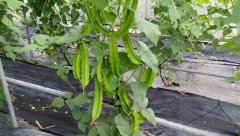
How do you get winged beans, and can you eat them raw? Everything explained in one article
Have you ever seen a bean with wings? If not, let's get to know it together. This kind of bean is not only better looking than ordinary beans, but its tender pods are emerald green, with an excellent pod shape and a crisp, fresh taste. Spring cropping can produce high-quality tender pods. Can winged beans be eaten raw? It should
-

Detailed Explanation of Field Management Techniques for Green Beans
Field Management Techniques for Green Beans
-

What are the methods for controlling pests and diseases of kidney beans?
Pest and disease control methods for kidney beans
-

What causes deformed kidney beans? How should they be dealt with?
Causes of deformed kidney beans and solutions
-

What are the environmental requirements for growing soybeans?
Environmental requirements for soybeans
条件筛选