How do you get winged beans, and can you eat them raw? Everything explained in one article
Have you ever seen a bean with wings? If not, let's get to know it together. This kind of bean is not only better looking than ordinary beans, but its tender pods are emerald green, with an excellent pod shape and a crisp, fresh taste. Spring cropping can produce high-quality tender pods. Can winged beans be eaten raw? It should be fine, as long as no pesticide has been sprayed.
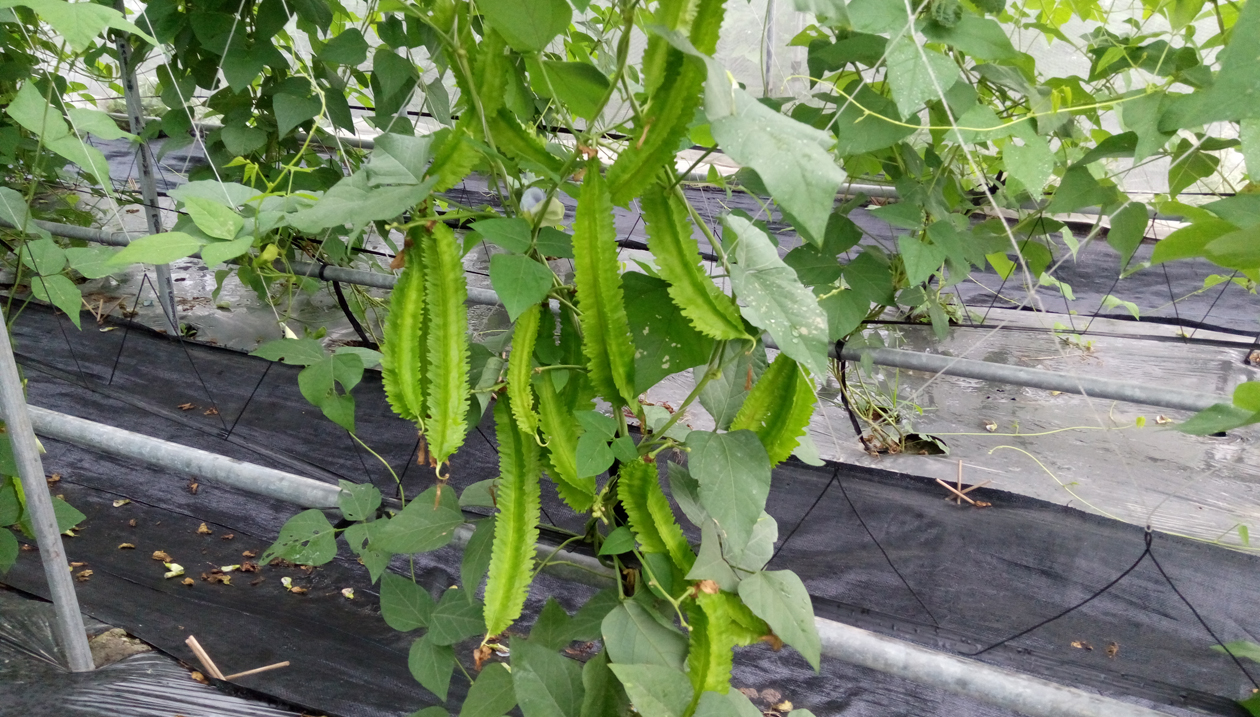
To promote the development of the indigenous vegetable industry in the Taitung area, the Taitung District Agricultural Research and Extension Station of the Council of Agriculture, Executive Yuan (hereafter referred to as the Taitung Station) specially held a press conference on December 14 at the Council of Agriculture to present the new winged bean variety "Taitung No. 1 - Qingcui," introducing the eye-catching indigenous legume vegetable with wings and its delicious preparations. The new winged bean variety has emerald green tender pods and high yield; after cooking, the color is excellent and the texture is crisp and fresh. Its production period also breaks through the limitation that current local strains can only be produced in the autumn crop, allowing normal production and supply to the market in the spring crop as well, greatly extending the winged bean production period. In addition, the new winged bean variety grows vigorously and has few pests and diseases, making it suitable for the organic and eco-friendly farming methods that the government is currently vigorously promoting. If farmers manage cultivation properly, it has great commercial value.
Chen Hsin-yen, Director of the Taitung Station, said that the winged bean is an important legume vegetable crop for indigenous peoples in the eastern region. It originated in Africa and Southeast Asia and was introduced to Taiwan in 1910. In the early days, the cultivation model was small-scale production planted by tribal members for their own use, with autumn and winter as its main production season. The local strains in various tribes are currently mixed, making it prone to shortcomings such as uneven pod lengths, lack of consistent harvest standards, and unstable yield and quality. To promote the indigenous vegetable industry in its jurisdiction, in recent years the Taitung Station has not only successively established economic mass-production cultivation techniques for winged beans, but also actively invested in breeding new winged bean varieties. After years of breeding and cultivation trials, a new variety was bred, and on May 2 of this year (2018), after review by multiple experts and scholars, it was approved and named "Winged Bean Taitung No. 1 - Qingcui."
The new variety "Winged Bean Taitung No. 1 - Qingcui" has excellent tender pod shape, consistent harvest standards, emerald green color, and a crisp, fresh texture. It can be cultivated on flat land and at low to medium altitudes, has strong growth vigor, and has few pests and diseases. In the autumn crop, its annual yield per hectare is about 11.5 metric tons, 44% higher than the average yield of 8 metric tons of the control local strain, making it a high-yielding variety. In addition, because the current local strains are sensitive to long daylight, they cannot flower and set pods for production after the spring equinox, and the production season usually ends after the Lunar New Year. The new variety released by the station, however, is insensitive to long daylight and can still produce normally after the spring equinox until late May, with no significant difference in yield compared with the autumn crop. This can greatly extend the winged bean production period by 3 months, which is extremely helpful to the indigenous legume vegetable industry.
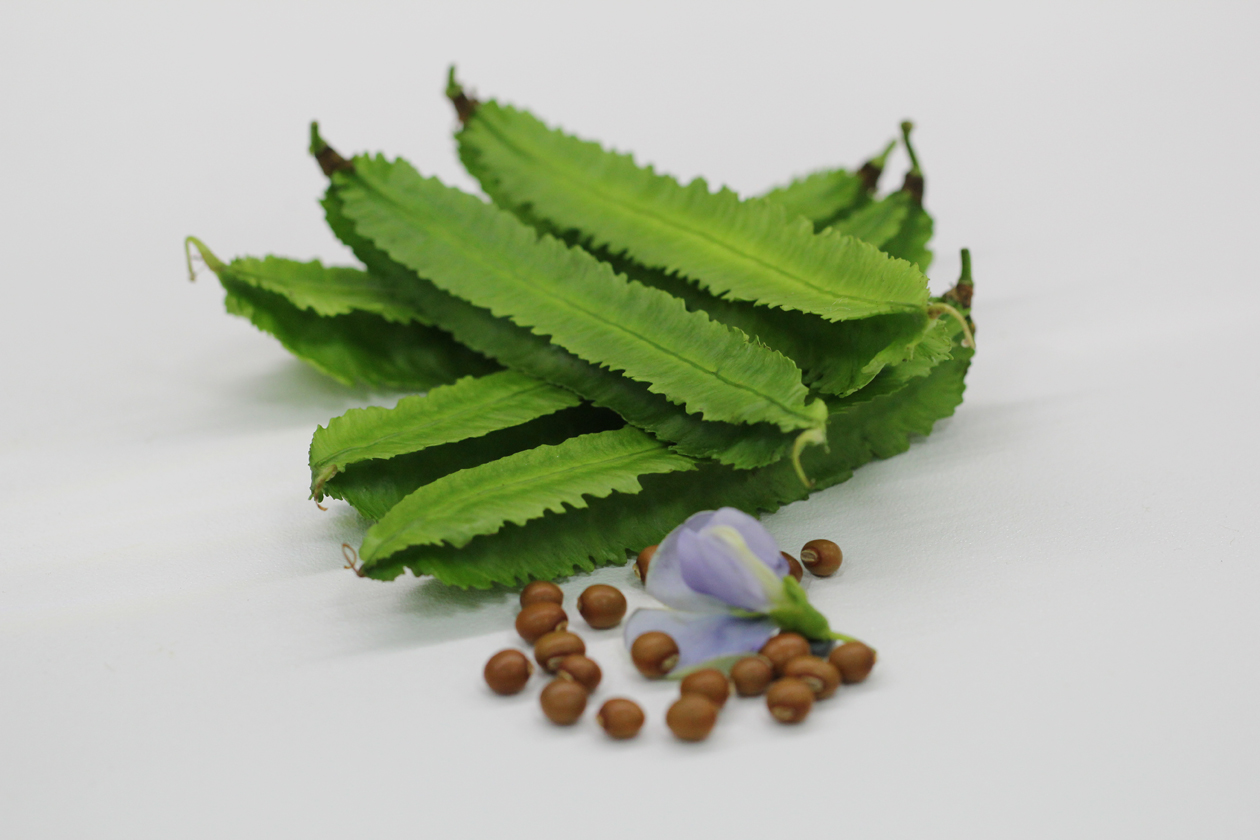
Director Chen specially pointed out that the new variety "Taitung No. 1 - Qingcui" released by the Taitung Station has few pests and diseases and is suitable for organic cultivation. Its nutrient content is rich and no less than that of common cowpeas or peas, and it can provide people with more diverse and safe choices when purchasing legume vegetables. In addition, among the various legume vegetables at present, winged beans are also the type with the crispest and freshest texture. The secret to its delicious preparation lies in first cutting the tender winged bean pods into small sections about the width of a finger or an appropriate size when cooking, blanching them for 30-60 seconds and then taking them out, then stir-frying them with meat or small dried fish according to personal taste preferences. They can also be served cold with Japanese-style or sesame dressings, which also gives an excellent flavor.
The Taitung Station emphasized that the new variety "Taitung No. 1 - Qingcui" has completed technology transfer and licensing, and farmer Liao Chia-chu, one of the top 100 young farmers taking on the new variety, is also actively investing in cultivation and production. In the future, PX Mart stores across Taiwan with farm-direct purchase platforms will gradually stock and sell it, and the public is welcome to go and buy it to try something fresh.