-
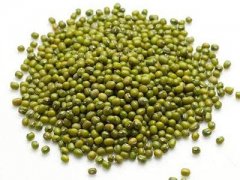
How to Store Mung Beans So They Don't Sprout or Get Bugs
Mung beans and adzuki beans are treasures among grains, so how should these two grains be stored? Mung beans and adzuki beans discolor easily because their seed coats contain a lot of tannins and polyphenol oxidase, which readily oxidize and discolor under the influence of air, light, moisture and temperature. The higher the moisture, the higher the temperature
-

New High-Yield Cultivation Technique for Soybeans: "Four Changes and One Addition"
With the traditional tillage and sowing method for growing soybeans, the rows are narrow and the plants too dense, and combined with various other reasons, yields have long hovered around 100-150 kg. Through years of experimental research, we have worked out a new approach that can increase soybean yields by more than 40%, namely the "Four Changes and One Addition" technique. The usual measures for raising soybean yields, besides selecting new high-quality, high-yield varieties, also include paying attention to crop rotation. According to experiments, after many years of continuous cropping, soybeans show slow growth, short plants, yellowing lower leaves, early leaf drop, and few pods with small seeds. Experiments have also proven that continuous cropping (monocropping) for more than 3 years can reduce yields by 20%-30%, or even more, and 2 years of continuous cropping following a one-year break can reduce yields by more than 30%. Therefore, crop rotation and changing to a different crop are of great significance in soybean production. To achieve high-yield and super-high-yield soybean cultivation, the new "Four Changes and One Addition" cultivation technique should be implemented on this basis. The specific methods of "Four Changes and One Addition" are:
-
How to Achieve High Yield and High Efficiency in Soybeans? Six Measures to Help You Get There
Matching superior varieties with good methods. While planting existing high-yield, high-quality soybean varieties in the project area, new and superior varieties such as Jidou No. 12, Handou No. 3, Jihuang No. 13, and Japanese high-oil soybean were introduced according to local conditions through a combination of introduction, demonstration, and promotion, bringing the coverage rate of superior varieties in the soybean project area to 100% and laying the foundation for matching superior varieties with good methods. Seed dressing with molybdenum fertilizer to increase the pod-setting rate. In high-yield soybean areas, use 3 grams of ammonium molybdate per mu, dilute with water into a 2% solution, and dress 1 kg of soybean seed. According to multi-site trials, soybeans treated with molybdenum
-
How to Achieve Early Maturity and High Yield in Soybeans
1. Choose suitable varieties. When selecting seeds, choose varieties with shorter plant height that can be planted at wider spacing; these varieties have relatively lower water requirements and suffer less yield loss in dry years. 2. Strengthen field management and weed promptly. Weeds compete with soybeans for fertilizer and water, affect photosynthesis and hinder ventilation, so weeds must be removed promptly. Cultivate and hill up at the right time. When cultivating and hilling, cultivate deeply and hill up plenty of soil to enhance soil permeability and its capacity to retain water and fertilizer. 3. Apply sufficient base fertilizer. On the basis of applying farmyard manure, the amount of chemical fertilizer applied must not be
-
Interplanting autumn soybeans in rice paddies yields good increases in both output and income
According to trials: after the mid-season rice harvest, by using the temperature and light conditions in the field, planting an additional season of autumn soybeans can increase soybean yield by 60-120 kg/mu, with economic income of 150-420 yuan/mu, giving a relatively good effect of increasing both output and income, and it is suitable for extension in ratoon rice areas below 400 m in altitude. The key technical points are as follows: 1. Suitable site and good varieties: fields below 400 m in altitude with no water for retaining ratoon rice, as well as all rice seed production fields, can be planted. After the rice grains have set, open ditches to drain water; after the rice harvest, promptly clear weeds and rice stubble, without plowing, and according to
-
How to grow spring-planted soybeans in Northeast China? A detailed explanation of the technical guidance
In the autumn and winter of last year, precipitation in Northeast China was lower than normal, soil moisture was insufficient, and drought was relatively severe. This spring there has been more rain and snow, temperatures began to rise rapidly in early April, and temperature and precipitation are close to normal. The Soybean Expert Steering Group of the Ministry of Agriculture, together with the National Agricultural Technology Extension Service Center, based on full investigation, proposed the following technical guidance for spring soybean planting: 1. Strictly select excellent varieties. Because of the dry climate last autumn, soybeans may not have matured normally physiologically at harvest, and mechanical threshing increased the possibility of damage to the seed embryo
-
Detailed Explanation of Mid-to-Late Stage Management Techniques for Soybeans in Northeast China
The main soybean-producing areas in Northeast China and Inner Mongolia have generally suffered from a disaster pattern of spring drought followed by spring waterlogging. Drought, low temperatures and insufficient sunlight have caused slow plant growth, and have also increased the occurrence of herbicide injury, weed infestation and diseases. At present, plants generally have 2-3 fewer compound leaves than in the same period of a normal year, and growth is uneven. Therefore, cultivating strong seedlings, building a reasonable population structure, promoting early maturity and preventing lodging are the key tasks in mid-to-late stage field management of soybeans, and at present special attention must be paid to draining waterlogged soybean fields and preventing waterlogging damage. Recently, the soybean expert guidance group of the Ministry of Agriculture and the National Agricultural Technology
-
How to grow soybeans in Northeast China? Main recommended high-oil, high-yield varieties and techniques
The Northeast high-oil, high-yield soybean demonstration project implemented by the state, after two years of development, has introduced a group of excellent high-oil soybean varieties and advanced production techniques, which are gradually being widely applied in large-scale production. On this basis, the Northeast high-oil, high-yield soybean demonstration technical expert group offers the following recommendations for the seed and techniques used in high-oil soybean production in the region in 2004: In 2004, Heilongjiang Province and its reclamation areas can, according to the accumulated temperature and production conditions of different regions, continue to use the high-oil varieties that had already been successfully promoted in large-scale production in 2003,
-
How can the new functional components of soybeans be developed and utilized?
China is the homeland of soybeans, and over the long course of history, "soybeans have nurtured the Chinese nation." Modern science has discovered that the functional components of soybeans that nurtured the Chinese nation are mainly found in soybean meal. High-temperature soybean meal is the highest-yield product of the soybean oil processing industry. Whether the effective components in high-temperature soybean meal can be extracted is key to revitalizing China's soybean oil processing industry. The National Soybean Deep Processing Technology Research and Promotion Center invented a process using high-temperature soybean meal as raw material to continuously extract high-purity soybean oligopeptides, soybean isoflavones,
-
Key Technical Points for Scientific Management of Soybeans Adapted to Seedling Conditions
Liang Huizhen, associate researcher at the Cash Crop Research Institute of the Provincial Academy of Agricultural Sciences, said that at present most areas of our province's soybeans are at the flowering and podding stage, which is the period of greatest nutrient and water uptake and also the peak period of root nodule nitrogen fixation. The main goal at this stage is to promote more flowering and more pod setting, prevent premature senescence, control excessive vegetative growth, increase flowers and preserve pods, reduce shedding, and lay the foundation for a high yield. Due to the tight time schedule at sowing, summer soybeans often receive no or little basal fertilizer, and by the time the soybeans set pods, nutrient deficiency occurs, so flower and pod fertilizer should be applied promptly. At
条件筛选