How to Grow Castor Beans? Detailed Explanation of High-Yield and High-Efficiency Cultivation Techniques
Castor bean (Ricinus communis) is an annual or perennial herbaceous plant of the genus Ricinus in the spurge family (Euphorbiaceae), and it is an important oil crop in China. At the same time, castor bean also has certain medicinal value; both its leaves and roots can be used as medicine, with effects such as reducing swelling and drawing out toxins, dispelling wind and invigorating blood circulation, and relieving pain and calming the nerves, so its cultivation value is very high. So, how do you grow castor beans?
I. Site Selection and Land Preparation
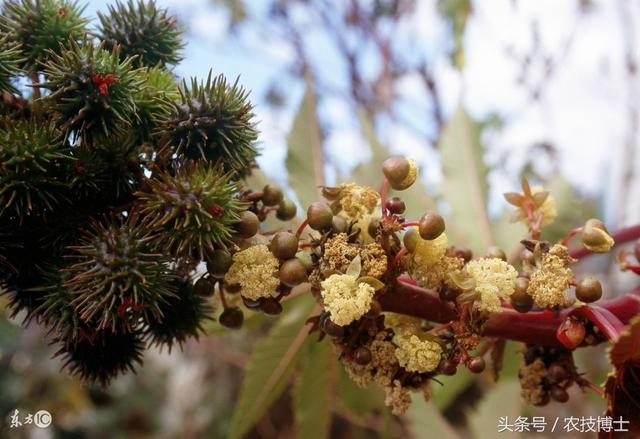
Castor bean has strong adaptability, is drought-tolerant and tolerant of poor soil, and does not have strict requirements for production conditions, but to obtain high yields, it must be planted on sandy loam soil with deep soil layers, loose texture, moderate acidity and alkalinity, and rich organic matter. It must never be planted in low-lying land or heavy clay yellow soil. After selecting the site, deep plowing is required (for large-scale planting, deep plowing in autumn is necessary), generally to a depth of about 30 cm, with good winter pre-irrigation, then harrowing to conserve soil moisture. Castor bean is not strict about the previous crop, but legume and grass family crop stubble is best.
II. Fertilization
Apply sufficient fertilizer. Castor bean requires a relatively large amount of fertilizer and needs adequate nutrients to ensure a relatively high yield. Producing 50 kg of castor beans requires 3.5 kg of pure nitrogen, 2.8 kg of phosphorus, and 3 kg of potassium. According to the fertilizer requirements of castor bean, during deep plowing and land preparation, 2000 kg of high-quality barnyard manure, 30 kg of diammonium phosphate, and 15 kg of potassium sulfate can be applied per mu, or 25 kg of ternary compound fertilizer (N:P:K = 16:16:16) per mu.
III. Variety Selection
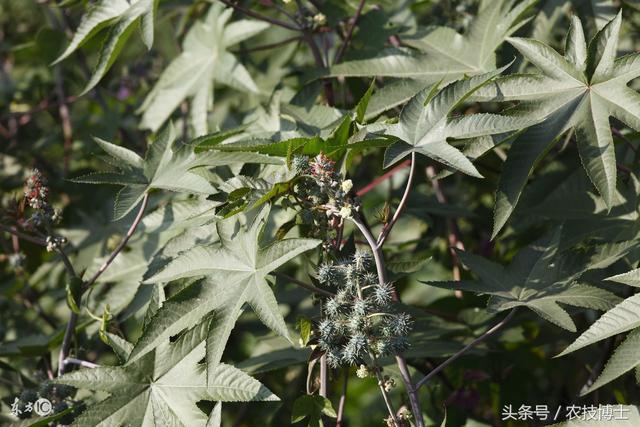
Zibi No. 5, Zibima No. 5, Jinbi No. 2, Fenbi No. 6, Jinbi No. 1, Jiaxiang No. 2, and Hangbi No. 8 are medium-maturity varieties, and are currently the main castor bean varieties planted in Xinjiang.
IV. Sowing Time and Sowing Rate
Before sowing, the seeds should be graded and sun-dried to increase the germination rate. Before sowing, seed dressing with 50% carbendazim wettable powder at 0.5% of the seed amount can prevent disease and protect seedlings. In northern Xinjiang, sowing is suitable in mid-to-late April when the average temperature reaches 12-15°C. Within the suitable sowing period, sow as early as possible. When sowing, level the land, use an air-suction seeder to form ridges with a row spacing of 80 cm, and sow in hills with a plant spacing of 60 cm, at a sowing depth of about 6 cm. To achieve a better weed control effect, the soil is usually treated with chemicals before sowing. The herbicides are mainly amide types, such as acetochlor, (iso)propachlor, napropamide, trifluralin, pendimethalin, propanil, etc.
V. Planting Density
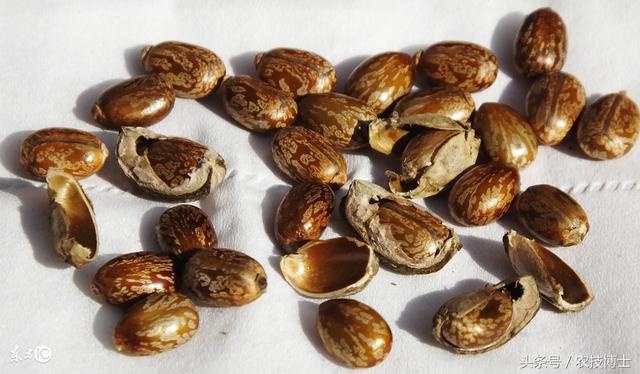
Planting density should be determined according to different varieties, climatic conditions, fertility levels, and cultivation techniques. At present, the density of varieties planted in various parts of northern Xinjiang should not be less than 15,000 plants/ha, with 22,500-37,500 plants/ha being suitable; if mechanical harvesting is used, the density can be increased further.
VI. Field Management
After castor bean seedlings emerge, inspect them promptly, and if missing seedlings are found, replant or transplant promptly to fill the gaps.
(1) Thinning and topdressing:When the seedlings grow 3-4 true leaves, thin out the weak seedlings; when the plant height is about 20 cm, finalize the seedlings, leaving one strong seedling per hole, and combine this with intertillage and weeding. When the flower spikes form, apply a nitrogen-phosphorus-potassium compound fertilizer once to increase the fruit-setting rate. Finalize the seedlings according to planting density; if done too late, weak seedlings will be produced and yield will be affected. Castor bean is a warmth-loving crop, and early intertillage can increase soil temperature. From emergence to flowering, carry out intertillage, weeding, and hilling 2-3 times, to a depth of 10-15 cm.
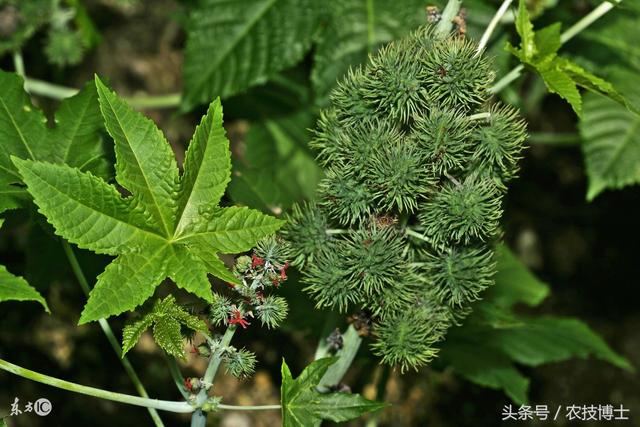
(2) Pollination:If rainy weather occurs during the full flowering period, artificial pollination can be carried out or nearby plants can be shaken so that pollen falls onto the female flowers of another plant, thereby increasing yield.
(3) Drainage:Castor bean is intolerant of waterlogging, and waterlogging easily causes root rot, so attention should be paid to drainage during the rainy season. Castor bean is drought-tolerant but not waterlogging-tolerant. When the soil moisture is sufficient, do not irrigate early. Wait until the main spike is about to flower before the first irrigation, and when the branch spikes flower, carry out the second irrigation. During the whole growth period, irrigate 2-3 times on clay soil and 4 times on sandy soil. Before the first irrigation, apply 150 kg/ha each of urea and diammonium phosphate. If growth is excessive, chlormequat can be used for chemical control, spraying once before and once after the first irrigation. Castor bean has an indeterminate growth habit, and timely pruning and removal of side branches can concentrate nutrients toward the fruit spikes, improve ventilation and light conditions, reduce flower and fruit drop, increase the fruit-setting rate, and increase yield. Pruning can generally be carried out in two rounds. The first is after the main stem shows buds, leaving 2-3 thick branches as primary branches and removing all the rest. The second is about 40 days before the first frost, when the growing points of all branches are removed to prevent ineffective consumption of nutrients, concentrate nutrients toward the fruit spikes, promote filling and maturation, and increase the 1000-grain weight.
VII. Harvest
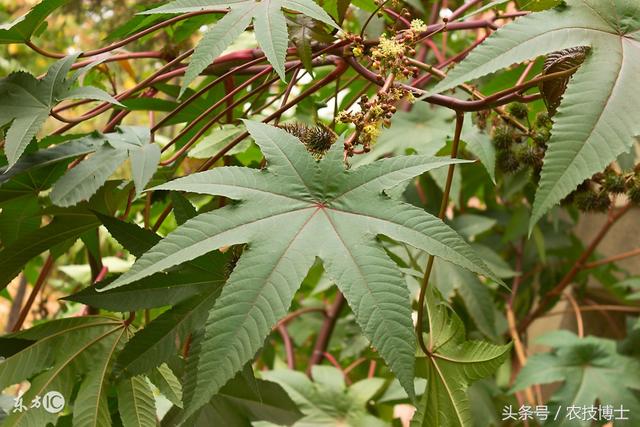
The fruit spikes and capsules of castor bean do not mature uniformly, and the maturity time of fruit spikes at different levels differs by 15-20 days, so harvesting must be carried out in batches. The harvest standard is: when 80% of the capsules on the fruit spike are yellow-brown, they can be harvested. The harvesting method is to carry a cotton-picking cloth bag, wear gloves, and comb from the base of the spike to the top, putting the capsules into the bag, then loading them into gunny sacks for centralized transport and timely sun-drying. According to practice, each person can harvest more than 1300 sq m per day. After the capsules are sun-dried, dehulling and sorting can be completed in one pass with a sheller. When the moisture content drops below 9%, they can be bagged and stored in the warehouse.
[Editor's Conclusion]Castor bean is a warmth-loving plant with strong adaptability to acidity and alkalinity, and is not tolerant of cold or frost, so special attention is needed during the planting process.