Planting Time, Methods and Causes of Flower and Pod Drop in Broad Beans as an Annual Herbaceous Crop
Broad bean is also called nandou, hudou, shudou and fodou. It is an annual herbaceous plant, 30-100 (120) cm tall. It is a dual-purpose crop for grain, vegetables, feed and green manure. So when are broad beans planted? What are the methods? What causes flower and pod drop?
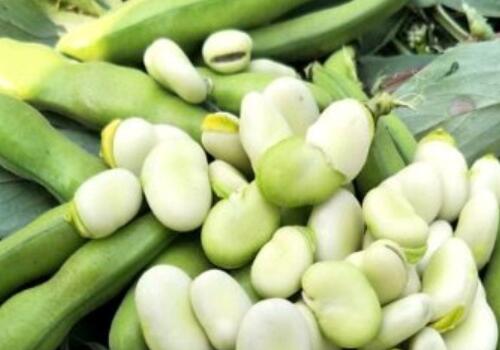
When are broad beans planted?
1. Generally, spring broad beans in northern and northwestern regions are sown from early March to mid-April; autumn broad bean areas in the south are sown in October, that is, mid-October in the lower reaches of the Yangtze River, late October in the middle reaches, late October in South China and Zhejiang, and in Yunnan and Guizhou, where agriculture is three-dimensional, the sowing period varies by region from September to October, with the largest sown area in early and mid-October.
2. In bean-growing areas at an altitude of 1550—1700 m, broad beans are normally suitable for sowing from October 5—15; in bean-growing areas at an altitude of 1750—1900 m, sowing is from October 10—20; in areas at an altitude of 1950—2200 m and above, sowing is from October 15—25.
What are the broad bean planting methods?
1. Select good varieties: For broad beans, choose excellent varieties with high yield, good quality and strong disease resistance, with local large white hudou being the best.
2. Fine land preparation: Broad beans like moisture but are not tolerant of waterlogging, so choose fertile soil and a plot with sufficient sunlight. After the previous crop is harvested, plow and level the land. For winter fallow fields, open perimeter ditches and bed ditches well. Make deep ditches and high beds at a specification of 1-1.5 m bed width, 25 cm bed height and 35 cm ditch width, and rake the bed surface level so that all ditches are connected and no water accumulates.
3. Reasonable fertilization: Mainly use farmyard manure and phosphorus and potassium fertilizers. Generally, per mu, mix 1000-1500 kg of pig and cattle manure, soil miscellaneous fertilizer or compost, 30-35 kg of superphosphate and 100 kg of plant ash as base fertilizer, and apply it in holes after sowing to cover the seed; when the seedlings reach 5-6 true leaves, apply per mu 5 loads of decomposed human and animal urine plus 5-7.5 kg of potassium sulfate or potassium chloride, diluted with water; at the full flowering and early pod stage, apply per mu 0.2-0.5 kg of potassium dihydrogen phosphate diluted in 50 kg of water as a foliar spray to prevent flower and pod drop that affects yield.
4. Sow at the right time: Sowing too early will cause early flowering and affect yield, while delaying sowing will affect the next spring crop. Sow around 5 days before and after Frost's Descent, at a row spacing of 33 cm and hill spacing of 12-18 cm, with 2-3 seeds per hole, at a sowing depth of 5-6 cm, and a sowing rate of 8-15 kg per mu. After sowing, cover with soil miscellaneous fertilizer, and if conditions permit, treat seeds with rhizobia.
5. Strengthen field management: Mainly grasp five key techniques. First, if missing plants are found 7 days after sowing, dig up denser nearby seedlings and transplant them with soil to fill the gaps, or reseed with pre-germinated seeds. Second, when the seedlings reach 5-6 true leaves, carry out one intertillage and hilling together with topdressing. Third, at the full flowering stage, choose a sunny and windless morning and use a sickle or your hands to cut or pinch off 4-6 cm of the terminal bud.
6. Topping and pruning, and disease control. Broad bean topping is done twice. The first topping is around the Winter Solstice, removing the growing point of the main stem to promote earlier branching and increase the number of effective branches; the second pruning is when 30-40% of plants begin to form the first pod, removing 2-3 cm of young branches, which can increase the pod-setting rate by about 20%. The main diseases of broad beans include chocolate spot and rust. Pay attention to their control.
What causes flower and pod drop in broad beans?
1. There are many causes of flower and pod drop in broad beans, and their relationships are very complex. But the main causes can be summarized in two aspects: first, they are determined by the physiological characteristics of broad beans themselves and are the result of different organs competing during growth and development until automatic balance is finally achieved; second, they are caused by adverse environmental conditions and extensive cultivation management.
2. Broad beans have an indeterminate growth habit. The stem apex (terminal bud) continues vegetative growth and does not stop until the pods mature. During this process, reproductive growth and vegetative growth proceed simultaneously. At this stage, the reproductive organs, namely buds, flowers and pods, continuously differentiate and develop, while vegetative organs such as roots, stems and leaves still grow rapidly, and the stem apex always occupies the dominant position in the uptake and distribution of nutrients within the plant, causing the lower flowers and pods to lack nutrients. The plant can only ensure concentrated nutrient supply to the remaining flowers and pods by reducing the total number of flowers and pods. Therefore, the upper vegetative growth has a strong competitive effect on the lower reproductive growth, limiting the seed-setting and development of most flowers and pods. Thus, timely topping can increase the pod-setting rate of broad beans and raise yield.
3. Among environmental factors, light, temperature, water and fertilizer can all have extremely complex effects on broad bean flower and pod abscission: excessive sowing density can cause plants to grow excessively because light conditions between branches worsen, increasing the flower and pod abscission rate. Some disastrous weather, such as low temperature, frost, drought and continuous rainy days, can further lead to freezing injury and poor pollination, directly causing massive flower and pod drop. In particular, if broad beans encounter insufficient or excessive water during the flowering and pod-setting period, their flowers and pods drop even more.