-
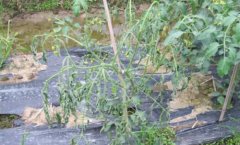
How to prevent and control bacterial wilt in tomatoes? Detailed explanation of the best treatment methods
Tomato bacterial wilt is a very serious disease in tomato cultivation. If it is not managed well, it can easily cause major damage. So how should it be managed? Let's take a look together. Pathogen: This disease is caused by Pseudomonas solanacearum. The bacterium belongs to the non-fluorescent pseudomonad
-
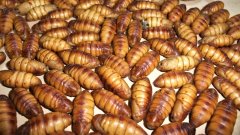
Antibacterial substances from silkworm pupae can be added to animal feed to reduce antibiotic use
In recent years, the Miaoli District Agricultural Research and Extension Station (hereinafter referred to as the Miaoli Station) has found through research that antibacterial substances produced by silkworm pupae can be further developed into functional animal feed additives, a move expected to effectively reduce the amount of antibiotics added when raising economic animals.
-
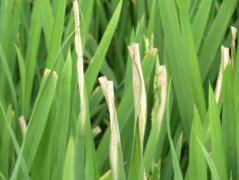
Success in Controlling Rice Bacterial Leaf Blight: Xingda Releases 2 Disease-Resistant Rice Varieties
Rice bacterial leaf blight, be gone! Xingda releases 2 disease-resistant rice varieties. Do you know which two rice varieties they are? Let's take a look. When farmers grow rice, what they fear most is encountering bacterial leaf blight, rice blast and sheath blight. The appearance of these diseases means reduced yields and affected rice qual
-
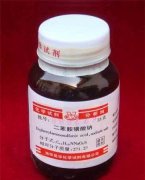
Organic Bacillus thuringiensis subsp. kurstaki found with diphenylamine pesticide contamination, traced to lubricating oil accidentally mixed into the manufacturing process
Investigation into the detection of diphenylamine pesticide contamination in the organic Bacillus thuringiensis subsp. kurstaki product Sulibao finds that lubricating oil accidentally entered the manufacturing process. What is going on here? How could lubricating oil appear in manufacturing? Let's take a look together. The Fushou Bacillus thuringiensis subsp. kurstaki product "Sulibao" was detected with the chemical agent "diphenylamine"
-
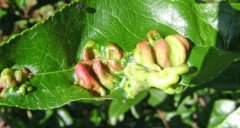
How to treat peach scab and leaf curl? Symptoms and treatment of brown rot and bacterial canker
There are many types of fruit trees, but there are many common fruit tree diseases, and many of them can be found. When preventing fruit tree diseases, the best thing you can do is prune the trees to allow sunlight and air to pass through the branches, because diseases spread easily in dark, damp environments
-
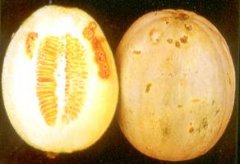
What harm do bacterial fruit blotch of melons and watermelons cause? Prevention and control of bacterial fruit blotch of watermelon
In Taiwan, China, between 1992 and 1993, in the coastal areas of Yunlin County and the Shanhua area of Tainan County, sporadic findings were made of large watermelons showing irregular water-soaked, slightly cracked lesions on the fruit surface, occurring mainly during the rainy season. The lesions spread over the rind and did not harm the flesh in the early stage. In May 1997, in Yilan, Taiwan, China
-

How to treat corn bacterial wilt? These control methods you need to master
Corn bacterial wilt, also known as corn stalk base rot or stalk rot, is a worldwide corn disease, but it has only occurred severely in our country in recent years. So how do you treat corn bacterial wilt? What are the symptoms? 1. How to treat corn bacterial wilt? You can use 25% Yekuling
-
What is the special-effect pesticide for watermelon bacterial leaf blight? Detailed explanation of symptoms and disease patterns
Abstract Special-effect pesticides for watermelon bacterial leaf blight: chlorothalonil wettable powder, procymidone wettable powder, mancozeb wettable powder. Main symptoms of watermelon bacterial leaf blight: first, obvious water-soaked small spots appear on the leaf margin on the underside of the leaf, or between the veins,
-
How to Prevent and Treat Bacterial Wilt in Peppers? A Detailed Guide to Practical Technical Points
Pepper bacterial wilt is a typical bacterial soil-borne disease, and its pathogen is bacteria of the Ralstonia solanacearum genus. The pathogen survives for a relatively long time and mainly invades through wounds on the plant stem. Root wounds caused by agricultural operations such as transplanting and loosening the soil, as well as by insects and other injuries, can all allow bacteria in the soil to invade, and they multiply rapidly under high temperature and high humidity conditions.
-
How to prevent and control bacterial angular leaf spot in Trichosanthes kirilowii? A detailed explanation of integrated control methods
Trichosanthes kirilowii, also known as Trichosanthes kirilowii Maxim. (Gualou), Yaogua, etc., is a perennial herbaceous vine of the genus Trichosanthes in the Cucurbitaceae family, with the entire plant used for medicinal purposes. The fruit shell is known in traditional Chinese medicine as Gualou, the seed as Gualou Ren, and the root as Tianhuafen. The whole Trichosanthes kirilowii fruit, when used as medicine, can clear heat and dissipate nodules, moisten the lungs and resolve phlegm, nourish the stomach and promote fluid production, etc.
条件筛选