-

The Latest Methods for Controlling Bacterial Angular Leaf Spot of Cucumber in Summer
Cucumber is a vegetable that people love to eat in summer, and this vegetable can be eaten almost all year round. Cucumbers are also the crop that farmers grow the most in their fields, and cucumber vines can generally be seen in rural areas. However, cucumbers are also a vegetable prone to relatively many pests and diseases when grown, especially in summer when the diseases are quite serious, which leaves many growers looking bewildered. So below, Shuaishuai will tell everyone how to control bacterial angular leaf spot of cucumber!
-
Causes and Control Methods of Bacterial Angular Leaf Spot
According to the Huaping County Organic Late-Maturing Mango Research Center, this year's temperatures in Huaping differ from previous years: in the early period (February-April) they fluctuated between high and low; from May to mid-June, temperatures were relatively high with severe sun exposure; this caused severe outbreaks of bacterial angular leaf spot in some mango-growing areas
-
Causes and Control Methods of Angular Leaf Spot in Cucumber, Watermelon, Melon and Mango
Angular leaf spot refers to a type of disease that occurs on the leaves of various crops such as cucumber, watermelon, melon and mango, with lesions shaped as polygons. So what are their causes and control methods? This disease is mainly prevented, and scientific management together with good ventilation and drainage conditions can greatly reduce the occurrence of the disease.
-
Causes, Symptoms and Control Methods of Persimmon Angular Leaf Spot
A very troublesome disease that harms persimmon trees is called persimmon angular leaf spot. It often gives growers a real headache. So how does persimmon angular leaf spot occur? What are the symptoms? How should it be controlled? Below, the editor of Tuliu.com takes you through it. 1. Sympt
-
What medicine works well for bacterial angular leaf spot
When bacterial angular leaf spot occurs, you can spray chunleimycin, agricultural streptomycin, xinzhimycin, nongkang 751, copper sulfate-succinate plus zhongshengmycin compound, thiazole zinc plus zhongshengmycin compound, zhongshengmycin plus streptomycin plus adjuvant, chlorobromoisocyanuric acid, thiazole zinc, yekuzuo, and other such agents
-
How to prevent and control bacterial angular leaf spot in Trichosanthes kirilowii? A detailed explanation of integrated control methods
Trichosanthes kirilowii, also known as Trichosanthes kirilowii Maxim. (Gualou), Yaogua, etc., is a perennial herbaceous vine of the genus Trichosanthes in the Cucurbitaceae family, with the entire plant used for medicinal purposes. The fruit shell is known in traditional Chinese medicine as Gualou, the seed as Gualou Ren, and the root as Tianhuafen. The whole Trichosanthes kirilowii fruit, when used as medicine, can clear heat and dissipate nodules, moisten the lungs and resolve phlegm, nourish the stomach and promote fluid production, etc.
-
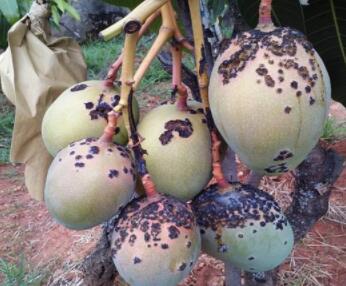
Causes and Control Methods of Bacterial Angular Leaf Spot
According to the Huaping County Organic Late-Maturing Mango Research Center, this year's temperatures in Huaping differ from previous years. In the early period (February to April), temperatures fluctuated between high and low; from May to mid-June, temperatures were relatively high with severe sun exposure, causing severe outbreaks of bacterial angular leaf spot in some mango-growing areas.
-
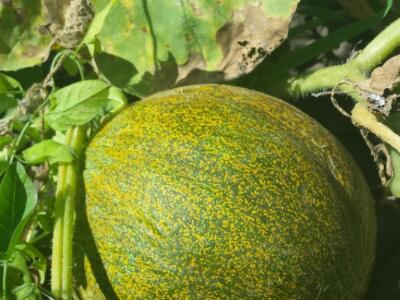
Causes and Control Methods of Angular Leaf Spot in Cucumber, Watermelon, Melon and Mango
Angular leaf spot refers to a class of diseases that occur on the leaves of various crops such as cucumber, watermelon, melon and mango, with disease spots shaped like polygons. So what are their causes and control methods? This disease is mainly prevented, and scientific management together with good ventilation and drainage conditions
-
Symptom Identification and Control Methods for Cotton Angular Leaf Spot
Symptoms: This disease not only damages cotton seedlings but also harms the stems, leaves, and developing bolls of mature plants. When seedlings are infected, the cotyledons develop water-soaked irregular or round lesions that are dark brown; in severe cases, the cotyledons wither and drop off. When true leaves are infected, small dark green spots first appear on the underside of the leaves, then expand into oil-soaked lesions; on the upper surface of the leaves, the lesions are mostly angular, and sometimes the lesions extend along the veins in irregular streaks, causing the leaves to turn yellow and drop off. When stems are infected, water-soaked main lesions appear, then expand and turn black or rot, the diseased area becomes sunken, and the pathogen bends to one side. When the terminal bud is infected, it forms a "rotten top," causing the entire plant to die.
-
How to effectively prevent and control cotton angular leaf spot
Cotton angular leaf spot is a bacterial disease. Cotton can be affected from the cotyledon stage to the mature plant stage. After infection, dark green small spots first appear on the underside of the leaves, and later the spots gradually expand, restricted by the leaf veins to form polygonal oil-soaked lesions. When the bacterial fluid is moist, it is a yellowish-brown sticky substance, and after drying it becomes a white scab-like substance. In severe cases, it can cause the leaves to dry up and fall off. If diseased leaves are held up to the light, the lesion areas look like oiled paper. The causes are, first, continuous cropping on the same land, with the disease developing from bacteria carried by diseased residues in the soil; second, poor light, high humidity and high temperature, with damaged cotton branches and leaves, which favors
条件筛选