Antibacterial substances from silkworm pupae can be added to animal feed to reduce antibiotic use
In recent years, the Miaoli District Agricultural Research and Extension Station (hereinafter referred to as the Miaoli Station) has found through research that antibacterial substances produced by silkworm pupae can be further developed into functional animal feed additives. This move is expected to effectively reduce the amount of antibiotics added when raising economic animals. In the future animal health market, it is estimated to have considerable development potential, and it also opens up brand-new business opportunities for the sericulture industry.
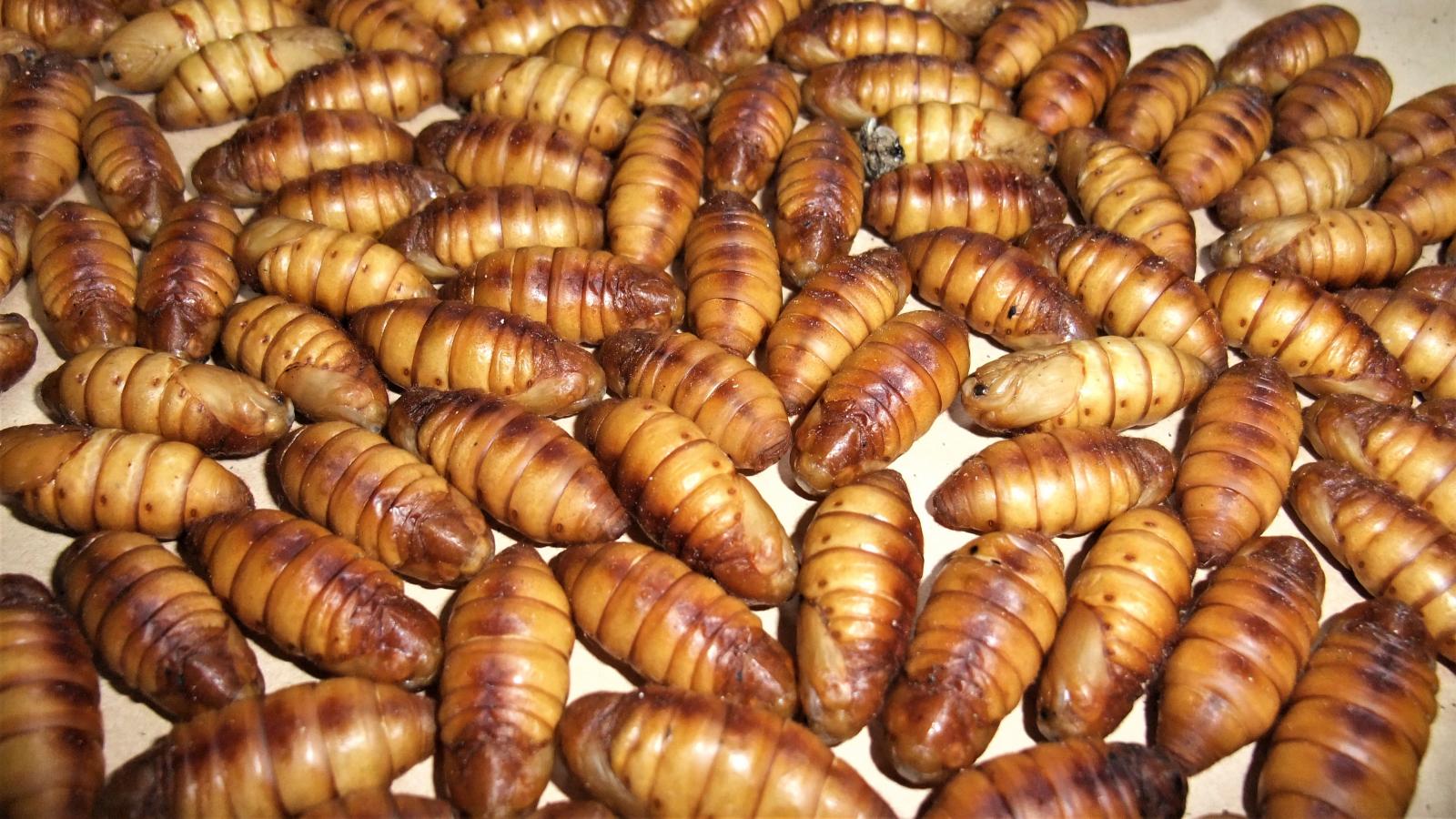
Inducing the production of antibacterial substances can effectively inhibit Staphylococcus aureus
The principle behind this research comes from the fact that the silkworm (Bombyx mori) possesses a special non-specific immune response. When facing a threat to its survival, its body autonomously produces multiple antibacterial substances to resist invasion by foreign microorganisms and avoid death. In this regard, among various methods of stimulating silkworms to produce antibacterial substances, the Miaoli Station found a method that can produce a high amount of antibacterial substances at the silkworm pupa stage. Testing revealed that these antibacterial substances can inhibit the reproduction of harmful Staphylococcus aureus.
Today, in addition to producing silk, sericulture can, through new technological research, also allow silkworm pupae to realize other value, further opening up new business opportunities for the industry. (Photo provided by the Miaoli District Agricultural Research and Extension Station)
Natural antibacterial properties, enhanced value, opening up new business opportunities for the industry
Miaoli Station Director Lu Hsiu-ying stated that in the past, the sericulture industry mainly focused on reeling silk to make fabric, and silkworm pupae could only be considered a by-product of the sericulture industry. Using silkworm pupae as a functional animal feed additive aims to increase the utilization value of silkworms. Because the silkworm itself is rich in high-quality protein and lipids, using it as feed is an excellent source of nutrition. If the characteristic of insects themselves producing antibacterial substances can also be well utilized to reduce harm to animals from harmful microorganisms, it can be described as "killing two birds with one stone."
Because pesticides cannot be used on the mulberry leaves used in sericulture, there are no concerns about residues of pesticides or heavy metals, making it a healthy and safe product. In addition, the antibacterial substances are naturally produced, with no concerns about genetic modification or ecological pollution. This research not only improves meat safety, but also opens up new uses and business opportunities for the sericulture industry.
Simultaneously reducing antibiotic use, improving meat safety
The Miaoli Station also pointed out that antibiotics are often used in the process of raising economic animals, mainly to reduce animal illness and death. However, abuse has caused harmful microorganisms in animals to develop drug resistance, which not only fails to promote animal health, but instead leaves antibiotic residues in meat, posing concerns for consumer health. Since 2006, the European Union has completely banned the addition of antibiotics to animal feed. In recent years, Taiwan, China has also gradually moved toward reducing antibiotics to improve meat quality and food safety.