How is the fertilization and stress-response technology for mung beans implemented? A full analysis of the key points
Mung bean is a major crop in our city, with a planting area of more than 1 million mu every year and a yield of more than 110,000 tons, accounting for more than 30% of the country's annual mung bean output. Baicheng mung beans, with their large seeds, plump grains, bright color, fresh green appearance, no off-colors, no pollution, and high protein content, have become a sought-after commodity on the international market...
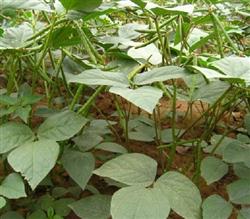 In order to achieve a relatively good yield of mung beans, the suitable timing and recommended fertilization rates for mung beans are specifically proposed. That is, topdressing at the early flowering stage of mung beans (the period of maximum fertilizer effect), with the fertilizer type preferably a combined application of nitrogen and phosphorus, applying 10-15 kg of nitrogen-phosphorus compound fertilizer per mu; or spraying 1.5 kg of urea plus 1 kg of monopotassium phosphate per mu, in 2-3 applications, each time 0.5-1.0 kg of urea and 400-500 g of monopotassium phosphate, mixed with 60-65 kg of water for spraying. This is because for every 100 kg of mung bean grains produced, 9.68 kg of nitrogen, 2.93 kg of phosphorus (P2O5), and 3.51 kg of potassium (K2O) need to be absorbed, of which, except for one-third of the nitrogen coming from the atmosphere, all the remaining nutrients must be absorbed from the soil. For mung beans, the period from emergence to flowering is the vegetative growth stage, and from flowering to pod filling is the stage in which vegetative growth and reproductive growth proceed together; this is the period of vigorous plant growth and also the key period that determines grain yield and quality.