-
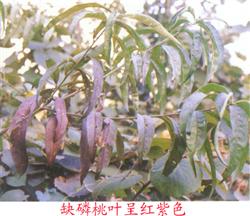
What Are the Symptoms of Phosphorus Deficiency in Peach Trees? Detailed Guide to Prevention and Control Methods
I. The Role of Phosphorus in the Growth and Development of Peach Trees Phosphorus has two roles in the growth and development of peach trees. On one hand, it can strengthen tree vigor, maintain healthy tree growth, promote flower formation, lead to earlier fruiting, promote the maturation of fruit and seeds, increase sugar content, and improve fruit quality. On the other hand, it can enhance the peach tree's adaptability to the external environment...
-
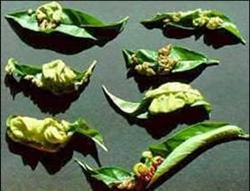
Technical Guidance on Early Spring Pest and Disease Control for Peach Trees
Peach leaf curl mainly damages leaves, but can also harm young shoots and young fruit. It generally occurs from April to May and happens only once a year. When fruit is affected, it turns red, the diseased part swells, the fuzz falls off, and the surface becomes smooth. For agricultural control, select high-yield, high-quality, disease-resistant varieties. In peach orchards that have entered the fruiting stage, manage the soil and fertilizer well...
-
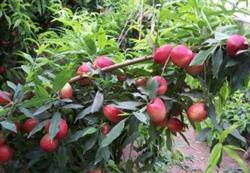
What are the pollution-free cultivation and management techniques for fresh-eating peach trees?
Pollution-free means that under specific conditions, the production environment, production techniques and product quality meet the requirements of the relevant national standards and regulations; the production environment quality meets the requirements of GB/T18407.2-2001; the production regulations of NY/T5114-2002 are implemented; during production, limited amounts of restricted chemical fertilizers, pesticides and other synthetic substances are permitted; and product quality...
-
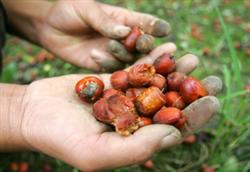
Detailed Explanation of Key Techniques for Renewal and Rejuvenation of Old Jujube Trees
Bending branches to open the angle. For relatively upright branches, bending can change their direction, disperse growth polarity, slow down the momentum of vegetative growth, and enhance ventilation and light penetration in the canopy. Removing sprouts and pinching tips. For newly sprouted useless jujube heads, when there is no space for development, they can be wiped off from the base, leaving only 2-3 jujube bearing shoots at the base. ...
-
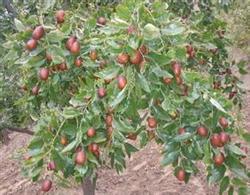
What are the key technical points for skillful fertilization of jujube trees to promote high yields?
Only through scientific and rational fertilization can jujube trees be strengthened, their resistance to pests and diseases improved, quality enhanced, and yields increased. Fertilization of jujube trees is divided into base fertilizer and topdressing. The scientifically appropriate time for applying base fertilizer is from the jujube fruit ripening stage until the soil thaws the following year, while topdressing is carried out in three applications: before bud break, at the early full-bloom stage, and during the rapid fruit swelling stage...
-
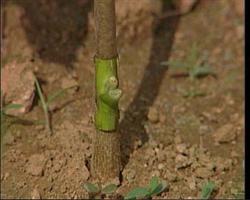
Detailed Explanation of Summer Bud Grafting Techniques and Methods for Jujube Trees
Pre-grafting preparation: Select wild jujube (Ziziphus jujuba var. spinosa) seedlings that are vigorous, free of pests and diseases, and have a basal stem diameter of more than 0.5 cm as rootstock. Cut vigorous, pest-free, plump-budded, current-year lignified branches as scions, 0.4-0.6 cm thick, remove the leaves but keep the petioles. Cut the scions into 20-30 cm long sections, wrap them in wet sand...
-
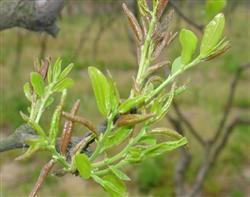
What are the control methods for the jujube gall midge, a pest of jujube trees?
This insect, commonly known as the jujube leaf maggot, is found in jujube-growing areas across the country, where its larvae damage the tender leaves, flower buds and young fruit of jujube trees. Damaged tender leaves curl into a tube shape, turn purplish red, become hard and brittle, and soon blacken and wither. Once flower buds are damaged they cannot open, and they turn yellow and drop off. Damaged young fruit cannot develop and grow properly; at about the size of a soybean they turn yellow and drop off...
-
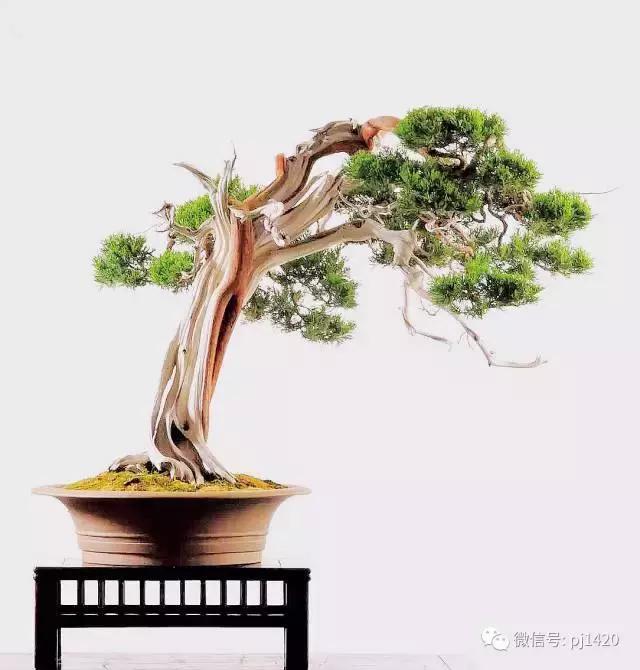
Want to make bonsai? These six trees are a must.
▲Wang Yongkang's Chinese juniper (zhenbai) work 1. Junipers and cypresses. Juniper and cypress bonsai can be called the king of bonsai, and among them Chinese juniper (zhenbai) is the most precious. Cypress and pine share equal fame; there is a saying of "pines and cypresses staying evergreen." The aesthetic features of cypress are almost the same as those of pine, but there are also differences...
-
Scientific Planting Techniques for Walnut Seedlings and Walnut Trees
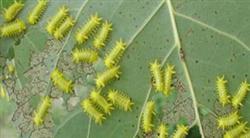
The yellow-spined slug moth mostly has 1 generation per year in the north, and 2 generations per year in the Yangtze River basin. After autumn, the mature larvae often spin silk and form hard cocoons on branch forks, twigs, leaf petioles, and even leaves to overwinter. The cocoon is oval, grayish-white, with several brown longitudinal bands, resembling a bird's egg. In early summer of the following year, the mature larvae pupate inside the cocoon, and after 1 month they emerge as adults and fly out,...
-
A Detailed Guide to Grafting and Pruning Techniques for Walnut Trees
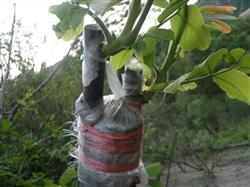
Pruning Methods for Trees in Full Fruit Period Pruning of walnut trees refers to pruning in the broad sense, that is, both training and cutting. Trees of different ages have different pruning tasks. Pruning young trees is, on the basis of training the framework, to continue developing and maintaining a high-yielding tree form; pruning trees in the initial fruiting stage is to continue developing the scaffold branches at all levels well, make full use of auxiliary nurturing branches for early fruiting...
条件筛选