A Detailed Guide to Grafting and Pruning Techniques for Walnut Trees
Pruning Methods for Trees in Full Fruit Period Pruning of walnut trees refers to pruning in the broad sense, that is, both training and cutting. Trees of different ages have different pruning tasks. Pruning young trees is, on the basis of training the framework, to continue developing and maintaining a high-yielding tree form; pruning trees in the initial fruiting stage is to continue developing the scaffold branches at all levels well, make full use of auxiliary nurturing branches for early fruiting...
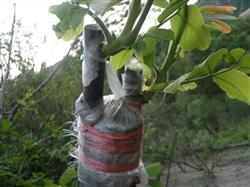
Pruning Methods for Trees in Full Fruit Period Pruning of walnut trees refers to pruning in the broad sense, that is, both training and cutting. Trees of different ages have different pruning tasks. Pruning young trees is, on the basis of training the framework, to continue developing and maintaining a high-yielding tree form; pruning trees in the initial fruiting stage is to continue developing the scaffold branches at all levels well, make full use of auxiliary nurturing branches for early fruiting, regulate the dominant-subordinate relationship among the primary and secondary branches at all levels, balance tree vigor, actively develop fruiting branch groups, and increase fruiting sites; pruning in the full fruit period is to regulate the relationship between vegetative growth and reproductive growth, improve the ventilation and light conditions of the tree, maintain vigorous growth of fruiting branch groups, and prolong the full fruit period.
(1) Pruning of scaffold branches and peripheral branches. Because scaffold branches extend for many years, the fruiting sites move outward, the tips droop, and water sprouts tend to appear at the rear. In the early full fruit stage, the main branches are still continuing to expand, so a firm framework should continue to be developed. Control the branches behind the extension leader in a timely manner to maintain the vigor of the branch tip. When the main branches no longer need to extend, the leader can be repeatedly replaced to control outward expansion. In vigorous trees, the extension branches often turn upward and the main branch tips stand upright, so branches behind them should be used to replace the leader and open the angle.
When the canopy reaches its maximum, tree height can be controlled by using forked branches to drop the top and remove the crown year by year, replacing the original leader with the uppermost main branch. The purpose is to reduce tree height and improve ventilation and light penetration.
Branches on the periphery of the canopy that are too crowded should be headed back and thinned out in a timely manner, because crowded peripheral branches cause insufficient light in the inner canopy.
(2) Development and pruning of fruiting branch groups. On the basis of development in the initial fruiting stage, fruiting branch groups should continue to be developed, and renewal and rejuvenation work should be done well. Fruiting branch groups should be arranged in a combination of large, medium and small, evenly distributed on the primary and secondary branches at all levels. Their overall distribution within the canopy is large inside and small outside, more below and fewer above, not dense outside, not empty inside, with good permeability, and the spacing between branch groups should be maintained at 0.6-1.0 m.
Methods for developing fruiting branch groups: 1) Medium and large auxiliary nurturing branches borne on scaffold branches are headed back and transformed into medium and large branch groups; 2) Using vigorous vegetative branches, adopt the method of leaving them unpruned first and then heading them back, removing the strong and keeping the weak, removing the upright and keeping the horizontal, to develop them into small and medium fruiting branch groups; 3) Using water sprouts in the inner canopy combined with summer pinching to transform them into fruiting branch groups.
In the pruning of fruiting branch groups, for overly strong branch groups, excessively vigorous branches should be thinned out; for weakened branch groups that have fruited for many consecutive years, timely heading back and renewal should be carried out to stimulate new shoots; for branch groups that are too short, because they cannot occupy the space they should, their extension leaders should be cut back to stimulate vigor and extend forward; moderate heading back of side branches can promote growth of the extension branch; overly vigorous and overly dense branch groups can be headed back or thinned to improve permeability, and bending the strong vigorous branch groups to extend can inhibit excessive growth of the branch group; short fruiting branches and male flower branches with weak vigor in the branch group should be thinned out in a timely manner, removing the weak and keeping the strong, to promote vigorous growth of the fruiting branch group and prolong the fruiting years. Medium and long fruiting branch groups have strong ability to bear fruit continuously, so such branches should not be cut back.
(3) Utilization of water sprouts. After walnut trees enter the full fruit period, many water sprouts are likely to sprout in the inner canopy. If there is space, timely heading back after branching can transform them into fruiting branch groups, so as to fill the inner canopy, supplement space, and increase fruiting sites.
To develop water sprouts into fruiting branch groups, those with moderate vigor and a length of 60-80 cm should be selected; after 1 year of delayed pruning, they should be headed back the next year at a suitable branching point.
If perennial upright branches in the inner canopy are tall and large, they will affect light in the inner canopy, so they should be promptly headed back, removing the upright and keeping the horizontal, and grown obliquely.
(4) Handling of branches behind the leader. Any downward-growing branch borne on the first layer of primary and secondary branches is prone to a pull-down effect and can be thinned from the base at an early stage. For downward-growing branches growing on the primary and secondary branches in the middle and upper parts of the canopy, whether to remove or keep them can be decided according to the insertion angle and size of the primary and secondary branches. Those with a wide opening angle should be thinned out, while those with a small angle can replace the original leader and increase the opening angle of the scaffold branches. For those with moderate vigor that have already formed flower buds, appropriate heading back after fruiting can transform them into fruiting branch groups.