-
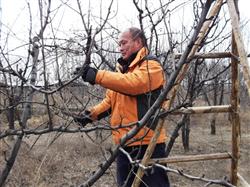
How to Graft Crabapple onto Old Apple Trees
In recent years, as landscaping projects have increased demand for large-sized crabapples, large-sized crabapples in landscaping nurseries have become noticeably insufficient, such as the widely used Malus micromalus and the colorful-leaf species Malus 'Royalty'. The apple tree, which belongs to the same family and genus as crabapple, has therefore been used as rootstock for grafting crabapple. In orchards, apple trees past their peak fruiting period...
-
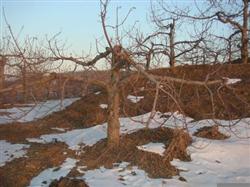
Key summer management techniques after reshaping apple trees
After reshaping, most tree forms in the Weibei area became open-center trunk forms. The open-center trunk form has only 3-5 main branches, a great reduction compared with the large branch count before reshaping, but because the root system below is still fully functional, in the year of reshaping the trees generally (except weak trees) produce vigorous shoots. Therefore we must pay attention to reshaping...
-
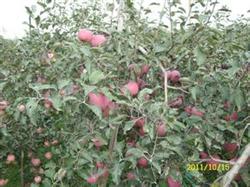
How can young apple trees be made to bear fruit earlier?
In current production, some orchards have relatively good soil conditions and fairly adequate fertilizer and water, but the planting density is too high, and management after planting cannot keep up. In particular, pruning techniques are not correctly applied to promote early flower bud formation and fruiting, resulting in overcrowded populations with a canopy coverage rate of 90%, or even 110%, and a canopy intersection rate greater than 20%, with branches per mu...
-
Detailed Explanation of the Key Operating Points of the New Technique for Flower and Fruit Thinning of Apricot Trees
New Technique for Flower and Fruit Thinning of Apricot Trees Apricot trees have the characteristics of fast growth, early shaping, early fruiting and early returns. In recent years, the planting scale in various places has expanded year by year, especially in comprehensive ecological parks near the suburbs of cities, where apricot has become an indispensable fruit for regulating the supply of fresh fruit...
-
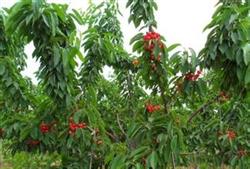
Management Techniques for Sweet Cherry Trees from 1 to 3 Years Old
The root system of sweet cherry trees is relatively shallow, and the root system of young trees from 1 to 3 years old is even shallower, generally around 5 to 40 cm. In winter, the frozen soil layer reaches 40 to 60 cm deep, and the entire root system of the tree is within the frozen soil. In the Beijing area in early spring, the aboveground air temperature rises quickly and high; in mid-to-late March, the temperature sometimes reaches as high as 2...
-
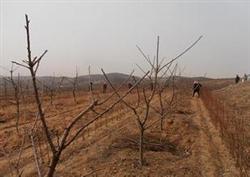
How to manage and care for young sweet cherry trees in autumn and winter
I. Autumn management 1. Thin where dense, plant where sparse. Sweet cherry is a light-loving tree species. To ensure ventilation and light penetration throughout the tree, some overlapping main branches or "gatekeeper" branches close to the trunk that cannot fill the space on the main branches should be removed early; upright and lateral branches on the main branches that cannot fill the space should be appropriately headed back to promote new shoots and form new fruiting branch groups.
-
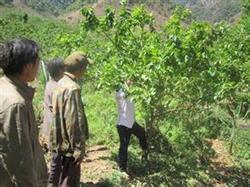
What are the key points to note for summer pruning of cherry trees?
Pinching new shoots: To promote flower bud differentiation and prevent excessive vegetative growth, the method of pinching new shoots should be adopted for control. That is, pinch the new shoots that have not stopped growing, and the pinching position is generally at the half-leaf mark; after pinching, growth stops for 10 to 15 days and then secondary shoots emerge, and when they grow to 15 to 20 cm, a second pinching is carried out, at...
-
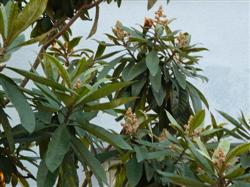
What are the winter management techniques for loquat trees?
First, apply winter fertilizer well, control excessive shoot growth, and strengthen the flower-forming genes and flower organs and ovaries. Promote and control, promote flowering, disinfect, and activate all in one go. This enables the fruit tree to bloom more and set more fruit year after year, protect and plump the fruit, and achieve stable yields and high quality. Second, carefully do the work of thinning and retaining flowers. For young loquat trees, growth should be allowed to expand the canopy, and the terminal flowers and...
-
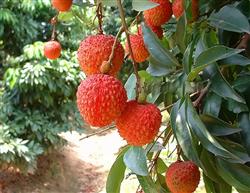
How to manage fruit-bearing litchi and longan trees? A complete analysis of the key management points
I. Do a good job of post-harvest management 1. Harvest at the right time. When harvesting the fruit, use the two-cut method for each fruit: first cut off the fruit cluster together with the base of the fruiting branch, or even the base of the branch below the fruiting mother branch, and only then cut off the fruit cluster. How far back the branches below the fruit cluster are pruned depends on how well the branches of the fruiting mother branch have grown; prune back shorter for well-grown ones and longer for poorly grown ones.
-
What are the precautions for pruning pomegranate trees?
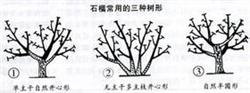
Pomegranate is sensitive to pruning; improper pruning can cause excessive vegetative growth or weaken the tree. The following points should be noted when pruning: 1. Train the tree shape. Because the pomegranate's trunk is not distinct, when planted in courtyards an open umbrella shape should be used, with branches kept only above 1.2 m on the trunk. For field cultivation, a flat-topped vertical-branch shape should predominate...
条件筛选