-
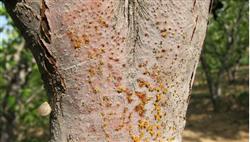
How to prevent and control pear tree canker? Mastering these methods is enough
1. Strengthen the tree to prevent disease: (1) Reasonable load: According to the tree's growth condition and fertilization level, determine an appropriate fruit load. Do not let the tree bear too heavy a load, and even less should you adopt excessive measures such as branch bending and girdling to increase fruit production for short-term gain. Properly thin flowers and fruits so that both fruiting and tree growth are achieved. (2...
-
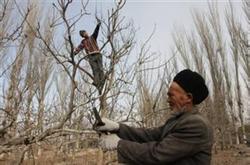
Key Points of Simplified Pruning Technique for Pear Trees Trained to a Modified Central Leader Form
For pear trees trained to a modified central leader form, the trunk height is 60-70 cm, the tree height is 3.5 m, and 4-5 larger scaffold branches are borne on the middle and lower parts of the central leader. The spacing between scaffold branches is about 20 cm. The basal angle of the scaffold branches is 60 degrees. The waist angle is 30-50 degrees. The tip angle is upright; the scaffold branches extend in a single axis. On them are borne small and medium fruiting shoots or fruiting branch groups; the ratio of scaffold branch to trunk is controlled...
-
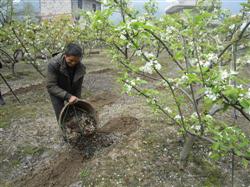
Correct Fertilization Methods and Technical Key Points for Pear Trees
I. Fertilizer amount. Generally speaking, producing 100 kg of pear fruit requires 0.47 kg of pure nitrogen, 0.23 kg of pure phosphorus, and 0.48 kg of pure potassium, with a nitrogen, phosphorus, and potassium ratio of 1:0.5:1. If calculated at a yield of 2500 kg of pears per mu, then each mu requires 11.75 kg of nitrogen, 5.75 kg of phosphorus, and 12 kg of potassium. In actual production, it can be based on...
-
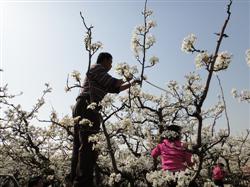
What is the difference between pruning methods for pear trees and apple trees
Post-bloom management of pear trees is a critical period in the whole year's management. Whether the comprehensive management measures during this period are appropriate directly affects the fruit set rate and fruit quality. The key points of pear tree management during this period are: 1. Pollination Pear flowers generally open after 8 o'clock in the morning. Flowers that open on the same day can be pollinated, and pollination is best 1 to 2 days after the flowers open...
-
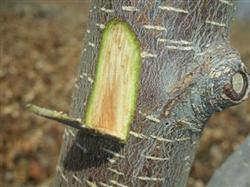
Pear Tree Early Spring Frost Damage Protection Methods and Technical Key Points
I. Frost Prevention 1. Spray salt water: Before the late frost arrives, spray the tree with 10-20% salt water. This can increase the concentration of cell sap in the tree, lower the freezing point, and also increase air humidity. When water condenses in the cold, it releases latent heat, thereby protecting against frost damage. 2. Spray hormones: In early spring, spray 0.1-0.2% maleic hydrazide solution to inhibit budding and delay flowering,...
-
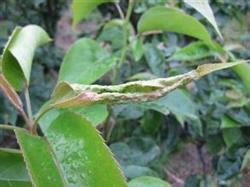
Control Methods for Pear Aphid Pests on Pear Trees
Pear aphid, also known as pear two-branched aphid or pear leaf-curling aphid, commonly called "greasy bug," occurs in pear-growing areas throughout the country and is one of the major pests of pear trees. When damage is severe, it causes early defoliation, affecting both the current year's yield and flower bud differentiation. This insect belongs to the order Homoptera, family Aphididae. 1. Damage symptoms: Adults and nymphs gather in colonies on buds, leaves, and tender shoots to suck...
-
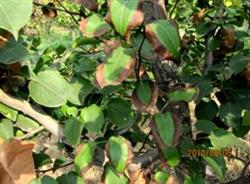
What are the control methods for potassium deficiency in pear trees
Villagers reported that in a pear orchard in a mountain village, some pear tree branches were found to have shortened internodes, smaller leaves that were yellow-green in color, with leaf margins curling upward, browning, and scorching; in severe cases, the entire tree's leaves were like this, resembling fire damage, and it was even more severe on trees in poor, thin soil with exposed roots, affecting tree vigor and yield. Many fruit growers could not figure out...
-
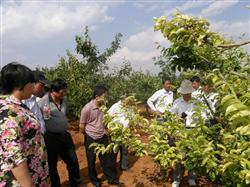
How to prevent and treat pear tree chlorosis? Reasonable fertilization is key
Iron deficiency symptoms in pear trees start from the new shoots, with leaf color changing from pale green to yellow, only the leaf veins remaining green. In severe cases, the entire leaf turns yellow-white, with scorched necrotic spots forming along the leaf margins. Affected new shoots are thin and weak, with elongated internodes and underdeveloped axillary buds. Pear trees can develop this at any stage from seedling to mature tree. The cause of this...
-
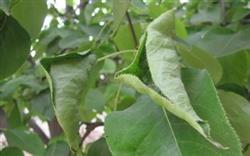
What species of aphids harm pear trees?
The aphids that harm pear trees are mainly 3 species: the pear two-tailed aphid, the pear yellow powdery aphid, and the Chinese pear original-tail aphid. These 3 aphids harm only pear trees; the two-tailed aphid and the yellow powdery aphid occur commonly and severely, while the original-tail aphid rarely occurs and causes lighter damage. Their morphological differences are as follows: (1) Pear two-tailed aphid: ① The wingless viviparous female aphid is 2 mm long, green or dark green...
-
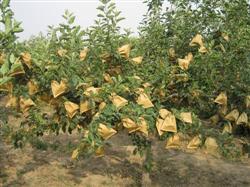
Pest and Disease Control Methods for Pear Trees Before Bagging in Early Spring
The period before and after bud break in early spring is when diseases and pests begin their activity, and once the pear orchard is bagged, spraying becomes considerably more difficult. Therefore, pest and disease control before bagging is the key to pest and disease management in bagged pear orchards. During this period, the focus should be on strengthening control of the pear psylla (Psylla pyrisuga), pear aphid, and red spider mite, among others. (1) Strengthen soil, fertilizer, and water...
条件筛选