-
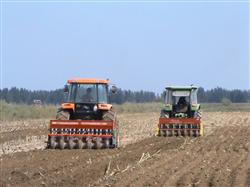
Current Wheat Growth Analysis and Spring Management Recommendations
Seven parts sowing, three parts management: improving sowing quality is the key to a bountiful grain harvest. At present, spring wheat in our province is about to enter the sowing period. How well we manage the sowing stage and improve sowing quality bears on the overall prospects for a bumper spring wheat harvest all year. 1. Select good varieties. To achieve a high wheat yield, soil is the foundation, fertilizer is the nutrition, and water is the lifeline, ...
-
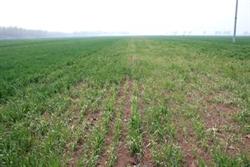
Key Technical Points for Spring Field Management of Dryland Wheat
I. Causes of Wheat Seedling Death in Winter and Spring 1. Internal causes refer to the ability of the wheat plant itself to resist cold and drought. Using varieties with poor cold resistance easily leads to seedling death. In individual cases, wheat seedlings sown too early that have reached the two-glume stage of spike differentiation before winter have weakened cold tolerance and often suffer severe seedling death when exposed to freezing injury. Some late and weak seedlings, having accumulated...
-
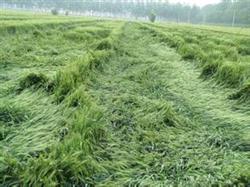
What are the spring lodging prevention measures for wheat? Explained clearly in one article
Lodging is one of the main factors affecting high and stable yields and good quality in wheat. Wheat lodging mainly occurs in high-yield wheat fields with ample fertilizer and water, excessive wheat growth, overly large populations, and dense, shaded field conditions. Early spring is the key period for preventing wheat lodging, and its comprehensive lodging prevention technical measures are: scientifically manage fertilizer and water. For high-yield wheat fields with a population of more than 650,000 plants per mu at the green-up stage, wait until the first internode of wheat has reached its final length (that is, late jointing stage), then apply topdressing and irrigation, applying 7.5-10 kg of urea per mu. This can reduce ineffective tillers, lower the length of basal internodes, promote thick and strong stems, and prevent lodging later, while also increasing grain number per spike and improving quality.
-
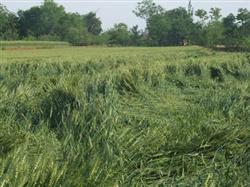
Technical Guidance on Spring Fertilization Management for Wheat
1) Spraying paclobutrazol. At the wheat stem elongation stage, spraying 30 kg of 200 ppm paclobutrazol solution per mu can dwarf the plants, enhance lodging resistance, and also control wheat powdery mildew and improve the plant's nitrogen uptake and utilization rate. (2) Spraying chlormequat chloride. For wheat fields with large populations and vigorous growth, at the early jointing stage, spray per mu 0....
-
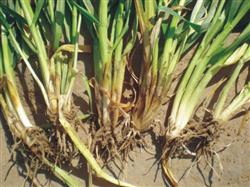
Spring Occurrence Patterns and Control Methods of Wheat Sharp Eyespot
Wheat sharp eyespot is a fungal disease mainly spread through the soil. As yield levels have increased, with the promotion of high-yielding varieties and wheat field management involving heavy watering and heavy fertilization, its damage has become increasingly serious. The pathogen of wheat sharp eyespot has a broad host range; besides infecting wheat, it can also infect corn, rice, foxtail millet, sorghum and many other...
-
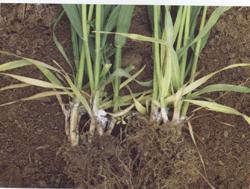
Four protection measures for wheat spring field management
I. Occurrence and harm of wheat sharp eyespot. Wheat sharp eyespot is a fungal disease mainly transmitted through soil. With the improvement of yield levels, the promotion of high-yielding varieties, and wheat field management with heavy water and heavy fertilizer, its harm has become increasingly serious. The pathogen of wheat sharp eyespot has a wide host range; besides infecting wheat, it can also...
-
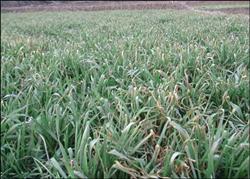
How to remedy wheat after a spring frost
Every year in February and March of spring, cold air often breaks out and moves southward in the north, with a large temperature drop during the process, and wheat that has jointed too early often suffers frost damage. At this time, for seedlings growing too vigorously, the method of pressing should be adopted to inhibit growth; for weak seedlings, reasonable topdressing should be applied to promote weak ones into strong ones, so as to enhance cold resistance, and at the same time attention should be paid to listening to the weather...
-
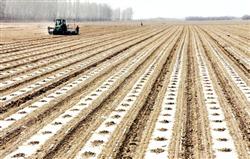
Detailed Explanation of Key Technical Points for Spring Cotton Sowing
Determine the density according to variety, soil fertility and planting method, and plant at a reasonable density to achieve full emergence from a single sowing. Generally, when a single spring cotton variety is planted, the density per mu is kept at around 3500 plants, with a row spacing of 1 m and a plant spacing of 19 cm; for semi-spring varieties, the density per mu is generally kept at around 4500 plants, with a row spacing of, and a plant spacing of 15 cm; for summer cotton varieties, ...
-
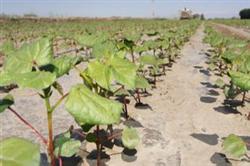
How to improve the emergence rate and seedling survival rate of cotton in spring
Main reasons for low cotton emergence rate and seedling survival rate: Poor land preparation: mainly uneven land, uneven soil moisture, and excessively thick dry soil layers in some places, resulting in incomplete emergence after sowing. Long-term cotton planting with plastic film: causing excessive residual film in the topsoil, so that some seeds are sown directly onto the plastic film in the soil and cannot...
-
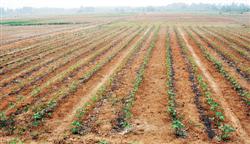
Spring cotton production technical guidance: how to manage the Yellow River basin cotton region
Raising seedlings and transplanting Simplified seedling raising and transplanting. First, choose a good seedling-raising site. It should be high-lying, sheltered from the wind and facing the sun, with convenient access to water and transportation. Second, prepare materials. Use seedling-raising substrate plus clean river sand to make a seedbed or fill plug trays, replacing nutritional pots, and prepare enough materials for 500 seedlings per sq m of seedbed. Third, sow at the right time...
条件筛选