Spring cotton production technical guidance: how to manage the Yellow River basin cotton region
Raising seedlings and transplanting Simplified seedling raising and transplanting. First, choose a good seedling-raising site. It should be high-lying, sheltered from the wind and facing the sun, with convenient access to water and transportation. Second, prepare materials. Use seedling-raising substrate plus clean river sand to make a seedbed or fill plug trays, replacing nutritional pots, and prepare enough materials for 500 seedlings per sq m of seedbed. Third, sow at the right time...
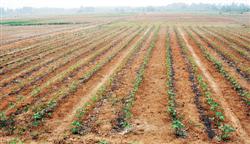
Raising seedlings and transplanting
Simplified seedling raising and transplanting. First, choose a good seedling-raising site. It should be high-lying, sheltered from the wind and facing the sun, with convenient access to water and transportation. Second, prepare materials. Use seedling-raising substrate plus clean river sand to make a seedbed or fill plug trays, replacing nutritional pots, and prepare enough materials for 500 seedlings per sq m of seedbed. Third, sow at the right time. Cotton fields intercropped with garlic and cotton fields intercropped with wheat generally sow in early April and transplant in early May, with a seedling age of about 30 days. Fourth, manage the seedbed. Use root-promoting agents for root drenching and root soaking to control the formation of "leggy seedlings" in high-density seedbeds and promote new root growth; control water and replenish water according to seedling condition, and harden seedlings before lifting. Fifth, transplant. Cotton fields intercropped with garlic are transplanted manually; cotton after wheat intercropping and after garlic can be transplanted mechanically together with cotton after wheat, at a transplanting density of 3000 plants/mu, and "settling water" should be watered promptly after transplanting. Sixth, implement the "three-stage" plan for large-scale seedling raising. That is, sow, lift seedlings and transplant in stages and batches.
For nutritional pot seedling raising, medium and large pot types are recommended. Fertilize the seedbed soil, make enough pots according to the transplanting density plus 20%, sow one seed per pot, and pay attention in the seedbed to preventing and controlling pests, diseases and weeds. Transplant into holes; other management is the same as for simplified seedling raising.
Drought resistance and seedling protection
Mulch to preserve soil moisture and wait to sow. If effective rainfall occurs before the suitable sowing period, mulch first to preserve soil moisture, then sow in holes when the suitable sowing period arrives, which can ensure a relatively high emergence rate.
Furrow irrigation and mulching. If there is no effective precipitation before sowing, open furrows before sowing, water in the furrows, then sow and cover with soil, then cover with plastic film; this is suitable for protecting seedlings in dryland.
"Water-seeded soil packet." Dig a soil pit, water and sow by hand, and cover with soil higher than the ground to form a soil mound.
Seed soaking and germination acceleration. In cotton fields with slightly poor surface soil moisture, soak cottonseed in water until the cotyledons separate, then remove and sun-dry or warm them so the radicle protrudes through the seed coat (commonly called "white showing"), then open furrows and sow in holes; when soil moisture is good and sowing with machinery, the seed can only be moistened without germination acceleration (coated seed cannot be soaked; once soaked, the coating agent falls off, damaging the seed and causing rotten seeds and rotten sprouts).
Determine the sowing method according to soil moisture. If surface soil moisture is good (dry soil layer about 2 cm), direct flat sowing can be used; if bottom soil moisture is good (dry soil layer about 4 cm), first press to raise moisture or "plow dry and sow wet"; if soil moisture is poor (dry soil layer more than 5 cm), use the "deep plowing and lifting soil" method, plowing the seed deeply to 2 cm below the wet soil, and after most cottonseed has "pushed through the soil", use a soil divider along the sowing row to lift the dry soil covering the seed onto the ridge backs.