-
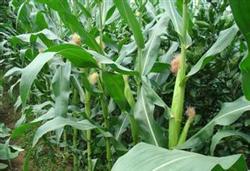
Want high yields from spring corn? Proper potassium fertilizer application is key
Spring corn grows slowly at the seedling stage, with sturdy plants and strong lodging resistance. Its yield per plant is relatively high, but it is susceptible to disease infection during hot, rainy seasons, which can affect spring corn yields. Mastering spring corn fertilization methods can help achieve high and stable yields. Apply organic fertilizer widely. Spring corn is a high-yield crop, and its yield level...
-
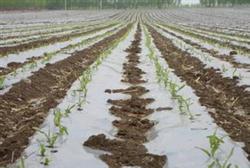
High-Yield Film-Mulched Cultivation Techniques for Spring-Sown Black Corn
Black corn is a new corn variety introduced in recent years and is a precious health-promoting fruit-and-vegetable food. After two consecutive years of trial planting, it achieved a yield of 400-500 kg per 667 sq m. Black corn has a plant height of 120 cm, a growth period of 90 days, a ear length of 12-15 cm, and a single ear weight of 150 g. It is suitable for sale as fresh-eating corn cobs, and can also...
-
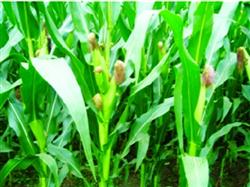
Planting spring corn requires good seed plus good methods
Fresh-eating type corn is generally divided into sweet corn and waxy corn; it has a unique flavor, is rich in nutrients, has a large market capacity, high yield and good returns. When grown as spring corn, it takes about 90 days from sowing to fresh ear harvest and does not affect the planting of hybrid late rice. To grow spring fresh-eating type corn well, the following points should mainly be grasped: first, choose...
-
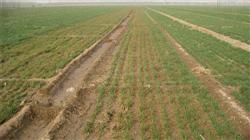
Spring Field Management Measures for Winter Wheat in Northern Xinjiang
Green-up Stage Management: After the beginning of spring (late March to early April), carry out spring harrowing in a timely manner, with a harrowing depth of 5 cm. Harrowing with a smoothing harrow or diagonal harrowing is preferable. Green-up fertilizer should be applied just before or at the early stage of wheat green-up, and it is advisable to apply more to weak seedlings, less or none to strong seedlings, and none to excessively vigorous seedlings. For wheat fields where the total number of stems per mu before winter is less than 400,000 and the wheat seedlings are growing weakly, late...
-
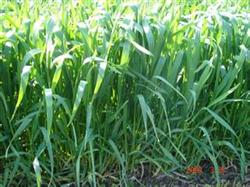
How to prevent and control wheat pests and diseases after spring? Practical tips are here
March 20 is "Spring Equinox," the day that falls exactly at the midpoint of the 90 days of spring, hence the name. There is a folk saying, "Spring Equinox and Autumn Equinox, day and night are equally divided." After the Spring Equinox, days grow longer and nights shorter, and temperatures gradually rise. "Spring Equinox" has an important influence on agricultural production activities. For the north, the Spring Equinox is the beginning of spring, ...
-
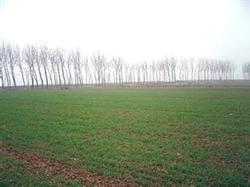
Wheat Suffering Low Temperatures in Spring Needs Timely Potassium Supplementation
To support the spring action on soil testing and formulated fertilization, experts from the Chinese Academy of Agricultural Sciences recently went to Gaocheng, Hebei, to conduct a follow-up survey of wheat growth. The survey found that due to low soil temperatures this spring, winter wheat in the region resumed growth 10 days later than in previous years. The first internode of the wheat was longer than in previous years, while the second internode had not yet developed well, and the stems were rather soft. ...
-
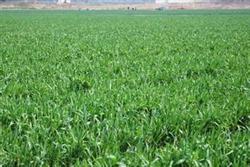
Timely potassium supplementation for spring wheat is crucial
Since the launch of the spring action for soil testing and formulated fertilization, soil and fertilizer experts from the Chinese Academy of Agricultural Sciences have taken active action, going deep into the fields to guide scientific fertilization. Recently, experts from the Chinese Academy of Agricultural Sciences went to Gaocheng, Hebei, to conduct a follow-up survey of wheat growth. The survey found that due to the low ground temperature this spring, the winter wheat in this area has turned green...
-
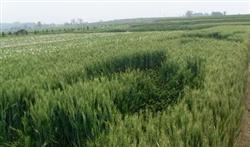
What are the methods for preventing lodging in spring wheat?
"Lodging" is one of the main obstacles affecting wheat yield under conditions of high fertilizer and water. In recent years, the promotion and application of plant growth regulators in wheat production has opened up a new way to prevent lodging and promote increased yield, and is an important supporting technical measure for high and stable wheat yields. 1. Spraying paclobutrazol during the wheat jointing stage...
-
Key Techniques for Spring Control of Wheat Sharp Eyespot
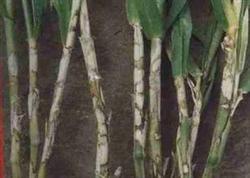
Wheat sharp eyespot is a fungal disease mainly spread through the soil. With the improvement of yield levels, the promotion of high-yielding varieties, and wheat field management with heavy irrigation and fertilization, its damage has become increasingly serious. After wheat sowing, if the germ is infected by the pathogen during germination, the coleoptile turns brown, and in severe cases rots and dies; after the standing and jointing stages, the diseased plant rate rises significantly...
-
Spring disease, pest and weed control in wheat enters a critical period
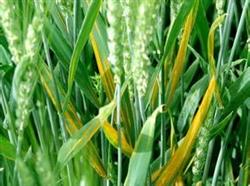
If disease centers are found in the field, spray promptly to control them. If the diseased leaf rate reaches 5% and the severity is below 10%, use 50 g of 15% triadimefon wettable powder per mu, or 40 mL of 20% triadimefon emulsifiable concentrate per mu, or 30 g of 25% triadimefon wettable powder per mu, or 15-30 g of 12.5% diniconazole wettable powder per mu, ...
条件筛选