How to improve the emergence rate and seedling survival rate of cotton in spring
Main reasons for low cotton emergence rate and seedling survival rate: Poor land preparation: mainly uneven land, uneven soil moisture, and excessively thick dry soil layers in some places, resulting in incomplete emergence after sowing. Long-term cotton planting with plastic film: causing excessive residual film in the topsoil, so that some seeds are sown directly onto the plastic film in the soil and cannot...
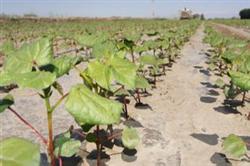
Main reasons for low cotton emergence rate and seedling survival rate. Poor land preparation: mainly uneven land, uneven soil moisture, and excessively thick dry soil layers in some places, resulting in incomplete emergence after sowing. Long-term cotton planting with plastic film: causing excessive residual film in the topsoil, so that some seeds are sown directly onto the plastic film in the soil and cannot emerge, or after some seeds emerge their roots happen to grow right onto the residual film, causing seedling death. Climatic reasons: cotton seed germination requires a certain temperature and humidity. If strong winds and cooling or long periods of rainy, wet weather occur after sowing, emergence will inevitably be affected. If the method of first mulching with film and then dibbling is used, rain within 1 week after sowing will cause the topsoil at the sowing holes to crust, affecting emergence. Failure to release seedlings manually in time: in the planting method of sowing first and then mulching with film, failure to release seedlings in time after emergence will also prevent normal emergence. Spring weather is changeable: after emergence, strong winds, drought, and low-temperature rainy weather and other irresistible natural disasters are likely to cause seedling death. Pests and diseases: the occurrence of pests and diseases at the cotton seedling stage can also easily cause seedling death.
Countermeasures to improve the cotton emergence rate and seedling survival rate. Improve land preparation quality: for spring-sown cotton, ensure a ploughing depth of no less than 25 cm, uniform ploughing, and a level soil surface after ploughing. The topsoil should be loose and the subsoil compact, with no visible or hidden clods or stubble. Those who have long used plastic film for cotton planting should pick up all residual film while preparing the land, giving the seeds a good environment for growth and improving the emergence rate. Select high-quality seeds: in variety selection, not only should the selected varieties be excellent, they should also be high-quality varieties. Only high-quality seeds can ensure the germination rate and improve the emergence rate. Improve sowing quality: generally, the most suitable period for open-field spring sowing is mid-to-late April, while film-mulched cotton can be advanced to early April. Sowing at suitable soil moisture is required, with a sowing depth of about 3 cm. Pay close attention to weather changes: make good preparations for disaster prevention and mitigation, and strive to minimize losses caused by natural disasters. Prevent and control pests and diseases: cotton seedling-stage diseases mainly fall into two major categories: root diseases and leaf diseases. Seedling-stage root diseases mainly include damping-off, anthracnose, and red rot. Seedling-stage leaf diseases mainly include black spot, stem blight, and angular leaf spot. The main pests at the cotton seedling stage include cotton aphid, thrips, cutworm, red spider mite, stink bug, and others. For diseases, spray 50% carbendazim wettable powder at 500-800 times dilution, or 70% thiophanate-methyl at 800-1000 times dilution, or 65% zineb at 500-800 times dilution, spraying once every 1 week for a total of 2-3 sprays. For cotton aphid and red spider mite, 50% pirimicarb wettable powder at 1000 times dilution or 10% imidacloprid at 3000 times dilution can be used for control. For cutworm control, trapping and killing and spraying 50% phoxim at 1500 times dilution can be used.