-
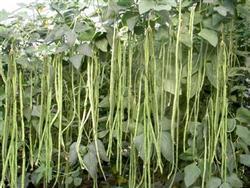
Key Points of Plastic Film Mulching Cultivation Techniques for Spring Asparagus Beans
(1) Variety selection: At present, the widely cultivated asparagus bean variety is Zhijiang 28-2, which can be used for spring plastic film mulching cultivation. (2) Sowing time: The suitable lower limit temperature for sowing asparagus beans is 14°C, and sowing should be done when the temperature steadily passes 4°C around the time of the last frost. The sowing method for asparagus beans can be the same as that for common beans (kidney beans)...
-
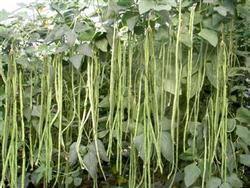
Plastic Greenhouse Cultivation Techniques for Early Spring Beans
Symptoms of bean blight: It mainly affects stems, leaves and pods. When the stem is infected, it initially appears water-soaked, then becomes wet-rotted and constricted around the stem, and the leaves and vines above the diseased part wither and die. When humidity is high, the cortex rots and white mold appears on the surface. When leaves are infected, the diseased part initially shows dark green water-soaked spots, which then expand into round light brown spots with white mold on the surface...
-
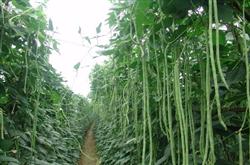
Detailed explanation of key points for early spring ground bean cultivation techniques
Pre-sowing preparation: irrigate before winter to build good soil moisture for early spring sowing. Prepare 6 kg of "American ground bean" high-quality seed per mu, ultra-thin plastic film (film width 70 cm), apply 3000 kg of organic fertilizer as base fertilizer, 10 kg of urea, 8 kg of diammonium phosphate, and 10 kg of potassium chloride. Sowing: after the ground thaws in early spring, make beds and cover with film. Bed width 50...
-
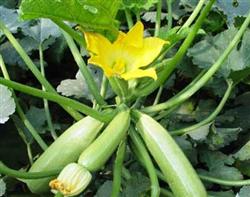
Three key management tasks after transplanting spring-sown zucchini
Early fruiting stage: the 20-25 days from transplanting to the harvest of the first fruit is the early fruiting stage. The key management points are keeping warm, controlling water, intertillage, and promoting roots and protecting seedlings. From transplanting to the recovery stage, keep the greenhouse closed for 5-7 days to preserve heat, cover with straw mats in the morning and evening, and maintain the daytime temperature inside the greenhouse at 25°C-30°C, nighttime at 15°C-18°C, and soil temperature at 20°C-25°C. After the recovery stage...
-
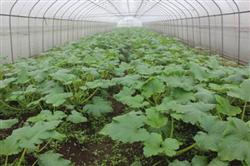
Beware of excess nitrogen and insufficient potassium when planting zucchini in spring
Guard against too much nitrogen and too little potassium. Zucchini's demand for nitrogen, phosphorus and potassium is greatest for potassium, followed by nitrogen, and least for phosphorus. Spring temperatures are relatively high, and if there is too much nitrogen fertilizer, zucchini can easily grow leggy. Therefore, when topdressing in spring, be sure to apply less nitrogen fertilizer and focus on high-potassium compound fertilizer. Guard against high temperature and drought. Zucchini is not tolerant of high temperatures, and high temperature...
-
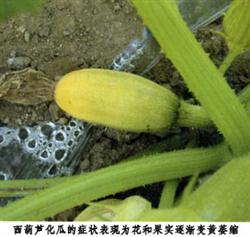
What causes fruit abortion in early spring zucchini grown in greenhouses?
In early spring zucchini cultivation in greenhouses, the fruit is prone to stopping its expansion midway, turning yellow, and wilting. Eventually it becomes shriveled, and this symptom can occur both before and after flowering; it is commonly known as fruit abortion. The causes of fruit abortion are as follows: (1) In early spring cultivation, the assimilation function of the leaves declines, and the plant accumulates less through photosynthesis. (2) Due to...
-
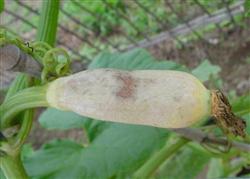
What causes zucchini fruit abortion? Early spring greenhouse prevention and control measures
In early spring zucchini cultivation in greenhouses, the fruit is prone to stopping its expansion midway, turning yellow, and wilting. Eventually it becomes shriveled; this symptom can appear both before and after flowering, and is commonly known as fruit abortion. The causes of fruit abortion are as follows: 1. In early spring cultivation, the assimilation capacity of the leaves declines, and the plant accumulates less through photosynthesis. 2. Due to...
-
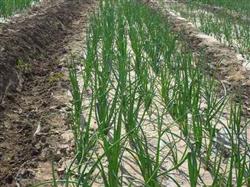
What are the spring disease control measures for onions?
1. Fertilizing and making beds: Choose a plot that faces the sun and is warm, with loose and fertile soil that can be both irrigated and drained, to build the seedling bed. The bed surface should be 1.2-1.5 m wide, and the length varies by location. Apply 5-6 kg of decomposed farmyard manure per sq m in the bed, and at the same time add 60-80 g of compound fertilizer. Mix the soil and fertilizer in the bed evenly and break it up fine, take out the covering soil, rake it level and wait to sow. ...
-
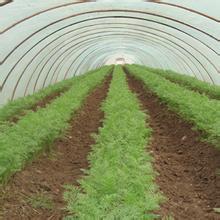
What are the key techniques for spring cultivation of carrots?
In recent years, as people's living standards have continued to rise, the area under off-season spring cultivation of carrots has kept increasing. The spring-sowing carrot cultivation techniques are introduced below. 1. Variety selection and sowing rate For spring sowing, choose medium-to-early maturing varieties that are resistant to bolting, of good quality and high yield. Such as New Kuroda 5-inch, Hongxin No. 4...
-
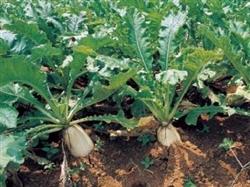
What are the key management techniques for spring radishes in May?
Planting spring radishes in early spring is a path to wealth with low investment, a short cycle, and high returns. It not only supplements the supply of vegetables during the off-season and increases the variety of produce, but also provides a good preceding crop for the following crop. Its main cultivation techniques are introduced as follows: 1. Choose excellent varieties. Generally, choose those with high yield, good quality...
条件筛选