What causes fruit abortion in early spring zucchini grown in greenhouses?
In early spring zucchini cultivation in greenhouses, the fruit is prone to stopping its expansion midway, turning yellow, and wilting. Eventually it becomes shriveled, and this symptom can occur both before and after flowering; it is commonly known as fruit abortion. The causes of fruit abortion are as follows: (1) In early spring cultivation, the assimilation function of the leaves declines, and the plant accumulates less through photosynthesis. (2) Due to...
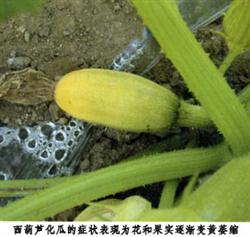
In early spring zucchini cultivation in greenhouses, the fruit is prone to stopping its expansion midway, turning yellow, and wilting. Eventually it becomes shriveled, and this symptom can occur both before and after flowering; it is commonly known as fruit abortion. The causes of fruit abortion are as follows:
(1) In early spring cultivation, the assimilation function of the leaves declines, and the plant accumulates less through photosynthesis.
(2) Because zucchini is a cross-pollinated vegetable, under low temperature and high humidity the pollen develops poorly and is not easily released, so the female flowers cannot receive pollen for fertilization, resulting in fruit abortion.
(3) In early spring greenhouse cultivation, being affected by low temperature and short daylight, zucchini produces many female flowers and few male flowers, thus causing poor pollination and fruit abortion. In some varieties, the pollen does not develop fully under low temperature, which can also cause fruit abortion.
Control methods: First, cultivate robust plants and promote plant growth and development; second, control the nighttime temperature and prevent the night temperature from being too high, so as to reduce respiratory consumption; at the same time, apply carbon dioxide gas fertilizer before ventilation to promote assimilation; third, use artificial pollination or hormone treatment. For artificial pollination, choose to do it before 9 a.m. on a sunny day, pick the male flowers that are blooming that day, tear off the petals, and place the entire stamen directly onto the stigma of the female flower for artificial pollination. Alternatively, apply 20-40 mg/L of 2,4-D to the fruit stalk, or spray the fruit with 80-150 mg/L gibberellin, which also has a good effect on retaining flowers and fruits.