-
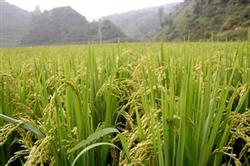
What are the practical measures for increasing rice yields?
Apply "no-deep-tillage" soil conditioner to increase soil permeability, promote rice root growth and development, and improve the rice plant's fertilizer use efficiency, thereby increasing rice yield. On this basis, firmly grasping the following measures also has a huge effect on increasing rice yield. 1. Increase the number of panicles. ① Cultivate strong seedlings. To...
-
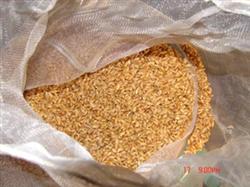
Correct Methods and Operating Steps for Disinfecting Rice Seeds
Rice seedling raising is about to begin, and seed disinfection is the key to raising seedlings. Here are 10 seed disinfection methods. 1. Soak rice seeds in a 500-fold dilution of 50% carbendazim, 50% thiophanate-methyl, or 50% thiram for 48 hours (200 g of the solution mixed evenly with 100 kg of water can soak 60-70 kg of rice seeds), then remove them, sprout them, and sow, ...
-
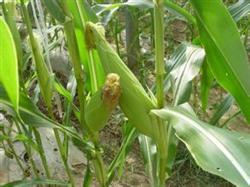
Detailed Explanation of Key Cultivation Techniques for Spring Maize and Late Rice
1. Deep planting of milk-stage seedlings, dry management to promote root growth and preserve seedlings. The techniques of raising seedlings in fertilizer balls and soft trays must be implemented, and the technique of deep planting of milk-stage seedlings must be carried out well. According to research, transplanting milk-stage seedlings has the advantages of early vigor and strong seedlings, strong dry matter accumulation capacity, sturdy plants, well-developed root systems, large and numerous ears with heavy grains, and low empty-stalk rate; its early-maturing and high-yielding growth advantage is 6 days earlier than production cultivation, and the seedling recovery period...
-
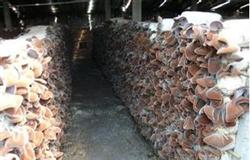
Detailed Explanation of Key Points for Cultivating Yellow-Back Wood Ear Mushroom (Auricularia polytricha) on Rice Straw
1 Rice straw softening treatment. The quality of rice straw treatment is the key to the success or failure of cultivating yellow-back wood ear mushroom and to achieving high yields. Rice straw is a loose material that easily accumulates water but is difficult to shape, and its epidermis in particular has a waxy layer that can hinder mycelial colonization of the substrate. Through experimentation, we have developed 3 methods for softening rice straw...
-
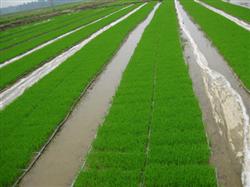
How to fertilize rice seedlings during Awakening of Insects
"Thunder rumbles in spring, and all things grow." Since ancient times, our country has attached great importance to the Awakening of Insects solar term, and many farming activities begin from this point, with the most important farming activity being none other than "sowing seeds and raising seedlings." The Awakening of Insects period marks the season for rice seedling cultivation. As the saying goes, "Good seedlings make half the crop." To achieve high rice yields, the first step is to cultivate enough...
-
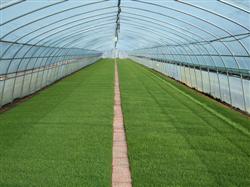
Key Technical Points for Dry Seedbed Raising of Rice Seedlings in Plug Trays under Large and Medium-Sized Plastic Tunnels
(1) Seed selection. Choose varieties of superior quality, high yield, disease resistance and medium-to-upper tillering capacity that tend toward the heavy-panicle type. In the first accumulated temperature zone, represented by Wuchang and Tailai, suitable main varieties include Wuyoudao No. 1, Songjing No. 2, Tengxi 140, Wudao No. 3 and Mudanjiang 19; in the second accumulated temperature zone, represented by Ning'an, Fangzheng, Yanshou, Huachuan and Suihua...
-
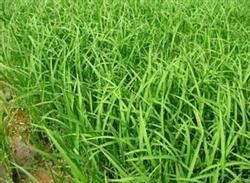
Detailed Explanation and Key Operation Points of Dry Rice Seedling Cultivation
According to surveys in recent years, most rice seedlings are raised in paddy fields; under year-round waterlogged conditions, paddy fields have poor aeration and cold, poorly aerated soil, which is not conducive to raising strong seedlings, and after transplanting the seedlings become stunted and develop late. Dry seedling cultivation is the raising of rice seedlings under dryland conditions; dryland soil is rich in oxygen, and water, air, and nutrients are easily coordinated, which...
-
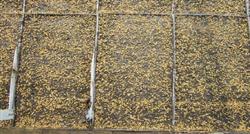
Detailed Explanation of Key Technical Points for Seedling Cultivation in High-Quality Rice Production
During the seedling cultivation period, in response to low-temperature cold wave weather, the Provincial Agricultural Technology General Station recommends the following measures: First, seize the time to sow and reseed. In areas where large-scale sowing has not yet been carried out, it is essential to seize the current favorable opportunity of rising temperatures and sow promptly; where seed rot, seedling rot, or seedling death has occurred, reseeding should be done promptly according to the degree of damage. Especially for machine transplanting...
-
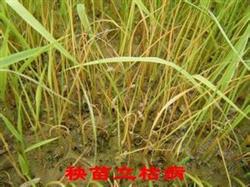
How to prevent and control bacterial wilt and damping-off in rice seedlings at 10 days of raising seedlings?
For bacterial wilt and damping-off, prevention is more important than cure. Only when the rice seedlings are robust are they less likely to become infected, so field management should be strengthened. Pay attention to controlling the seedbed temperature; it should not be too high or too low. In particular, pay attention to the effect of the low temperatures of a late spring cold snap on the rice seedlings, and harden and root-restrict the seedlings at the appropriate time; the humidity during seedling raising should not be too high, as high humidity easily causes various diseases and...
-

Pig prices have risen. Can this rally last?
Summary: The pig market has seen regional price increases, but a large-scale rise is unlikely. Recently, pig prices have seen a rare run of consecutive increases, and looking at today's pig prices, they are still rising across the board. Science Xingnong noticed that pig prices in a certain place in Zhejiang reached...
条件筛选