Detailed Explanation of Key Technical Points for Seedling Cultivation in High-Quality Rice Production
During the seedling cultivation period, in response to low-temperature cold wave weather, the Provincial Agricultural Technology General Station recommends the following measures: First, seize the time to sow and reseed. In areas where large-scale sowing has not yet been carried out, it is essential to seize the current favorable opportunity of rising temperatures and sow promptly; where seed rot, seedling rot, or seedling death has occurred, reseeding should be done promptly according to the degree of damage. Especially for machine transplanting...
 (1) Standards for Strong Seedlings
Seedling age 30-35 days, leaf age 3.5-4.5 leaves, seedling height 12-14 cm, root number 9-10, dry weight of 100 seedlings 3 grams or more.
(2) Preparation Before Seedling Cultivation
1. Selecting the seedbed site: Choose a flat terrain, sheltered from wind and facing the sun, with good drainage, convenient water source, loose and fertile soil, slightly acidic garden land or dry field land without pesticide residues for the seedling nursery. It is best to establish a seedling cultivation base for the nursery field, which should be permanently fixed, fertilized year after year, and weeds eliminated. If it is the first year of converting dry land to paddy, long-residual pesticides must be avoided; otherwise, the seedlings will suffer phytotoxicity or even be destroyed. The specific long-residual pesticides are chlorimuron-ethyl, imazethapyr, fomesafen, atrazine, nicosulfuron, metsulfuron-methyl, chlorsulfuron, simazine, etc.
2. Determining the ratio of seedling field to main field: 1:80-100 is appropriate, that is, each ha of main field requires 125-145 sq m of seedling field.
3. Seedbed specifications: Actively promote large and medium greenhouse seedling cultivation. For large greenhouse seedling cultivation, the bed width is 6-7 m, bed length 40-60 m, greenhouse height 2.2 m, walkway width 30-40 cm; bed surface height 10-12 cm, agricultural film specification is width 10-11 m. For medium greenhouse seedling cultivation, the bed width is 5-6 m, greenhouse height 1.6-1.7 m, bed length 30-50 m, bed surface height 10-12 cm, agricultural film specification is width 8-9 m.
4. Land preparation and bed making. It is recommended to make beds in autumn, apply farmyard manure in autumn. For spring bed making, early spring plowing and harrowing are required, with a tilling depth of 12-15 cm, removing root stubble, breaking up clods, and leveling the bed surface. Avoid compacting the seedbed.
5. Seedbed fertilization, acid adjustment, and disinfection: Wodijia 3.3% Fumei·Metalaxyl powder rice seedling strengthening agent can be used. The application method is as follows:
Nutrient soil preparation: First pour the contents of the small bag (0.75 kg) into the large bag (4.75 kg) and mix thoroughly, then take 120 g of Shengjiao soil phosphorus and potassium activator powder (250 g/bag), mix together into 0.6-0.8 cubic meters (about 600 kg) of sieved dry field soil or mountain soil and stir evenly to make nutrient soil. Especially for plots converted from dry land to paddy with pesticide residues, the soil phosphorus and potassium activator must be used.
(1) Nutrient soil seedling method: Spread about 600 kg of the prepared nutrient soil evenly on a pre-leveled 30 sq m seedbed, with a thickness of about 3 cm, and spread flat.
(2) Isolation layer seedling method: Level the bed surface finely, water thoroughly, lay the isolation material, spread about 600 kg of nutrient soil evenly on the 30 sq m isolation material, with a thickness of about 3 cm, and spread flat.
(3) Tray seedling method: Level the bed surface, water thoroughly, place soft trays or lay flat bottom mats. Pour the contents of the small bag (0.75 kg) into the large bag (4.75 kg) and mix thoroughly, then take 120 g of Shengjiao soil phosphorus and potassium activator powder (250 g/bag), mix together into 350 kg of sieved fine dry field soil or mountain soil and stir evenly to make nutrient soil, spread evenly and flat in 180 seedling trays.
6. Water the seedbed thoroughly: Use a watering can to thoroughly water the seedbed bottom water, so that the water content of the 15 cm deep bed soil reaches saturation.
(3) Variety and Seed Treatment
1. Variety selection: According to the natural climate characteristics of this city, we select medium-early maturing varieties for planting based on local conditions, mainly including Kenjiandao No. 10, Longjing No. 14, Kongyu 131, Sanjiangdao No. 1, etc. Seed purity must be guaranteed at 99%, cleanliness 95%, germination rate above 90%, moisture content not higher than 16%, and 4 kg of seed reserved per mu.
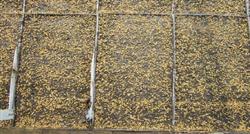
2. Seed sunning: After the seeds are taken out of storage, choose sunny days to sun the seeds for 1-2 days. Pay attention to turning them frequently, 3-4 times per day. Do not expose them directly on concrete ground to avoid causing rice seed cracking.
3. Seed selection: First screen to remove grass seeds and impurities, then use specific gravity liquid for seed selection. Use yellow mud water or salt water with a density of 1.13 for seed selection, that is, 50 kg of water plus 12-12.5 kg of salt. Use a fresh egg to test the density; when the egg exposed above the solution is the size of a five-cent coin, seed selection can begin. Remove the blighted grains, remove the broken-shell grains at the bottom, and wash the selected seeds twice with clean water.
4. Seed soaking and disinfection: Soak the selected seeds with 25% Shibaike 3000-4000 times solution, that is, use 12.5-16.5 mL of Shibaike, add to 50 kg of water, soak 40 kg of seeds, stir 1-2 times per day, maintain water temperature at 10-15°C, soak and disinfect for 5-7 days, until the seeds are thoroughly soaked and crush without a raw core when rubbed by hand.
5. Germination acceleration: Take the soaked seeds, rinse with 35°C water to raise the seed temperature, then cover tightly with warm materials, use 30-32°C high temperature to break the hull; high temperature is strictly prohibited. When about 80% of seeds have broken hull, lower the temperature to 25°C for suitable temperature sprouting. Turn frequently to ensure seeds are heated evenly and sprouts emerge uniformly. When sprouts reach 1 mm, lower the temperature to 15-20°C for low-temperature sprout drying before sowing.
(4) Sowing
1. Sowing period: Sowing can begin when the daily temperature stably passes 5-6°C. The specific time is April 10-20.
2. Sowing rate: For manual broadcasting, sow 250-300 g of sprouted seeds per sq m (5-6 liang); for tray seedling cultivation, sow about 90-100 g of dry seeds per tray, that is, 110-120 g (2.2-2.4 liang) of sprouted seeds.
3. Preventing underground pests: Use phorate granules for fumigation, with about 8 kg per greenhouse.
4. Sowing method: Manual broadcasting or mechanical sowing. Sowing should be uniform and consistent. For uneven areas, a chicken feather broom can be used to sweep the seeds to achieve uniformity. After sowing, press the seeds with a wooden board or roll with a small roller wrapped in plastic (11340, -15.00, -0.13%) so that the seeds are embedded on three sides.
5. Soil covering: Cover with sieved fertile fine soil free of grass seeds to a thickness of 0.5-1 cm, covering the seeds completely.
6. Closed weed control: First, use Wuchang-produced 1.15% Ding·Puo powder (seedbed herbicide) 250 g (one bag), mix with fine soil 3-5 kg, broadcast on 20 sq m of seedbed for closed weed control. To broadcast evenly, first broadcast 70%, then use 30% to even out. Second, use 40% Ding·Puo emulsifiable concentrate (Chuangjingfeng) at 40-50 mL/100 sq m (one 20 mL vial sprays 40-50 sq m), add to 50 kg of water, spray after soil covering. Third, use 90% thiobencarb emulsifiable concentrate for weed control. In rice seedbeds mainly infested with barnyardgrass, it can be used alone at a dose of 30 mL/100 sq m, add to 50 kg of water, spray after soil covering; in seedbeds with mixed barnyardgrass and broadleaf weeds, thiobencarb should be mixed with prometryn. The dose and method are: per 100 sq m use 90% thiobencarb 30 mL + 40% prometryn 10 g, add to 50 kg of water, spray after soil covering.
7. Laying plastic film flat: After sowing, lay plastic film flat on the bed surface for insulation, and remove immediately after seedlings emerge.
8. Erecting frames and covering with film: After covering large and medium greenhouses with film, tie ropes over the film to press it tight, and seal the surroundings with soil. Set up windbreak net belts and windbreak barriers.
(5) Seedling Field Management
1. Temperature management: Keep sealed for insulation from sowing to emergence. From emergence to 1 leaf 1 heart stage, the temperature inside the greenhouse must not exceed 28°C; begin ventilation and hardening. From 1.5 leaves to 2.5 leaves stage, greenhouse temperature should be controlled at 20-25°C, gradually increasing ventilation volume, strictly preventing high-temperature seedling burn and excessive seedling growth. From 2.5 leaves to 3 leaves stage, greenhouse temperature should be controlled below 20°C, gradually achieving uncovering during day and covering at night. Remove all film before transplanting, harden for more than 3 days. In case of low temperature, add covering materials and keep warm promptly.
2. Water management: In principle, do not water before the 2-leaf stage of seedlings; keep the soil moist. When there are no water droplets on leaf tips in the morning, or seedlings wilt at noon, or the bed surface cracks, water promptly. If there is standing water on the bed surface, dry the bed promptly. After the 2-leaf stage, if the bed soil is dry, remove the film and water. Water in the morning or evening, water thoroughly each time, and reduce watering frequency. After removing the film, appropriately increase watering frequency, but do not flood the bed. Watering time should be in the morning or evening, watering thoroughly each time.
3. Weed control in seedbed: For seedbeds without closed weed control, for barnyardgrass at the 1.5-leaf stage, use propanil for weed control, using 16% propanil emulsifiable concentrate 1.5 mL per sq m, add water to 30 times dilution, spray after dew disappears, and cover with film immediately after spraying.
4. Preventing damping-off disease: At the 1.5-leaf stage of seedlings, use Junduqing water agent 100 mL diluted with water to spray 200 sq m of seedbed, or use 2 mL of Yizailing per sq m, dilute 1000 times solution to spray seedlings, or use 3.2% Kukuxing 15 g diluted with 2.5-3 kg of water to spray seedlings.
5. Seedbed topdressing: From 2.5 leaves to 3 leaves stage, it is the weaning period. Seedling resistance weakens, and they easily turn yellow from hunger. Use Lede 2 g per sq m of seedbed, add to 50-60 g of water, spray evenly; the effect is very good. For plots where the main field is converted from dry land to paddy that year, spray Lede once more 3-5 days before transplanting. A chemical fertilizer topdressing can also be combined with watering: use urea 1.5-2 g per sq m of seedbed, zinc sulfate 0.25 g, dilute 100 times solution, foliar spray, and rinse seedlings with clean water promptly after spraying. Or ammonium sulfate 25 g, add to 2.5 kg of water, foliar spray, and rinse seedlings with clean water after topdressing. For soil-transplanted seedlings, 1 day before lifting seedlings, after dew disappears, apply diammonium phosphate 100 g per sq m, add to 80-100 times dilution, spray, and rinse seedlings with clean water after topdressing.
6. Preventing leafminer: 1-2 days before transplanting, use 5% fipronil emulsifiable concentrate 40-42 mL per 100 sq m, that is, each 100 mL bottle sprays 240 sq m, the seedlings for two ha of land.
7. Lifting seedlings: It is recommended to use a flat shovel to lift seedlings from the isolation layer. The soil thickness on seedling roots should be 2 cm, and absolutely must not be less than 2 cm. Transplant immediately after lifting; do not transplant overnight seedlings.