How to fertilize rice seedlings during Awakening of Insects
"Thunder rumbles in spring, and all things grow." Since ancient times, our country has attached great importance to the Awakening of Insects solar term, and many farming activities begin from this point, with the most important farming activity being none other than "sowing seeds and raising seedlings." The Awakening of Insects period marks the season for rice seedling cultivation. As the saying goes, "Good seedlings make half the crop." To achieve high rice yields, the first step is to cultivate enough...
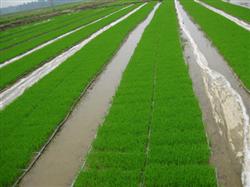
"Thunder rumbles in spring, and all things grow." Since ancient times, our country has attached great importance to the Awakening of Insects solar term, and many farming activities begin from this point, with the most important farming activity being none other than "sowing seeds and raising seedlings." The Awakening of Insects period marks the season for rice seedling cultivation. As the saying goes, "Good seedlings make half the crop." To achieve high rice yields, the first step is to cultivate a sufficient number of strong seedlings, and fertilizing the seedling bed is an important measure for cultivating strong seedlings.
The purpose of fertilizer management in rice seedling beds is to cultivate strong seedlings. The basic characteristics of strong rice seedlings are: sturdy and upright seedlings with erect leaves, fresh green leaf color, a "flat gourd" shape at the base, a well-developed root system with many white roots, and tillers. Given that early and middle rice have a relatively short seedling age period, low temperatures during seedling cultivation, and slow rates of soil nutrient release and fertilizer decomposition, fertilization should emphasize the application of thoroughly decomposed, high-quality farmyard manure, supplemented with an appropriate amount of chemical fertilizer as base fertilizer for the seedling bed. In terms of chemical fertilizer application principles, nitrogen fertilizer should be controlled. For seedling beds with higher soil fertility, less nitrogen fertilizer should be applied, and the amounts of phosphorus and potassium fertilizers should be appropriately increased, that is, using a compound fertilizer with low nitrogen, high phosphorus, and medium potassium for seedling cultivation. Never use a high-nitrogen compound fertilizer for raising seedlings. Emphasize the application of phosphorus fertilizer (such as 30-40 kg of superphosphate or calcium magnesium phosphate per mu) and potassium fertilizer (10 kg of potassium chloride per mu). On high-fertility soil, no nitrogen needs to be applied as base fertilizer for the seedling bed; on soil of average fertility, apply a small amount of nitrogen fertilizer, controlled at about 3 kg per mu. This can reduce the possibility of seedling rot in rice seedling beds and help cultivate strong seedlings. In seedling beds deficient in zinc, mix 1 kg of zinc sulfate with organic fertilizer per mu and apply it as a surface fertilizer for the seedling bed. When using zinc fertilizer, be sure to apply it evenly. In the later stage of the seedling bed, that is, 3-4 days before pulling up the seedlings, nitrogen fertilizer may be applied as appropriate as a starting fertilizer, which people call "send-off fertilizer."
For late rice seedling bed fertilization, because both air temperature and mud temperature are relatively high, to prevent excessive seedling growth, late rice seedling beds are more suitable for farmyard manure with a mild and lasting fertilizer effect. At the same time, the amount of phosphorus fertilizer applied is slightly less than for early and middle rice seedling beds, with 25-30 kg of superphosphate or 25-30 kg of calcium magnesium phosphate applied as base fertilizer per mu. Potassium fertilizer is very important for late rice seedling cultivation. Applying potassium fertilizer can prevent seedling sesame leaf spot, brown spot disease, and so on. For late rice seedling beds, applying 8-10 kg of potassium chloride per mu as surface fertilizer is appropriate. Nitrogen fertilizer application requires even more attention; apply little or no nitrogen fertilizer to help control seedling growth. 4-5 days before transplanting, apply 2-3 kg of urea or 8-10 kg of ammonium bicarbonate per mu as a top dressing to ensure good development of new roots after transplanting and to accelerate the greening of the rice seedlings.