-
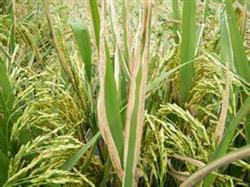
Detailed Explanation of the Causes and Control Techniques of Rice Bacterial Leaf Blight
The pathogen of rice bacterial leaf blight is Xanthomonas oryzae, a bacterium belonging to the genus Xanthomonas. Bacterial leaf blight is one of the major diseases of rice. Once it occurs, it generally reduces yield by 10%, and in severe cases by 50-60%. Therefore, strengthening the control of bacterial leaf blight is very important. 1. Causes of the disease 1.1 Relationship between disease occurrence and climatic conditions...
-
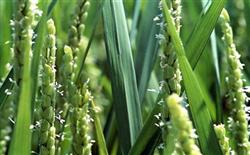
What to do when rice has difficulty heading? Spraying gibberellin can alleviate it
When rice has difficulty heading, or shows the "neck-enclosed" phenomenon, the grains enclosed in the leaf sheath cannot emerge in time for pollination and fertilization, and generally become empty or blighted grains, greatly affecting yield. There are many causes of this phenomenon: in some cases the variety itself is more prone to the neck-enclosed phenomenon, and it becomes more severe under adverse environmental conditions; in others...
-
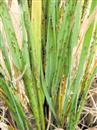
Occurrence Characteristics of Rice Planthoppers and Control Strategies
Baohe Township is located in the southwest of Jing County and belongs to a hilly area. The township has 9144 mu of cultivated land, including 7813 mu of paddy fields, and is a typical mountainous agricultural township. Rice planthoppers are a frequent pest that seriously damages rice in our township and cause losses of varying degrees every year. Especially in the past 2 years, due to the influence of a series of factors such as climate, rice production...
-
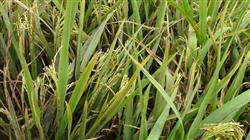
Occurrence of Rice Blast and Rice Planthopper and Their Control Methods
I. OccurrenceRice blast: Rice leaf blast has now appeared in Helan, Qingtongxia and other places. The first appearance date was June 13, about 10 days earlier than last year. Especially after the rainfall on July 7 and 12, the field humidity was relatively high, which was very favorable for the development of leaf blast. A recent general survey in Qingtongxia showed an average diseased field rate of 16.7%, a diseased plant rate of 2.2%, and a diseased leaf rate of 0.68%. In Helan, it occurred sporadically in some drill-seeded fields. Ear-neck blast will appear at the end of July and the beginning of August. The meteorological forecast shows that in August the temperature across the region will be relatively high and precipitation in the irrigation area will be relatively low, which is unfavorable for the occurrence and development of ear-neck blast. It is expected that ear-neck blast will generally occur at a mild-to-moderate level, with moderate to severe occurrence in fields where large areas of susceptible varieties are planted in some localities. Even so, all rice-growing counties still must not take it lightly and should strengthen monitoring. For fields with disease centers, farmers should immediately be organized to spray pesticides to block the disease centers and control the spread of fungal spores. In mid- and late July, general control should be carried out in fields where leaf blast has already occurred and in fields with high density and vigorous growth, to control the development of leaf blast and prevent the occurrence of ear blast. In early and mid-August, fields where ear-neck blast has already occurred should be sprayed promptly to control the spread of the disease. Rice planthopper: A survey in Wuzhong on July 10 found a 42% insect-hole rate; in 50 sweep-net passes, there were 32 adult brown-backed planthoppers, 10 white-backed planthoppers, 37 long-winged forms, and 5 short-winged forms. There were 60 white-backed planthopper nymphs and 151 brown-backed planthopper nymphs. A survey in Qingtongxia on July 10 found 24 insects per 100 hills.
-

Authentic Yangcheng Lake hairy crabs: nearly 10,000 sold in 1 hour before the lake opens, prices about to rise
"When the autumn wind blows, crab legs itch." When the autumn air is crisp and cool, it is exactly the season when Yangcheng Lake is fragrant with osmanthus and fat with crabs. Eating Yangcheng Lake hairy crabs follows the saying "ninth-month females, tenth-month males": in the ninth month the female crabs are at their best, and in the tenth month the male crabs are at their freshest. Su Dongpo said: "Not eating crab betrays...
-
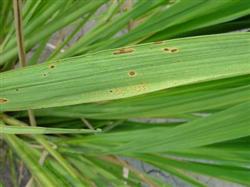
Symptom Identification and Control Methods of Rice Blast Leaf Spot on Water Bamboo
Rice blast leaf spot is a major disease of water bamboo, widely distributed and commonly occurring, found in all water bamboo growing areas, with more severe incidence in summer and autumn, diseased plants often reaching 80%-100%, significantly affecting water bamboo production. [Symptoms] This disease mainly affects the leaves. The lesions initially appear as small brown necrotic spots, which later develop into nearly oval to spindle-shaped...
-

New Taipei City Shulin Red Yeast Rice Culture Festival Brings New Options to Seafood Platters
The New Taipei City Shulin Red Yeast Rice Culture Festival has entered its 12th edition since it was first held in 2007. A promotional press conference was held yesterday, officially kicking off this year's event. The adorable mascot Red Yeast Rice Baby joined the Shulin District Director in introducing the event schedule...
-

What is the current price of garlic? Is it a good time to buy and store garlic?
Summary: Is now a good time to buy garlic for storage? Looking at current garlic prices, they have been rising gradually over the past few days, and have now reached 1.19 yuan per jin. Judging from the trend over the past two months, the overall price has also been on an upward trend, so...
-
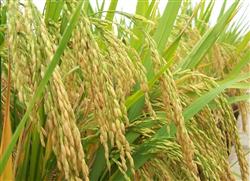
High-Yield Cultivation Techniques for Single-Season Direct-Seeded Rice
Single-season late rice under direct seeding has the advantages of easing seasonal conflicts, reducing labor intensity, and saving labor, cost, seed, and seedling beds, with yields generally above 500 kg, and is deeply welcomed by farmers. Based on several years of planting experience, the techniques are summarized as follows: 1. Select and breed excellent varieties, prepare the field leveling well, improve sowing quality, and strive...
-
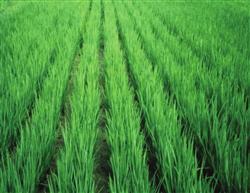
Zinc supplementation for rice boosts disease resistance and high yields, making rice plants healthier
When rice enters the jointing and panicle elongation stage, it is an important period of transition from vegetative growth to reproductive growth, and also a critical period that determines yield. Doing a good job of field management in the middle and late stages of rice is crucial for ensuring sufficient panicles, developing large panicles, shaping a high-yield plant type, and building a good framework for a bumper harvest. I. Seedling characteristics According to a survey on July 21...
条件筛选