Key Technical Points for Dry Seedbed Raising of Rice Seedlings in Plug Trays under Large and Medium-Sized Plastic Tunnels
(1) Seed selection. Choose varieties of superior quality, high yield, disease resistance and medium-to-upper tillering capacity that tend toward the heavy-panicle type. In the first accumulated temperature zone, represented by Wuchang and Tailai, suitable main varieties include Wuyoudao No. 1, Songjing No. 2, Tengxi 140, Wudao No. 3 and Mudanjiang 19; in the second accumulated temperature zone, represented by Ning'an, Fangzheng, Yanshou, Huachuan and Suihua...
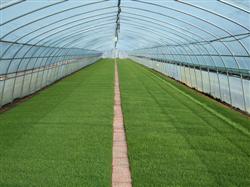
(1) Seed selection. Choose varieties of superior quality, high yield, disease resistance and medium-to-upper tillering capacity that tend toward the heavy-panicle type. In the first accumulated temperature zone, represented by Wuchang and Tailai, suitable main varieties include Wuyoudao No. 1, Songjing No. 2, Tengxi 140, Wudao No. 3 and Mudanjiang 19; in the second accumulated temperature zone, represented by Ning'an, Fangzheng, Yanshou, Huachuan and Suihua, suitable main varieties include Kendao No. 8, Tongxi 112, Fujiguang, Hejiang 19, Suijing No. 4 and Longjing No. 10; in the third accumulated temperature zone, represented by Mulan and other places, suitable main varieties include Kongyu 131, Suijing No. 3, Longjing No. 8 and Shangyu 397.
(2) Seedbed preparation. When the soil inside the tunnel has thawed to a depth of more than 10 cm, begin plowing the land to make the seedling bed. Before plowing, apply thoroughly decomposed farmyard manure evenly; the soil should be fine and free of large clods, and roots and debris should be raked out of the soil. Leave a walkway in the middle of the tunnel, and make rectangular seedling beds on both sides of the walkway. Build a small ridge 5 cm high around the seedling bed (flat bed). If plug trays are used for raising seedlings, when preparing the seedling bed, make sure the effective width of the bed matches the combined width of the arranged trays so as not to waste bed space.
(3) Preparing nutrient soil. Mix fertile upland soil and decomposed pig manure in a 7:3 ratio and compost the mixture, or mix upland soil, decomposed peat and pig manure in a 4:4:2 ratio and compost it; before sowing, screen through a 6-8 mesh sieve, then add seedling-strengthening agent and mix thoroughly before use. Use 20 kg of bed soil per square meter, evenly mixed into the 3 cm plow layer of the bed soil; for plug tray seedling raising; for example, with 561-cell plug trays, about 400 trays are used per hectare of paddy field (depending on differences in seedling survival rate and transplanting density), and each tray uses about 2 kg of nutrient soil.
(4) Seed treatment. Before sowing, sun the seeds for 3 days, select seeds with saltwater or yellow mud water of specific gravity 1.1-1.3, remove the blighted grains, rinse, then soak and disinfect the seeds with Shibaoke (water temperature 15-16°C, soaking for 5-7 days); after soaking, break the hull at 30-32°C, and when about 80% of the seeds have broken hull, lower the temperature to 25°C for germination. When the sprouts grow to 1-2 mm, lower the temperature to 15-20°C to air the sprouts and await sowing.
(5) Sowing. Before sowing, water the bed soil thoroughly to the bottom; the bottom of each plug cell must be in close contact with the bed surface with no gaps. Sow 2-3 germinated seeds per cell, using a drawer-type seeder or by hand. For manual sowing, first fill two-thirds of each plug cell with nutrient soil, scrape off excess nutrient soil, water lightly with a fine-spout watering can, and after the nutrient soil settles, sow by hand, sweep any seeds that did not enter the cells into the cells, adjust them evenly, cover with 0.5 cm of soil, and finally close the bed to kill weeds and cover with plastic film.
(6) Seedling bed management. First, prevent excessively high temperatures inside the tunnel from producing weak seedlings; second, prevent low temperature and water shortage from producing small old seedlings; third, prevent severe temperature fluctuations from causing damping-off and dead seedlings. The seedling age is generally 35-40 days, producing large seedlings with an average of 4.5 leaves and one tiller. Seedlings at different growth stages require different suitable temperatures; from sowing to emergence the temperature is relatively low, and large and medium-sized tunnels should mainly be kept sealed for warmth; if "capping" occurs at emergence, promptly break up the lifted covering soil, water lightly, and cover again with soil. After the seedlings emerge evenly, remove the plastic film. At the one-leaf-one-heart stage, control the temperature at about 25°C and plant height at 4.5-5.5 cm; at the two-leaf-one-heart stage, control the temperature at 20-25°C and plant height at 7.5-8.5 cm; at the three-leaf-one-heart stage, control the temperature at 20°C and seedling height at 12.5-13.5 cm. For water management, supply water when lacking, especially after the 2.5-leaf stage; because plug tray seedlings have poor drought resistance, attention should be paid to watering. When dew on the leaf tips decreases in the morning or leaves curl at noon, water promptly in the morning or evening to prevent the seedlings from being scorched to death by high temperatures; water slowly back and forth with a spray, not by flooding. Begin ventilating to harden the seedlings at the one-leaf-one-heart stage, promoting root growth and controlling top growth. Generally, start ventilation at 9-10 a.m. on sunny days and close the film at 14-15 p.m. to keep warm; ventilation time and volume should be based on temperature, and when the temperature is low, reduce ventilation time and volume. Note that the ventilation opening should first be on the leeward side; each time you ventilate, open the vent slowly and gradually increase ventilation. When temperatures are high in the later stage of seedling raising, ventilate from both sides at the same time; 3-5 days before transplanting, ventilate day and night or remove the tunnel film. Disease prevention should focus mainly on rice blast and damping-off; at the 1.5-2.5 leaf stage of the seedlings, spray Yizailing, Ekuling or Bingkujing to prevent rice blast and damping-off, or, together with watering, spray acidified water with a pH of 4 1-3 times to control damping-off, and rinse with clean water after spraying. After the 3-leaf stage, if leaves generally lose green and turn yellow due to fertilizer deficiency, use 2-3 kg of monopotassium phosphate or ammonium sulfate per 100 square meters of seedling bed, mix with 200-300 kg of water to make a 100-fold solution and spray on the leaves; after fertilizing, water with clean water to prevent burning the seedlings.