High-Yield Cultivation Techniques for Single-Season Direct-Seeded Rice
Single-season late rice under direct seeding has the advantages of easing seasonal conflicts, reducing labor intensity, and saving labor, cost, seed, and seedling beds, with yields generally above 500 kg, and is deeply welcomed by farmers. Based on several years of planting experience, the techniques are summarized as follows: 1. Select and breed excellent varieties, prepare the field leveling well, improve sowing quality, and strive...
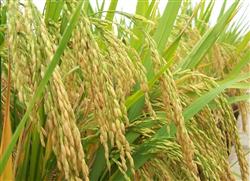
Single-season late rice under direct seeding has the advantages of easing seasonal conflicts, reducing labor intensity, and saving labor, cost, seed, and seedling beds, with yields generally above 500 kg, and is deeply welcomed by farmers. Based on several years of planting experience, the techniques are summarized as follows:
1. Select and breed excellent varieties, prepare the field leveling well, improve sowing quality, and strive for full seedling establishment.
Choose high-yield varieties that are short-stalked, fertilizer-tolerant, lodging-resistant, and have strong rooting ability. Based on years of trials and large-scale demonstrations, single-season late rice under direct seeding generally uses high-quality, high-yield varieties such as Xiushui 11, Bing 98-110, and Bing 97-59.
To ensure full and uniform seedling establishment in direct-seeded rice, it is very important to carry out field preparation and sowing quality well. In field preparation quality, achieve the "four requirements": First, plow early; after harvesting the previous crop, plow promptly while applying base fertilizer. Plowing should not be too deep, and rotary tillage is generally preferred. Second, apply sufficient basal and surface fertilizer. Generally, before sowing, apply 15 dan of organic fertilizer per mu, or return 200-250 kg of straw to the field, with 12-13 kg of urea, 20 kg of superphosphate, and 7.5 kg of potassium chloride as basal and surface fertilizer. Third, the field surface must be level; when preparing the field, focus on the word "level," ensuring the height difference across the entire field does not exceed one cun. Fourth, ditches and channels must be complete; open horizontal ditches, vertical ditches, and surrounding ditches well, strictly prevent water accumulation on the field surface, with a bed width of 2-3 m, which may also be appropriately widened, as long as it does not affect sowing and field management.
In sowing quality, adhere to the "six requirements": First, before sowing, persist in sunning and selecting seed, choose plump seeds free of pests and diseases, and soak them with 2 mL of 80% "402" or 10% seed-soaking spirit mixed with 5 kg of water for 48-60 hours, then clean and germinate. Second, persist in sowing after germination; seed germination must be moderate. Too short a germination period increases the time for sprouting and seedling establishment in the field and makes them susceptible to adverse weather conditions, while too long a germination period easily causes damage to and detachment of young sprouts and young roots during sowing. Generally, germination until the white tip shows or the sprout reaches half a grain in length is appropriate. Third, persist in rational seeding rate. First conduct a germination test; under the condition of reaching a germination rate above 90%, the sowing rate per mu is about 3.5 kg. If adverse weather conditions occur or the seed germination rate is low, appropriately increase the sowing rate to ensure 85,000-100,000 basic seedlings. Fourth, sow every other day. To prevent the field surface from being too soft, the soil too muddy, and sowing too deep, it is advisable to sow the next day after plowing and making beds. Based on the actual conditions of our district and year-round climate, single-season late rice under direct seeding is generally suitable in late May, and no later than June 20, to avoid excessive rain later that may submerge seedlings and cause seedling rot. Fifth, persist in uniform sowing; require taking a scale to the field and sow a fixed quantity per bed. Sowing methods generally use broadcast direct seeding or drilling. If mechanical sowing is used, drilling or hill sowing may be adopted. After sowing, press the seeds into the soil heavily, requiring no exposed grains. Persist in contiguous planting to prevent rat damage, and sow some reserve seedlings at the field edge so that when missing seedlings occur, they can be replanted promptly to ensure full seedling establishment.
2. Manage field management well, cultivate strong seedlings, promote early development, and ensure increased yield and income
1. Early-stage management (sowing to three-leaf stage). Main cultivation goals: full seedlings, uniform seedlings, strong seedlings.
(1) Apply seedling fertilizer early. When the seedlings reach the two-leaf-one-heart stage, apply seedling fertilizer promptly, generally 5-7 kg of urea per mu, to promote early tillering and large tillers in rice seedlings.
(2) Moist emergence. After sowing, use furrow irrigation to keep moist for emergence; after turning green, irrigate moistly. On sunny days, prevent the field surface from cracking; on rainy days, drain ditch water. During this period, mainly use running-horse water irrigation.
(3) Chemical weeding. Choose pre-emergence herbicides with a broad weed-killing spectrum and safety to rice, such as Zhibojing and Longsha, for closed treatment, which can effectively control the germination of barnyardgrass, sedges, and other annual weeds (for details, see the Safe Pesticide Application Operating Procedures for Major Diseases and Pests of Single-Season Rice in Yuhang District).
(4) Check seedlings and replant rice promptly. When missing seedlings occur in direct-seeded rice fields, replant promptly. Methods: first, thin where dense to fill where sparse; second, use reserve seedlings to fill gaps, ensuring full seedling establishment.
2. Mid-stage management (three-leaf stage to heading). Main cultivation goals: promote early development, strive for sufficient panicles, strong individuals, and a stable population.
(1) Apply fertilizer appropriately. At the four-leaf-one-heart stage, apply 10 kg of urea as tillering fertilizer, and afterward, according to seedling conditions and weather, apply about 5 kg of urea as panicle fertilizer.
(2) Shallow-water tillering, multiple light dryings. After the three-leaf stage, establish a shallow water layer to promote tillering. When the peak tillering stage reaches the predetermined seedling number of 220,000-250,000, drain and dry the field promptly. Because direct-seeded rice has a shallow root distribution, it is advisable to dry lightly multiple times to help roots penetrate deeper, lower the peak seedling number, coordinate individual and population conflicts, and achieve the goals of strong individuals and a stable population. Heavy drying will break roots, affect later grain filling and seed setting, and easily cause lodging.
(3) Mid-stage weeding. If barnyardgrass and broadleaf weeds cause serious damage, use 20-30 g of 50% quinclorac plus 20-24 g of 10% bensulfuron-methyl per mu, mixed with 3 backpack loads of water for uniform spraying (avoid application under blazing sun).
(4) Use flower-promoting and flower-preserving fertilizer well: apply flower-promoting fertilizer at the early stage of young panicle differentiation, generally 10-12 kg of urea per mu, to promote spikelet differentiation. Apply flower-preserving fertilizer when the flag leaf tip emerges, 7-8 kg of urea per mu, to reduce spikelet degeneration.
(5) Disease and pest control. Direct-seeded rice seedlings are relatively tender and the population is relatively large, making them susceptible to disease and pest damage. In the early stage, mainly control rice thrips; in the mid-to-late stage, pay attention to controlling rice leaf roller, striped stem borer, rice planthopper, sheath blight, and false smut (see operating procedures for details).
3. Late-stage management (heading to harvest). Main cultivation goals: green stalks and yellow ripening, clean appearance, no lodging, no premature senescence.
(1) Intermittent irrigation, alternating dry and wet, mainly wet; later water should not meet earlier water. Never cut off water too early, so as to maintain and prolong root activity, achieve the goals of nourishing roots, preserving leaves, increasing grain weight, and preventing lodging.
(2) Apply grain fertilizer appropriately. According to the appearance and growth vigor of direct-seeded rice, combined with disease and pest control, generally apply 3 kg of urea per mu.
(3) Harvest at the right time. Harvest promptly when maturity reaches above 90%, preventing cutting while still green.
In addition, during field management operations such as fertilizing and spraying, walk in the ditches and try to avoid walking on the bed surface, to prevent and reduce lodging in the later stage.