-
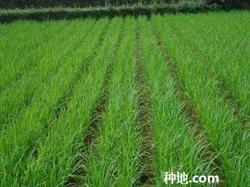
What are the benefits of applying silicon fertilizer to rice? Explained clearly in one article
What are the benefits of applying silicon fertilizer to rice? Please introduce. Rice is a typical silicon-accumulating and silicon-loving crop, with a relatively high demand for silicon, close to that for nitrogen, phosphorus and potassium, ranking fourth. The results of trials and applied research show that silicon plays a considerable role in rice growth. 1. Applying silicon to rice can enhance the rice's resistance...
-
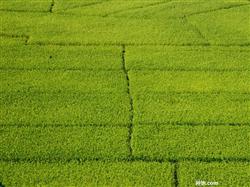
Correct Methods and Technical Key Points for Rice Field Drying
How to balance fertilization in rice? Please advise. Balanced fertilization technology for rice is a scientific fertilization method that involves understanding soil fertility status through soil testing, and based on information such as the crop's nutrient requirements, implementing rational fertilizer ratios and application to promote high yield, high quality, and high efficiency in crops. It includes combining organic fertilizer with chemical fertilizer, nitrogen fertilizer...
-
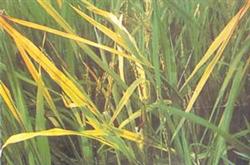
Detailed Guide to Identifying Rice Yellow Leaf Disease Symptoms
How do you identify rice yellow leaf disease? Please note that rice yellow leaf disease can be identified by the following methods: 1 Bacterial leaf blight yellowing. It spreads from bottom to top, and diseased leaves turn yellow to blighted white. After infection, dark green spots first appear at the leaf tip or leaf margin, then become yellow elongated lesions. The boundary between diseased and healthy tissue is distinct, like a wave pattern...
-
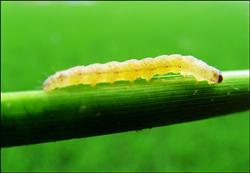
What are the control methods for the rice stem borer (Chilo suppressalis)?
How to control the rice stem borer (Chilo suppressalis) in rice? Please advise. The rice stem borer is one of the main pests on rice in our county. Its larvae mainly bore into the stems and cause dead hearts; when they attack during the booting and heading stages of rice, they form half-blighted panicles, dead booting panicles and white heads, seriously affecting rice yield. In our county, the control of the first generation of the rice stem borer was very uneven this year...
-

How to sprout rice seeds well? Mastering the correct method is key
How to sprout rice seeds well? Introducing a new method for sprouting rice seeds can solve this problem. The main advantages of this method are: first, it can increase the sprouting rate to above 95%, with strong sprouts and short roots, and it is safe and reliable; second, it shortens the seed soaking and sprouting time. From soaking to standard sprouts, it generally takes only about 48 hours,...
-
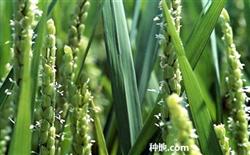
What is the correct application method for rice flower-promoting fertilizer?
How should rice flower-promoting fertilizer be applied? Please guide. Rice flower-promoting fertilizer and flower-preserving fertilizer are collectively called ear fertilizer. Flower-promoting fertilizer is generally applied from the 4th leaf from the top to the 3rd leaf from the top stage of rice. The 4th leaf from the top to the 3rd leaf from the top stage is a reverse leaf age stage. For early-maturing late japonica rice, it is generally applied when the first internode has reached its final length and the second internode is elongating. Flower-promoting fertilizer should be applied according to the seedlings. High-yield fields generally do not apply flower-promoting fertilizer. Only fields with small population growth and obvious yellowing at the early stage of jointing and ear elongation should be topdressed with an appropriate amount. Fields with little base fertilizer, a small population, and obviously faded leaf color should be applied early; fields with sufficient base fertilizer, a large population, and no yellowing of leaf color should be applied less or not at all.
-
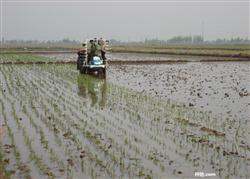
How to transplant rice seedlings properly? A detailed explanation of the key technical points
How to transplant rice seedlings well? Please guide: according to climate characteristics, the following work should be done well in rice transplanting techniques: 1. Transplant early at the right time, speed up progress, and expand the transplanting area. When the daily average temperature steadily passes 13°C and the field water temperature reaches 18°C, transplanting can begin. This year transplanting started on May 8 and [ended] before May 28...
-
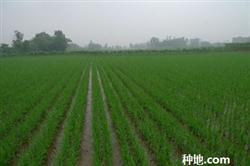
How to judge the growth of rice seedlings after transplanting
How do you know the condition of rice seedlings after transplanting? Here is an introduction to how the condition of rice seedlings can be checked from the following points: 1. Leaf diagnosis. Rice leaves that are on the darker side of green indicate rich nutrition and high nitrogen content, and uniform leaf color with leaves that can stand upright is a sign of healthy seedlings. Otherwise, apply topdressing to make the seedlings vigorous. 2. Root diagnosis. Rice...
-
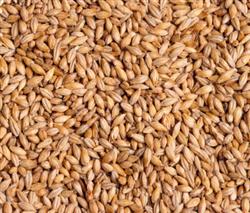
How should rice seedling stunting be prevented and controlled?
How can the quality of rice seeds be identified? Please guide. To identify the quality of rice seeds, you can refer to the following methods: Check the uniformity. Seeds mixed with other rice grains have irregular grain shapes and different degrees of grain plumpness. Check the glume color. The grain color of good seeds should be relatively consistent and the color relatively fresh...
-
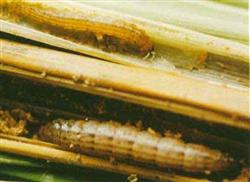
How to control rice stem borers? Practical methods and techniques explained
How to control rice stem borers? Please advise. Rice stem borers are commonly known as dead-heart borers, among which the most widespread and serious are the striped stem borer and the yellow stem borer, along with the rice skipper and the greater rice stem borer. The striped stem borer damages not only rice but also gramineous crops such as corn and wheat, while the yellow stem borer is a monophagous pest that attacks only rice. For...
条件筛选