Correct Methods and Technical Key Points for Rice Field Drying
How to balance fertilization in rice? Please advise. Balanced fertilization technology for rice is a scientific fertilization method that involves understanding soil fertility status through soil testing, and based on information such as the crop's nutrient requirements, implementing rational fertilizer ratios and application to promote high yield, high quality, and high efficiency in crops. It includes combining organic fertilizer with chemical fertilizer, nitrogen fertilizer...
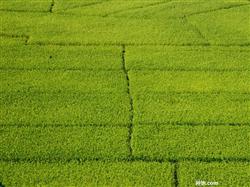 How is field drying carried out in rice? Please explain.
Regarding the timing of field drying in rice, the principle of "when seedlings are ready, do not wait for the time; when the time comes, do not wait for the seedlings" should be adhered to. The so-called "when seedlings are ready, do not wait for the time" means that once sufficient seedlings are reached (generally 200,000 to 250,000 total tillers per mu), field drying should begin, without waiting for rice growth and development to reach a certain stage. Because hybrid rice has strong tillering ability and can still continue to tiller when field drying first begins, the field drying time should be appropriately advanced, starting when the total tiller number reaches 80% of the planned seedling number. The so-called "when the time comes, do not wait for the seedlings" means that once rice enters the late tillering stage to the early young panicle differentiation stage, even if the total tiller number per mu has not yet reached the predetermined target, drainage and field drying should be carried out promptly. Otherwise, if the opportunity is missed, rice sensitivity to water increases, and it becomes unsuitable to cut off water for field drying.
Regarding the degree of field drying, it should be flexibly controlled by observing the field, the seedlings, and the weather. Generally, fertile fields with dark green leaves and vigorous growth, as well as low-lying cold-waterlogged muddy fields, should be dried heavily; lean fields with blue-green leaves, average growth, and little fertilizer application, as well as dry fields where irrigation is difficult, should be dried lightly; for sandy fields with poor water retention, clayey fields where the soil tends to harden after drying and is difficult to soften after re-watering, and "rain-fed fields" lacking irrigation conditions, field drying is not suitable. The field drying time is generally controlled at 5-7 days, and it is appropriate to dry until chicken-claw cracks appear on the field surface, the seedling leaf color turns lighter, the leaves stand upright like swords, one can stand in the field without sinking, new roots appear on the field surface, and old roots grow downward. After field drying, re-water promptly, and at the same time, according to seedling conditions and growth, apply 2-3 kg of urea per mu as topdressing, and do not cut off water again until before heading, to promote booting and stem elongation in rice.
Click to access massive rice cultivation techniques
Click to access massive grain cultivation techniques