How to transplant rice seedlings properly? A detailed explanation of the key technical points
How to transplant rice seedlings well? Please guide: according to climate characteristics, the following work should be done well in rice transplanting techniques: 1. Transplant early at the right time, speed up progress, and expand the transplanting area. When the daily average temperature steadily passes 13°C and the field water temperature reaches 18°C, transplanting can begin. This year transplanting started on May 8 and [ended] before May 28...
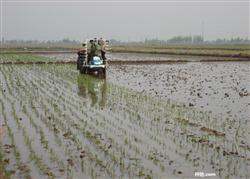
How to transplant rice seedlings well? Please guide
According to climate characteristics, the following work should be done well in rice transplanting techniques:
1. Transplant early at the right time, speed up progress, and expand the transplanting area. When the daily average temperature steadily passes 13°C and the field water temperature reaches 18°C, transplanting can begin. This year transplanting started on May 8 and ended before May 28. If a cold wave strikes during the transplanting period, transplanting should be stopped and resumed after the cold wave passes. Attention should be paid to water layer management to prevent cold damage at the seedling stage.
2. Wide rows, small hills, sparse planting, and improved transplanting quality. The row-to-hill spacing is required to be 8--9 cun x 3 cun, with 3--4 seedlings per hill, 22,000--25,000 hills per mu, and the basic seedlings per mu controlled within 66,000--100,000. For manual transplanting, the field should maintain "flower-skin water" to facilitate shallow planting; transplanting along a line should be maintained, without damaging roots or bending roots, the seedlings should stand upright, planted 2 cm deep, and irrigated to a depth of one cun after transplanting.
3. Control nitrogen fertilizer and apply topdressing scientifically. Adhere to controlling nitrogen, stabilizing phosphorus, supplementing potassium, and increasing the application of organic fertilizer. It is strictly forbidden to indiscriminately apply nitrogen fertilizer during the seedling recovery period, and the amount of nitrogen fertilizer used in the middle and late tillering stages should be controlled to prevent excessive growth in the late stage and delayed heading; appropriately increase the application of panicle fertilizer to improve the seed-setting rate.
4. Use pesticides safely and eliminate pesticide damage. In recent years, incidents of pesticide damage caused by improper use of chemical herbicides have occurred from time to time. All localities should pay attention to strengthening technical guidance on safe pesticide use, apply pesticides strictly in accordance with the instructions for herbicide use, and eliminate the occurrence of pesticide damage.
Click to get a massive amount of rice cultivation techniques
Click to get a massive amount of grain cultivation techniques