-
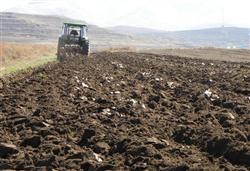
How can licorice (Glycyrrhiza) be grown for high yields?
How can cultivated licorice achieve high yields? What should be noted? We ask experienced readers to share their advice. Zhongdiwang has compiled the techniques for cultivating licorice, listed below for readers' reference. Soil selection for planting licorice: licorice prefers a dry climate and tolerates severe cold, and is suitable for deep soil...
-
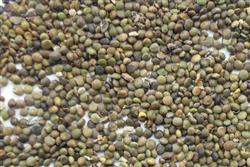
How should licorice seeds be treated? Introduction to common treatment methods
How should licorice seeds be treated? Is there anyone who can help explain? Licorice seeds generally begin to germinate at 10-15°C, and germinate fastest at 15-20°C. Old seeds have a reduced germination rate. One of the biggest characteristics of licorice is that it exhibits hard-seededness, usually with a hard seed rate of 70-90%, making it very difficult for seedlings to emerge after sowing, so in production, seeds...
-
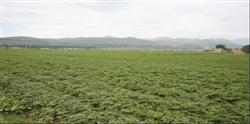
How to Grow Licorice? A Detailed Guide to Cultivating the Medicinal Plant Licorice
●Growth Habits. Licorice, also known as sweet grass root, red licorice, and powdered licorice. It is a plant of the Fabaceae family. Its roots and rhizomes are used as medicine. It has the effects of clearing heat and detoxifying, moistening the lungs and relieving cough, tonifying the spleen and boosting qi, and harmonizing various medicines. Licorice mostly grows in the northern temperate zone, in plains, mountainous areas, or river valleys at an altitude of 0-200 m. The soil is mostly sandy soil. Soil...
-
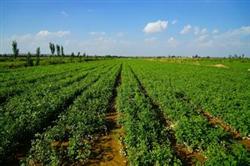
Licorice is best planted after autumn plowing; otherwise it affects seedling emergence and seedling survival.
1. Seed treatment: before sowing, treat the seeds with 60-100°C water for 30 seconds; then soak them in warm water for 1 day and night, and the germination rate can reach 50%. If concentrated sulfuric acid is used, remove the seeds immediately when the seed coat turns black and rinse them in clean water, then soak them in warm water; sow when the seeds swell, and the germination rate can reach more than 90%. 2. Planting metho...
-
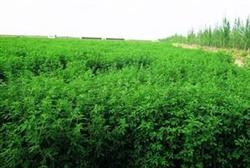
Detailed Explanation of Licorice Seedling Raising Methods and Key Planting Techniques
Abstract: Licorice is the source material for a large number of traditional Chinese medicine preparations, and is widely used in food, beverages, tobacco, daily chemicals and other fields, with broad application prospects. However, due to the lack of wild licorice resources, artificial planting efforts need to be increased. In order to improve licorice seedling raising and planting techniques, the Urumqi Grassland Station conducted licorice seedling raising and planting...
-
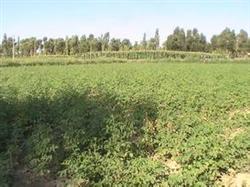
Detailed Explanation of Key Techniques for Licorice Seedling Raising and Transplanting
Licorice is an important medicinal herb. With the strengthening of national ecological and environmental protection, the use of wild resources has become very limited, and licorice seedling raising and transplanting techniques have become very important. Licorice is a perennial herbaceous plant of the Fabaceae family and is listed by the state as a key controlled medicinal herb. Glycyrrhizic acid, as a sweetener, is 200-300 times sweeter than sucrose, ...
-
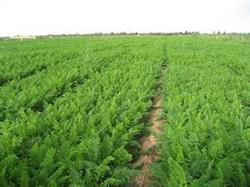
Detailed Explanation of Licorice Seedling Raising and Transplanting Methods and Technical Key Points
The glycyrrhizic acid contained in licorice is 200 to 300 times sweeter than sucrose, making it the best natural sweetener discovered to date. China exports large quantities of licorice and its extracts to European, American and Southeast Asian countries, and it has become a major foreign-exchange-earning medicinal herb. Due to increasing demand at home and abroad, wild licorice resources are becoming increasingly depleted. Therefore, it is necessary to...
-
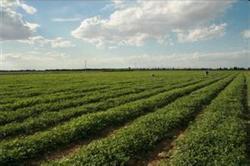
Detailed Explanation of Field Management Techniques for Licorice
Licorice is a plant in the Fabaceae family. The main types include Glycyrrhiza aspera, Glycyrrhiza glabra, and Glycyrrhiza inflata. Its dried roots and rhizomes are used as medicine, and the crude drug is called licorice. It has the effects of tonifying the spleen and boosting qi, relieving cough and reducing phlegm, clearing heat and detoxifying, easing tension and relieving pain, and harmonizing the properties of medicines. The cultivation techniques for licorice are introduced as follows. 1. Soil selection. Licorice...
-
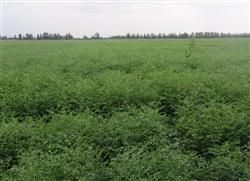
What Does Licorice Look Like? A Detailed Guide to Its Morphological Characteristics and Suitable Growing Environment
[Morphological Characteristics]Licorice (Glycyrrhiza) is a perennial herb, 30-100 cm tall. The entire plant is covered with short white pubescence and glandular hairs. The above-ground stem is upright, woody at the lower part, and the branchlets are angular and green. The leaves are alternate and odd-pinnately compound. There are 3-8 pairs of leaflets, ovate or ovate-elliptic, with entire margins, and the terminal leaflet is larger. The raceme...
-
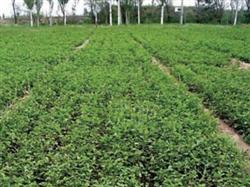
Licorice Market Prospects Analysis and Scientific Planting Techniques
Licorice is a plant of the Fabaceae family, the dried root and rhizome of Glycyrrhiza uralensis, Glycyrrhiza inflata, or Glycyrrhiza glabra, and is a commonly used bulk medicinal material. Wild licorice is mainly distributed in Inner Mongolia, Ningxia, **, Gansu, and other places; cultivated licorice is mainly distributed in the Hexi Corridor of Gansu, the surrounding area of Longxi, and parts of Ningxia. Licorice is a national-level se...
条件筛选