How to judge the growth of rice seedlings after transplanting
How do you know the condition of rice seedlings after transplanting? Here is an introduction to how the condition of rice seedlings can be checked from the following points: 1. Leaf diagnosis. Rice leaves that are on the darker side of green indicate rich nutrition and high nitrogen content, and uniform leaf color with leaves that can stand upright is a sign of healthy seedlings. Otherwise, apply topdressing to make the seedlings vigorous. 2. Root diagnosis. Rice...
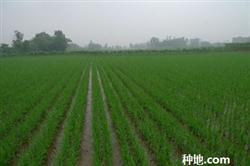
How do you know the condition of rice seedlings after transplanting? Here is an introduction
The condition of rice seedlings can be checked from the following points:
I. Leaf diagnosis. Rice leaves that are on the darker side of green indicate rich nutrition and high nitrogen content, and uniform leaf color with leaves that can stand upright is a sign of healthy seedlings. Otherwise, apply topdressing to make the seedlings vigorous.
II. Root diagnosis. Rice roots that are white are healthy seedlings; if observed carefully, the tips of rice roots appear white, the middle is yellow-brown, and the base is dark brown.
III. Guttation at leaf tips. If water is released automatically from the leaf tips in the morning, it indicates strong nutrient absorption capacity and is a sign of healthy seedlings.
IV. Leaves not soft. After transplanting, rice seedlings need only 4-5 days to recover from transplanting and adapt to growth in the paddy field.
V. Late-developing seedlings. After transplanting, the seedlings grow slowly and individual development is not normal enough; the reasons are hard soil and insufficiently fine land preparation. The remedy is to loosen the soil, improve aeration, and irrigate with an appropriate small amount of water.
VI. Cold-stunted seedlings. Cold-stunted seedlings are caused by low temperature, with small, narrow leaves and slow growth. Adopt shallow irrigation with a thin layer of water to regulate temperature with water and raise ground temperature, and combine this with light sun-drying of the field.
VII. Water-deficient seedlings. Water-deficient seedlings wilt every noon and can still recover by the next day; if severely short of water, the wilted leaves dry up and the leaves curl obviously and cannot recover. Keep warm and retain moisture so the seedlings can recover, mainly by irrigating with shallow water.
VIII. Deformed seedlings. They form "bamboo leaves" or "tubular leaves", with twisted leaves, shortened and widened leaves, and shrunken deformity. Pesticides should be used accurately, not excessively, and according to the instructions, to avoid the occurrence of deformed seedlings.
Click to get a massive amount of rice cultivation techniques
Click to get a massive amount of grain cultivation techniques