-
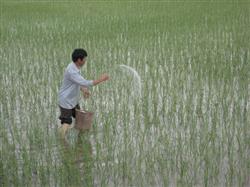
What are the precautions for fertilizing rice?
What should be noted when fertilizing rice? Please give an introduction. The principle of rice fertilization should be to use organic fertilizer and phosphate fertilizer as base fertilizer, potassium fertilizer mainly as tillering fertilizer, and nitrogen fertilizer applied evenly in multiple applications, with special attention to fertilizer for plump panicles and plump grains, so as to achieve large panicles and large grains while ensuring sufficient panicles. (1) Base fertilizer should be mainly organic fertilizer...
-
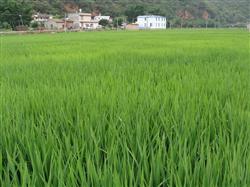
Key Technical Points for Late-Stage Rice Growth Management
How should rice be managed in the late growth stage? What should be noted? In the late growth stage of rice, premature senescence must especially be prevented. If premature senescence occurs from the heading to maturity stage, it will lead to poor grain filling and an increase in blighted grains, causing reduced yield. There are many factors causing premature senescence in the late growth stage of rice. First, improper cultivation management. Planting...
-
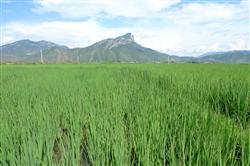
What are the correct methods and precautions for draining and drying rice fields?
How to dry a rice field properly? An introduction. Draining and drying a rice field is an important measure for improving paddy soil structure, promoting rice seedling roots to grow downward, enhancing rice root vigor, increasing rice stalk toughness and lodging resistance, controlling ineffective tillering, raising the percentage of productive tillers, improving the field microclimate, and reducing the occurrence of rice diseases and insect pests. But...
-
What is the correct method and purpose of draining paddy fields for rice?
How do you drain a paddy field for rice? What does it do? Please explain the field-draining method. Draining paddy fields is one of the main technical measures for increasing rice yields and promoting early ripening. 1. Main purposes of field draining. 1) Control ineffective tillering and consolidate effective tillering. When rice tillering has reached a certain number, that is, once there are enough seedlings, in our province, in terms of time, the effective tillering termination period is around the end of June. Early tillers can form panicles, while tillers after the termination period cannot form panicles or only form small panicles. In production, by draining the field, the young tiller buds at higher positions cannot get water and fertilizer and stop growing, reducing nutrient consumption, so that the main stem and large tillers receive more nutrient supply, laying a foundation for strong stems and large panicles.
-
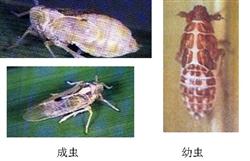
How to control the brown planthopper and white-backed planthopper in rice?
How to control the brown planthopper and white-backed planthopper in rice? Please provide an explanation of the methods. The brown planthopper has occurred at level 5 for two consecutive years, with strong pesticide resistance, while the white-backed planthopper has occurred at levels 3 to 4 for many consecutive years; the main factors affecting their occurrence are the amount of immigration and the summer-autumn climate conditions. In the winter of 2006, the brown planthopper broke out massively in the rice-growing areas of Vietnam, indicating that this...
-
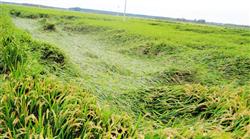
Detailed Explanation of the Causes of Rice Lodging and Control Methods
Why does rice lodge? How should it be prevented and controlled? Please give an introduction. The earlier rice lodging occurs, the greater the impact on yield; in severe plots, yield can be reduced by more than 50%, or even cause total crop failure. Lodging also has a great impact on rice quality, and at the same time increases harvest difficulty. Although rice lodging is related to windy and rainy weather, the main...
-
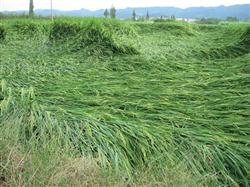
What are the control methods for rice lodging and weed damage?
How to control lodging and weed damage in rice? Please introduce the control methods. Rice is prone to lodging and susceptible to weed damage, and the following countermeasures should be taken: Choose suitable varieties. When selecting direct-seeded rice varieties, besides having good quality, high yield and multiple resistance, they should also have the characteristics of fertilizer tolerance, short stature and moderate tillering. For early rice, medium-maturing varieties should be chosen...
-
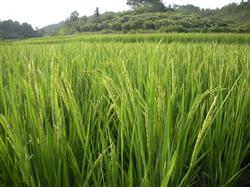
What precautions should be taken when spraying pesticides at the rice heading stage?
What should be noted when spraying pesticides at the rice heading stage? Please give a detailed introduction. Around the heading stage of rice, it is generally a period when various diseases and insect pests occur and cause damage, requiring the use of chemical pesticides for control, but applying pesticides during this growth stage can easily cause pesticide damage with some pesticides, resulting in losses that should not occur, and attention should be paid to this. 1. Triazole...
-
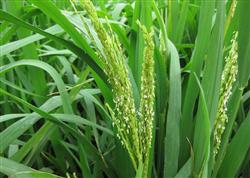
What to Do When Rice Has Difficulty Heading? Causes and Solutions
What to Do When Rice Has Difficulty Heading? What Medicine Can Solve It? When rice has difficulty heading, or shows the phenomenon of neck enclosure, the rice grains wrapped inside the leaf sheath cannot emerge in time for pollination and fertilization, and generally become empty and blighted grains, greatly affecting yield. There are many reasons for this phenomenon; in some cases the variety itself has a relatively severe tendency toward neck enclosure...
-
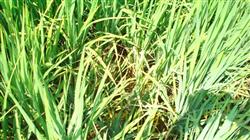
What are the control methods for rice viral diseases?
How do you control rice viral diseases? Please explain the methods. Rice viral diseases occur in explosive, intermittent and migratory patterns. The severity of rice viral diseases is closely related to the cropping system, the population size and migration patterns of transmission vectors, climatic conditions and cultivation management measures. Control should implement the plant protection policy of "prevention first, integrated control"...
条件筛选