-
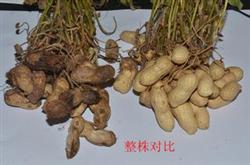
Integrated control of peanut pod rot to achieve both higher yield and better quality
Peanut pod rot, also known as "peanut rotten pod disease," has become fairly common in recent years in the major peanut-producing areas of our province, including Daming, Xinle, Dingzhou, Xingtang and Luanxian, and it becomes even more severe in fields planted continuously to peanuts for many years when the pod-setting stage coincides with a rainy year. According to surveys, affected fields suffer at least a 20% yield loss, ...
-
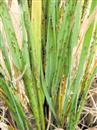
Occurrence Characteristics of Rice Planthoppers and Control Strategies
Baohe Township is located in the southwest of Jing County and belongs to a hilly area. The township has 9144 mu of cultivated land, including 7813 mu of paddy fields, and is a typical mountainous agricultural township. Rice planthoppers are a frequent pest that seriously damages rice in our township and cause losses of varying degrees every year. Especially in the past 2 years, due to the influence of a series of factors such as climate, rice production...
-
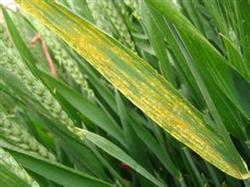
Wheat stripe rust can be managed by a zone-based strategy of treating key spots to protect the wider area
Wheat stripe rust is a serious biological disaster that has long affected the safe production of wheat in China. In years when the disease is common, wheat yields are reduced by 10%-20%, and in years of severe epidemic, losses can reach more than 60%, or even leave wheat with almost no harvest. Based on a comprehensive analysis of factors such as the amount of inoculum, weather conditions and variety distribution, it is predicted that in 2011...
-
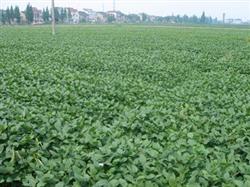
Integrated control methods for three pests of spring soybean
I. Cutworms. The main pest damaging local crops is the yellow cutworm (Agrotis segetum). 1. Damage characteristics: The larvae mostly bite off seedlings at ground level, causing missing plants and broken rows. After the main stem becomes lignified, they feed on the epidermis of the roots near the ground surface, causing root damage that affects the root's ability to absorb water, causing the plant to gradually wilt and die. ...
-
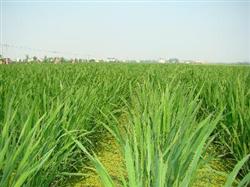
Occurrence Characteristics of Pests and Diseases in High-Mountain Water Bamboo and Integrated Control Techniques
The key points of off-season cultivation techniques for double-cropping water bamboo at low altitudes are introduced as follows: 1. Selection of improved varieties. The Zhejiang Yidianhong water bamboo (a single-cropping type) is selected. 2. Land preparation and seedling raising. Select a field sheltered from wind and facing the sun, with convenient irrigation and drainage and loose, fertile soil, as the seedling bed. In early November, sun-dry the seedlings until they are 60-70% dry, 1...
-
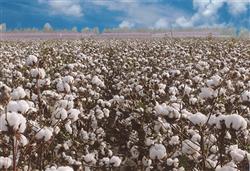
What are the integrated control techniques for cotton pests and diseases?
Topdressing is an important measure for cotton to set more bolls, set large bolls, reduce shedding, and increase yield. However, if topdressing is not done scientifically, it will not achieve the desired effect and sometimes may even produce side effects. In production, cotton topdressing has the following four key points. First, topdress according to the fertilizer requirement pattern. At different growth stages, cotton has different requirements for fertilizer...
-
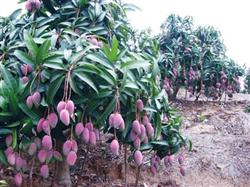
Integrated management with new techniques makes mangoes retain flowers and fruits, with more fruit set
Mango jujube sets fruit easily but retaining it is difficult; from the young fruit stage to the white-ripe stage it keeps dropping fruit, and puzzlingly, it always drops the large ones and keeps the small ones, which distresses jujube growers greatly. In recent years, various flower- and fruit-retention measures were tested on mango, and the following integrated management new techniques were developed to solve this problem: 1...
-
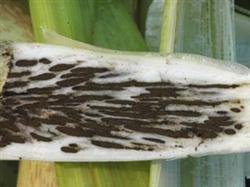
Occurrence and Integrated Control Methods of Water Bamboo Smut
Water bamboo smut is a major disease of water bamboo (Zizania latifolia), mainly affecting the leaf sheaths and the edible swollen stems, leading to reduced yield and quality of water bamboo. The main symptoms and integrated control methods of this disease are briefly described below: 1. Main symptoms: In the early stage of leaf sheath infection, the lesions appear as small dark green round spots, which later develop into oval tumor-like protrusions; in the later stage, the leaf sheaths are filled with black spore masses, causing the leaf sheaths to turn black. When the edible swollen stem is infected, the smut fungus fills the water bamboo tissue, causing the middle to swell and protrude, the edible stem strips to become shorter, and the outer surface to have many longitudinal grooves. It becomes rough, and in severe cases the edible stem is unfit for consumption.
-
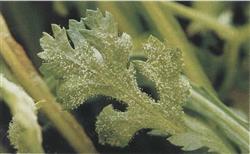
Integrated control methods for downy mildew in autumn garland chrysanthemum
Downy mildew in garland chrysanthemum mainly damages the leaves. In the early stage of the disease, pale yellow nearly round or polygonal lesions appear on the old leaves in the lower part of the plant, gradually spreading to the middle and upper parts of the plant; in the later stage the lesions become yellowish brown, and when the disease is severe the lesions merge into one patch and the leaves turn yellow and die. When humidity is high, white mold develops on the underside of the lesions. The pathogen infects...
-
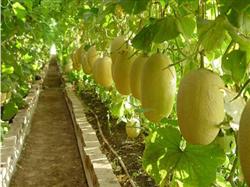
Integrated Control Measures for Gummy Stem Blight of Hami Melon in Rainy Regions
I. Bacterial Leaf Spot Symptoms: In the early stage, water-soaked lesions appear near the veins on the underside of leaves; the lesions expand rapidly and merge into one another, with a yellow halo at the edges. Control method: In the early stage of the disease, spray the foliage 2-3 times with 77% Duoning at 500 times dilution or 3% zhongshengmycin at 800 times dilution, once every 4-5 days. II. Gummy Stem Blight Symptoms...
条件筛选