-

What is the best and most cost-effective substrate for growing Phalaenopsis orchids at home?
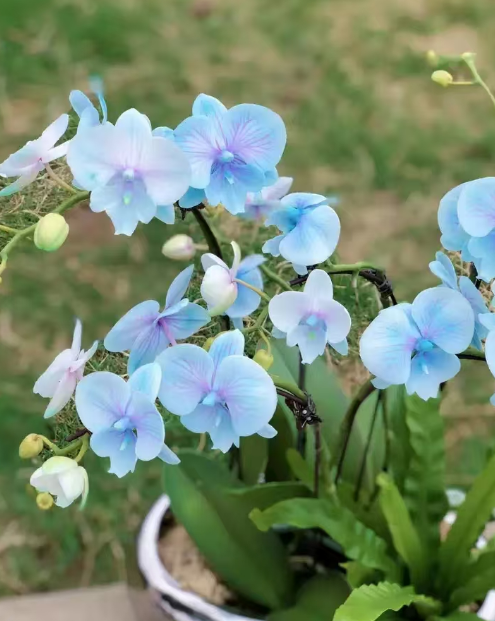
Friends who grow Phalaenopsis orchids surely know: "To grow orchids, first grow the roots; to grow the roots, rely on the substrate." Unlike growing pothos or succulents in ordinary potting soil, Phalaenopsis is an epiphytic orchid with aerial roots that need to breathe air. If you use sticky garden soil, the roots will surely rot within half a month. So when choosing a substrate, never be careless. You have to pick those that are breathable, water-retentive yet not root-suffocating, and also cost-effective. After all, we are growing flowers at home, and there is no need to spend a lot of money on fancy but impractical things.
-
Should rootless side shoots on Phalaenopsis orchids be cut off? Here's the correct way to separate them
Once you've grown Phalaenopsis orchids for a while, you'll notice that old plants and new plants have completely different "temperaments" - they differ greatly just in watering, let alone flowering performance. So how should you care for this old-and-new pair in summer so they both grow smoothly? First, let's talk about the difference in watering. Old plants, well, their root systems are already established, and some old roots on the outside
-

What to do when a Phalaenopsis orchid grows a young offshoot on its side, and does it need to be divided into a separate pot?
A perfectly healthy Phalaenopsis orchid suddenly sprouts a small tender shoot on its side. It looks quite cute, but you are not sure what to do with it. Should you keep this little offshoot or remove it? Should you hurry to divide it into its own pot? Phalaenopsis orchids are different from other flowers: their side shoots usually grow on the flower spike, and sometimes they also emerge near the roots. This shows that your Phalaenopsis has been kept
-

Which houseplants can't tolerate waterlogging? These five hate being overwatered the most
You water them every day and fuss over them, yet the plant wilts instead. You dig into the soil and find the roots have rotted to mush. The truth is, not all plants love to drink. Some are naturally afraid of waterlogging, and the more diligently you water them, the faster they die. Today let's talk about five houseplants that fear water the most. Beginners, take note. Snake
-

Do Phalaenopsis seedlings need to be divided into separate pots, and can the old plant still survive?
A little seedling has popped up in the Phalaenopsis pot - should it be divided into its own pot or not? Will dividing it harm the old plant? But if it's not divided, the seedling might get crowded and not grow well. Today let's talk about this - all practical experience, easy for beginners to understand too. When a Phalaenopsis seedling first emerges, don't rush to move it - it hasn't yet developed "independence." You
-

Can You Use an Unperforated Milk Tea Cup for Phalaenopsis? A Detailed Guide to the Correct Watering Method
Nowadays, people can learn many money-saving methods online, including using cups as pots for growing flowers. Take using cups to grow Phalaenopsis as an example: it is very easy to find tutorials online teaching how to make orchid pots out of milk tea cups. As a result, many questions from beginners have arisen, including what potting medium is suitable? What should be noted when using an unperforated milk tea cup?
-

Which perennial flowers have a long blooming period, tolerate heat and cold, and are suitable for courtyard planting?
When choosing flowers for the courtyard, you want both scenery in all four seasons and the ability to adapt to a changing climate. Want to plant something in your yard that is low-maintenance and blooms for a long time? Today I am recommending several treasure flowers that have long blooming periods, are perennial, and tolerate both heat and cold. Coreopsis: Coreopsis is an absolute must-have for lazy gardeners! This guy is tough as
-

How to Improve the Survival Rate of Rose Cuttings in June and Which Flowers Are Suitable for Cutting in June and July
In the summer sky, it starts to get light at around 6 o'clock. At this time, walking in front of the windowsill, you will see sunlight falling on the plants, making people feel that this energy is nourishing every plant. For experienced flower growers, this is exactly the right time to cut a few branches for cuttings. The money tree, just from its plant name alone, is quite loved by everyone, and its leaves
-

Which outdoor flowers that can't tolerate waterlogging during the rainy season need to be moved indoors?
It's been raining a lot lately, and many gardening friends are starting to agonize: should the flowers at home be moved indoors to shelter from the rain? If they stay outside, will they be damaged by the rainwater? To be honest, this has to be judged case by case! If among your plants there are these five water-fearing types, then you'd better move them indoors right away, otherwise
-

Which month gives the highest survival rate for transplanting Phalaenopsis orchids, and will transplanting too early kill them?
You just bought a Phalaenopsis orchid and before it even warmed up, your hand slipped and you repotted it, and now you stare at the pot every day praying it won't die! Plenty of beginner growers have done this impulsive thing. Will transplanting a Phalaenopsis too early really make it "die young," and when should you repot to be sure of success? Transplanting too early really can be fatal! Imagine you
条件筛选