Wheat stripe rust can be managed by a zone-based strategy of treating key spots to protect the wider area
Wheat stripe rust is a serious biological disaster that has long affected the safe production of wheat in China. In years when the disease is common, wheat yields are reduced by 10%-20%, and in years of severe epidemic, losses can reach more than 60%, or even leave wheat with almost no harvest. Based on a comprehensive analysis of factors such as the amount of inoculum, weather conditions and variety distribution, it is predicted that in 2011...
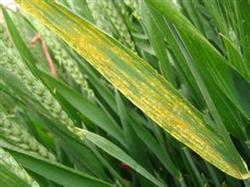
Wheat stripe rust is a serious biological disaster that has long affected the safe production of wheat in China. In years when the disease is common, wheat yields are reduced by 10%-20%, and in years of severe epidemic, losses can reach more than 60%, or even leave wheat with almost no harvest. Based on a comprehensive analysis of factors such as the amount of inoculum, weather conditions and variety distribution, it is predicted that about 30 million mu of wheat in China will be affected by stripe rust in 2011. Among these areas, northwestern Sichuan, southern Gansu, southern Shaanxi, southern Henan, most of **, and the late-maturing wheat areas of Ningxia are expected to experience moderate or severe epidemics. Recent surveys in Mianyang, Sichuan, Shiyan, Hubei, and Hanzhong, Shaanxi, found that relatively large disease centers of wheat stripe rust have already appeared. Because stripe rust is extremely epidemic and contagious, under suitable temperature and humidity conditions the disease multiplies and spreads very quickly. At present, the main wheat-producing areas of China are in the critical growth period of wheat greening and jointing. As temperatures rise, wheat stripe rust will successively enter the peak period of damage. Agricultural departments at all levels must attach great importance to this, include disease prevention and control among the key measures for securing a summer grain harvest, strengthen disease monitoring, adopt a zone-based control strategy, select highly effective pesticide varieties, and promptly control the disease epidemic to ensure a bumper wheat harvest.
Strengthen disease monitoring:
Plant protection departments of agricultural authorities at all levels must, in accordance with the wheat stripe rust forecast and survey standards, closely monitor the occurrence situation, conscientiously carry out fixed-point observations and field surveys of the disease; accurately grasp the dynamics of stripe rust occurrence and decline, and promptly issue forecasts and control alerts according to changes in disease development; and promptly report disease occurrence to government departments and higher-level professional departments, so as to provide a reliable basis for disease prevention and control decisions.
Adopt a zone-based control strategy:
At present, the focus should be on early chemical control in winter multiplication areas such as northwestern Hubei, the Sichuan Basin, southern Henan, southern Shaanxi, Chongqing, Guizhou and Yunnan. For key affected fields, adopt the approach of "scouting with pesticide on hand, controlling a whole area when a single spot is found" to promptly control disease centers; provide unified prevention and control of wheat fields to control regional spread of the disease. In spring epidemic areas such as the Huang-Huai-Hai region, disease monitoring should be strengthened, and spraying should be carried out when the threshold is reached (diseased leaf rate reaching 5%). In oversummering and variable areas such as southeastern Gansu, northwestern Sichuan, southern Ningxia and Haidong (autumn inoculum base areas), comprehensive measures should be adopted, including rust-resistant improved varieties and seed dressing with chemicals, combined with stopping wheat cultivation and changing crops, and delayed sowing at the appropriate time.
Select highly effective pesticide varieties:
Vigorously promote highly effective, low-toxicity systemic fungicides based mainly on triazoles and diniconazoles for field spraying to control the disease. Use 80-100 grams of 15% triadimefon powder per mu, or 30-40 grams of 25% diniconazole powder per mu, or 40 milliliters of 12.5% suspension concentrate for spray control, with control efficacy reaching more than 90%.