-
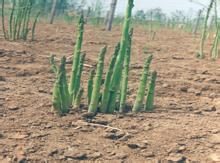
Detailed Explanation of Open-Field Sowing, Seedling Raising and Transplanting Techniques for Asparagus
Asparagus is a premium vegetable and health food with extremely high nutritional value, enjoying the reputation of "King of Vegetables" on the international market. The asparagus planting area in Baoding City reaches more than 14,000 mu, of which the spear-harvesting field area is more than 8,000 mu, with an annual output of more than 7,500 tons. All of it is sold fresh to major cities such as Beijing and Tianjin. The asparagus planting area is gradually...
-
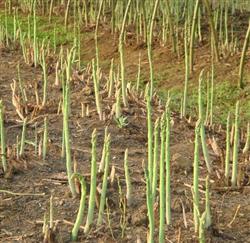
Detailed explanation of key asparagus seedling-raising techniques, full guidance from sowing to emergence
The key cultivation techniques for asparagus are introduced as follows: 1. Variety selection. Unlike other vegetables, asparagus is a perennial plant, and one planting can be harvested continuously for 15 years. Therefore, choose first-generation hybrid varieties with resistance to pests and diseases, strong stress resistance, a short dormancy period, good market quality, and high quality and yield. 2. Seedling raising...
-
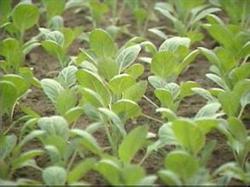
4 Key Technical Points for Raising Spring Cabbage Seedlings in Winter
Spring cabbage is a type of vegetable crop with a relatively large planting area in the vegetable-producing regions of the central and southern parts of our province. Spring cabbage production has the characteristics of low input, saving labor and effort, and high yield. Right now, the golden season for raising early spring cabbage seedlings has arrived again. Below, the key technical points for raising spring cabbage seedlings are introduced for everyone's reference: 1. Suitable...
-
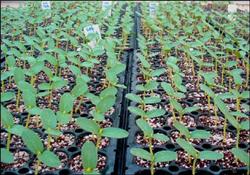
Detailed Explanation of Key Technical Points for Raising Muskmelon Seedlings in Early Spring
To prepare the nutrient soil, use fertile soil that has never been planted with melons or vegetables and fully fermented and decomposed chicken manure or human waste, sift and mix them thoroughly at a ratio of 7:3. For each cubic meter of nutrient soil, add 2.5 kg of superphosphate, 0.5 kg of potassium sulfate, and 15-20 g of 95% hymexazol. To build an electric heating hotbed, 24-26 sq m of seedbed is needed per mu of field. The seedbed is wide 1...
-
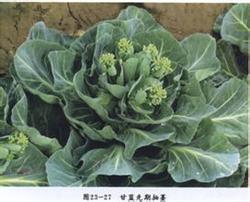
Detailed Explanation of Cabbage Seedling-Raising Techniques for Summer-Autumn and Overwintering
Late-sown overwintering cabbage cultivation is generally raised as seedlings in September and planted in November on late-crop plots such as cotton, rice, orchards or sweet potato land. It is harvested in mid-April. The income is generally 3000 yuan per mu. The returns are relatively good, and it is welcomed by many growers. From sowing to harvest, it passes through a long period of low temperature, and premature bolting is likely to occur...
-
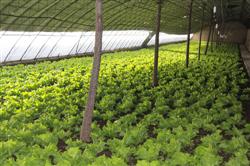
Key Points of Seedling-Raising Techniques for Winter Greenhouse Cultivation of Lettuce
① Variety selection: Choose varieties with strong cold tolerance, disease resistance and strong adaptability, such as 'Emperor', 'Salinas', 'Great Lakes 659', etc. The seedbed should be fertile sandy loam with strong water- and fertilizer-retention capacity. ② Seedbed preparation: Because lettuce seeds are small, seedbed tillage must be strict, the soil must be finely prepared, and the bed soil should be as fine and crumbly and level as possible. Every 10...
-

What should you pay attention to when raising silkworms? These matters cannot be ignored
What should you pay attention to when raising silkworms
-
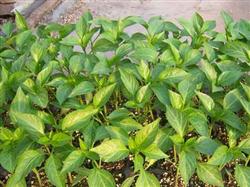
Detailed Explanation of Key Techniques for Spring Sowing and Seedling Raising of Peppers
(1) Preparation of the sunny seedbed: Choose a plot with fertile soil, sheltered from the wind and facing the sun, where eggplants and tomatoes have not been planted in the previous crop, and build a sunny seedbed. For each mu planted, raise seedlings with a seeding rate of 150 grams, and the sunny seedbed should be more than 10 square meters. Apply sufficient base fertilizer, irrigate heavily to build up soil moisture, and use a small amount of urea, phosphate fertilizer and active potassium fertilizer. Because the sunny seedbed...
-
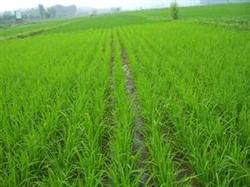
Detailed Explanation of Rice Dry-Raising and Dry-Planting Cultivation Techniques
Dry-raising and dry-planting refers to the practice, when dry-raised early rice seedlings reach the suitable seedling age for throwing and transplanting but the field is dry and lacking water for paddy preparation, of directly spraying herbicide to control weeds, then making holes with a wooden stick or opening furrows with a shovel, and then transplanting the seedlings. Key points of the cultivation technique (1) Paddy field treatment: before planting, spray the paddy field with herbicide to control weeds; options include...
-
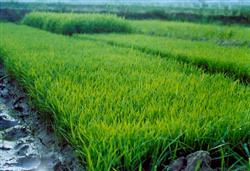
Common Problems in Rice Seedling Raising and Countermeasures
Cultivating robust seedlings is the key to high rice yields. By analyzing common problems that arise during seedling raising, corresponding solutions are proposed to provide technical reference for cultivating high-yield robust seedlings. (I) Common problems in machine-transplanted seedling raising and countermeasure techniques 1. Poor seed emergence. Machine-transplanted seedling raising often suffers from poor seed emergence, uneven emergence, and...
条件筛选