Key Points of Seedling-Raising Techniques for Winter Greenhouse Cultivation of Lettuce
① Variety selection: Choose varieties with strong cold tolerance, disease resistance and strong adaptability, such as 'Emperor', 'Salinas', 'Great Lakes 659', etc. The seedbed should be fertile sandy loam with strong water- and fertilizer-retention capacity. ② Seedbed preparation: Because lettuce seeds are small, seedbed tillage must be strict, the soil must be finely prepared, and the bed soil should be as fine and crumbly and level as possible. Every 10...
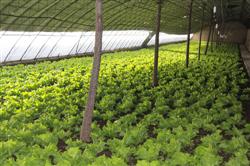
① Variety selection: Choose varieties with strong cold tolerance, disease resistance and strong adaptability, such as 'Emperor', 'Salinas', 'Great Lakes 659', etc. The seedbed should be fertile sandy loam with strong water- and fertilizer-retention capacity.
② Seedbed preparation: Because lettuce seeds are small, seedbed tillage must be strict, the soil must be finely prepared, and the bed soil should be as fine and crumbly and level as possible. For every 10 sq m of seedbed, apply 10 kg of fully decomposed, finely broken farmyard manure, 0.3 kg of diammonium phosphate, and 0.3 kg of potassium dihydrogen phosphate. Spread evenly over the ground, plow 10-12 cm deep, mix thoroughly and level, then firm the surface.
③ Seed treatment: Lettuce can be sown as dry seed or soaked for sprouting. For dry-seed sowing, before sowing first treat the seed with 75% chlorothalonil wettable powder at 0.3% of the seed dry weight; sow immediately after treating, and never leave it overnight.
For soaking and sprouting, first soak the seed in clean water at about 20°C for 3-4 hours, rub and wash, then drain off the water, put the seed into a wet gauze bag or basin, and place it at 20°C to sprout. Rinse once a day with clean water, drain, and continue sprouting; full sprouting occurs in 2-3 days. When natural temperatures are too high, sprouting can be done in a well shaft or in a cave, etc., with the temperature kept at 15-20°C, which is suitable.
④ Sowing: Before sowing, water the seedbed thoroughly; while the water has not yet fully seeped away, sieve soil to level the bed surface; after the water seeps in, sieve and spread fine soil 0.1-0.2 cm thick, then sow. The seeding rate is 375-450 g per hectare. To grow strong seedlings and prevent leggy or weak seedlings from excessive stretching, sowing should not be too dense; generally, broadcasting 1 g per sq m of seedbed is suitable. To sow evenly, mix the seed with sand and broadcast in 2 passes, then sieve soil to cover 0.3-0.5 cm. To prevent water loss, spread rice straw, wheat straw, or cover with plastic film on the bed surface according to the ground temperature. To prevent ants, crickets, etc. from eating the seeds, spray dimethoate, dichlorvos, etc. on the bed surface after sowing.
⑤ Seedling-stage management: Generally after sowing, keep the bed temperature at 20-25°C and the bed surface moist; full emergence occurs in 3-5 days. If the temperature is too high, shade appropriately to create a cool, moist environment to favor healthy seedling growth. When the seedlings have just emerged, promptly remove the covering on the bed surface to prevent the formation of leggy seedlings with excessively elongated hypocotyls.
After emergence, keep 18-20°C during the day and 8-10°C at night. 7-10 days after emergence, when the seedlings have two true leaves and one heart leaf, thin and transplant them promptly, with a spacing of 3-5 cm. After transplanting, spray or water with a 500-fold potassium dihydrogen phosphate solution. During the seedling stage, also spray 1-2 times with 75% chlorothalonil wettable powder or 70% thiophanate-methyl wettable powder at 600-800 times to control seedling-stage diseases. When the seedlings are 25-35 days old and have 4-5 true leaves, they can be planted out.