Detailed Explanation of Open-Field Sowing, Seedling Raising and Transplanting Techniques for Asparagus
Asparagus is a premium vegetable and health food with extremely high nutritional value, enjoying the reputation of "King of Vegetables" on the international market. The asparagus planting area in Baoding City reaches more than 14,000 mu, of which the spear-harvesting field area is more than 8,000 mu, with an annual output of more than 7,500 tons. All of it is sold fresh to major cities such as Beijing and Tianjin. The asparagus planting area is gradually...
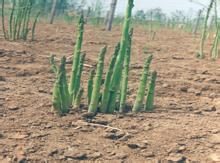
Asparagus is a premium vegetable and health food with extremely high nutritional value, enjoying the reputation of "King of Vegetables" on the international market. The asparagus planting area in Baoding City reaches more than 14,000 mu, of which the spear-harvesting field area is more than 8,000 mu, with an annual output of more than 7,500 tons. All of it is sold fresh to major cities such as Beijing and Tianjin. The asparagus planting area is expanding year by year, but most of the varieties used are F2 generation seeds, with poor quality, low yield and relatively backward management, which no longer meet the needs of domestic and international markets. Therefore, selecting and introducing excellent new varieties, adopting advanced management techniques and improving the economic benefits of asparagus have become an important task before us.
I. Soil selection. Loose loam or sandy loam with rich organic matter, good water retention and drainage performance, and deep soil layer is suitable. The pH value is best between 5.8 and 6.7; avoid raising seedlings on overly acidic or heavily saline-alkaline soil. Asparagus prefers light, and its stems are slender and weak, so choose a site without shade, sheltered from the wind or behind a windbreak for cultivation. Avoid cultivation on orchard land and sweet potato land to prevent underground pests.
II. Variety selection
1. Apollo: Bred by the California Asparagus Seed Company of the United States. A vegetative F1 hybrid; the average spear diameter is 1.59 cm, the texture is tender, the fiber content is low, the color is dark green, the rate of loose tips is relatively low, and disease resistance is strong. The yield of adult spears can reach 1200-1500 kg per mu.
2. Purple Passion: Bred by the California Asparagus Seed Company of the United States. A polyploid purple asparagus variety; the spears are violet in color, the rate of loose tips is relatively low, it is juicy and slightly sweet, tastes excellent when eaten raw, and has good disease resistance. The yield of adult spears can reach 750-1000 kg per mu.
3. Atlas F1: This variety has outstanding hybrid vigor and high yield; the single spear weight is more than 26 g, the branching point is about 60 cm, the stems are thick and strong, the spear tips are tightly closed, the color is dark green, and the average diameter is about 1.8 cm. It is a dual-purpose variety for green and white asparagus.
III. Sowing techniques
1. Land preparation and bed making: Generally, apply 3000-5000 kg of decomposed barnyard manure, 10 kg of urea, and 7-8 kg each of potassium chloride and superphosphate per mu, mix thoroughly and plow into the top 10 cm of soil. Plow and harrow multiple times to mix evenly. Build a soil ridge every 110 cm, with a ridge height of 15 cm and a width of 20 cm, and firm it down. The bed length should not exceed 30 m; level the bed surface, water thoroughly to store bottom moisture, and set aside for use.
2. Seed soaking and germination promotion: Put the seeds into a container, add clean water at 30°C equal to twice the seed volume to soak the seeds, and rinse and change the water 3 times a day. After soaking for 48 hours, drain the water.
For seed sterilization treatment, you may choose to soak the seeds in a 50% carbendazim solution for 12 hours (to control the pathogen of stem blight), or soak the seeds in 5.25% sodium hypochlorite for 10-15 minutes (to kill surface fungi). Rinse clean and air-dry before sowing.
3. Sowing time: Generally, sow and raise seedlings in the open field from mid-July to early August, and transplant dormant roots in early November, for low cost and high benefit.
4. Sowing: Use spot sowing with a plant and row spacing of 10 x 10 cm, generally covering with about 4 cm of soil. Irrigate once. Calculated by net sowing area, generally 1100 seeds can be sown per 11 sq m, enough to transplant 1 mu of land.
IV. Transplanting management
1. Land preparation: First level the plot, deep plow about 35 cm, and harrow fine and rake level. Then dig transplanting trenches according to the row spacing (150 cm) (35-40 cm deep, 35-45 cm wide), apply the uniformly mixed soil and barnyard manure to the bottom of the trench at a thickness of 10-15 cm, and then carry out chemical treatment. A 1000-fold dilution of 50% phoxim can be evenly sprayed on the bottom of the trench; apply chemical fertilizers, 10 kg of diammonium phosphate, 8 kg of urea and 5 kg of potassium fertilizer per mu, and finally backfill soil about 15 cm. Water thoroughly; after the soil settles, backfill soil again so that the trench surface is 10 cm below ground level, and set aside for use.
2. Transplanting time: Spring transplanting can be carried out in early to mid-March, summer transplanting in mid-July, and autumn transplanting in mid-November; the survival rate is high, which is conducive to high yield.
3. Transplanting: Three days before transplanting, irrigate the transplanting trench sufficiently; 3 days later, transplant according to the plant spacing (30-35 cm). Dig a small hole 10 cm deep in the trench, place the seedlings into the holes in the direction of growth point development and arrange them in a straight line, covering with soil as the seedlings are placed. After covering with soil, water; once the seedlings survive and send out new stems, cover with soil in stages until level with the bed.