4 Key Technical Points for Raising Spring Cabbage Seedlings in Winter
Spring cabbage is a type of vegetable crop with a relatively large planting area in the vegetable-producing regions of the central and southern parts of our province. Spring cabbage production has the characteristics of low input, saving labor and effort, and high yield. Right now, the golden season for raising early spring cabbage seedlings has arrived again. Below, the key technical points for raising spring cabbage seedlings are introduced for everyone's reference: 1. Suitable...
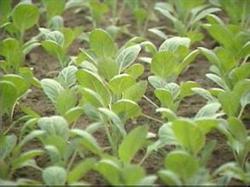
Spring cabbage is a type of vegetable crop with a relatively large planting area in the vegetable-producing regions of the central and southern parts of our province. Spring cabbage production has the characteristics of low input, saving labor and effort, and high yield. Right now, the golden season for raising early spring cabbage seedlings has arrived again. Below, the key technical points for raising spring cabbage seedlings are introduced for everyone's reference:
1. Suitable varieties
For open-field planting in spring, varieties with good early maturity, outstanding high yield, and strong disease resistance such as Zhonggan 15, Zhonggan No. 21, and Shuanghuan 15 can be selected. For early spring arched-shed cultivation, varieties with strong cold resistance, strong disease resistance, and strong winter hardiness can be selected, such as: Lubaowang, Shuanghuan 45, Jingxuan 8398, Chunqiang, and others.
2. Preparing the seedbed
For the seedling bed soil, choose fertile garden soil that has not been planted with cruciferous vegetables in the previous year, apply fully decomposed farmyard manure, and then mix in an appropriate amount of nitrogen, phosphorus, and potassium ternary compound fertilizer. Before sowing, the seedbed must be thoroughly disinfected. An equal amount of 40% quintozene and 50% thiram wettable powder can be used, mixed at 9-10 grams per sq m, and after sowing, 2/3 of the medicated soil is used as covering soil. Before sowing, treat the seeds with 50% thiram and 65% mancozeb wettable powder at 0.3% of the seed weight.
3. Sowing at the right time
In North China, the suitable sowing period for open-field cabbage and cold-shed early spring cabbage is from late December to early-to-mid January, and sunlight greenhouse seedling raising or improved solar seedbed seedling raising is mostly used. For generally early-maturing varieties, the planting density per mu is about 4,500 plants, for mid-early-maturing varieties it is 3,500-4,000 plants, and the seeding rate per mu is suitably about 50 grams. Before sowing, the seeds generally do not need to be pre-germinated and can be sown as dry seeds. The seedling bed should first be watered sufficiently, the seeds should be scattered evenly, and after sowing, sieved medicated soil should be spread to preserve moisture and prevent the seedling bed from cracking.
4. Seedbed management
Before emergence, the temperature in the greenhouse or solar seedbed should be maintained between 15-25 degrees C. Generally, after 5 days from sowing, the seedlings will have emerged completely. At this time, attention should be paid to gradually ventilating in a timely manner so that the temperature is maintained between 10-20 degrees C. If the seedlings are too dense, thinning is needed to prevent the seedlings from growing leggy. When the seedlings grow to 3 true leaves (about early-to-mid February), one round of seedling separation should be carried out, transplanting the seedlings into nutritional pots. The temperature of the seedling separation bed is generally kept at 8-20 degrees C. In March, before the seedlings are planted, low-temperature "hardening of seedlings" can be carried out, gradually increasing the amount of ventilation, and the minimum temperature of the seedbed can be gradually lowered to about 5 degrees C.