-
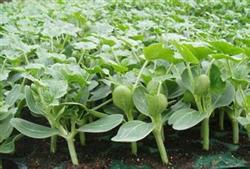
Four key steps to master for raising watermelon seedlings in a heated hotbed
Raising watermelon seedlings in a heated hotbed has the characteristics of fast warming, even temperature, low cost and simple operation. It can cultivate robust watermelon seedlings in January and February when the air temperature is very low, and its seedling-raising effect is similar to that of an electric heating hotbed. 1. Build the seedbed. First dig a bed pool 4.5 m long from east to west, 1.6 m wide from north to south and 0.2 m deep...
-
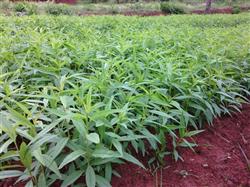
Detailed explanation of yellow peach seedling cultivation techniques, teaching you scientific seedling raising
Yellow peach seedling cultivation techniques 1. Introduction: Yellow peach saplings are seedlings of the yellow-fleshed peach type, belonging to grafted seedlings, raised by grafting onto peach seedling rootstock. Yellow peach originated in China, and many yellow peach varieties are cultivated in our country, so yellow peach saplings can be divided into three categories: first, seedlings of fresh-eating yellow peaches such as Fenghuang seedlings, Jinhuang seedlings, etc.; second,...
-
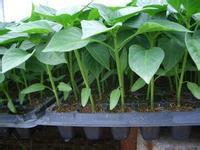
Detailed Explanation of Key Techniques for Raising Pepper Seedlings in Protected Cultivation
Seedling raising time and seedling stage. For spring cultivation of peppers in protected cultivation, sowing and seedling raising is generally carried out from January to February, with a seedling age of 90 to 110 days. Sow at the appropriate time according to the planting period. Seedling raising facilities. (1) High-efficiency energy-saving solar greenhouse; (2) Insulated improved solar seedbed; (3) Plastic greenhouse, small arch shed plus plastic film mulching and straw curtains. Seed...
-
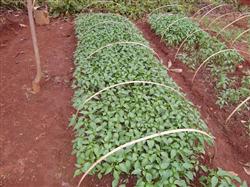
Detailed Explanation of Key Techniques for Raising Chili Pepper Seedlings in Spring
Site selection and bed preparation: Choose a plot of fertile land, sheltered from the wind and facing the sun, where eggplants and tomatoes have not been grown in the previous crop, and build a hotbed. For each mu planted, raise seedlings using 150 grams of seed. Scientific fertilization: Apply sufficient base fertilizer, irrigate heavily to build up soil moisture, and use a small amount of urea, phosphate fertilizer and active potassium fertilizer. Because the hotbed is sealed, do not apply...
-
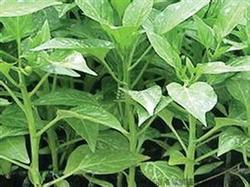
To grow strong pepper seedlings, you need to change your seedling-raising methods.
Using greenhouses to raise seedlings can advance the pepper marketing time and greatly increase economic returns. During the seedling-raising process, several key steps should not be overlooked: (1) Choose the seedling site well. Choose land that is high and dry, sunny, well-drained, not planted with the same crop repeatedly, and free of disease sources for raising seedlings. (2) Handle the seeds strictly. ...
-

Five key points for raising onion seedlings: master the technique to grow strong seedlings
1. Choose superior varieties. In production, purple-skinned varieties such as Ziyu No. 1, Ziyu No. 2, Zixing, and Shuanghuanhong can be selected. These varieties have the characteristics of strong pungency, high yield, excellent quality, and suitability for export. These varieties generally yield about 5000 kg per mu, and high-yielding plots can reach 7500 kg per mu. 2...
-
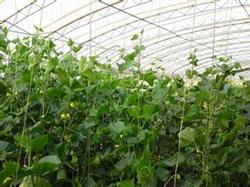
Detailed Guide to Raising Dry Cucumbers in Spring Greenhouses
Generally sow in late February to early March, choosing early-maturing varieties that are high-yielding, disease-resistant, tolerant of low temperature and weak light, and have good market quality. Before sowing, prepare the nutrient soil, add an appropriate amount of superphosphate and diammonium phosphate to the nutrient soil, and be sure to disinfect the nutrient soil after it is prepared; before sowing, disinfect the cleaned seeds, soak them in 55°C...
-
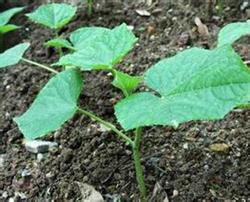
How to prevent root burn and seed rot when raising cucumber seedlings in winter and spring
Winter and spring are seasons with low temperatures, short daylight, and weak light. These natural conditions are all important factors affecting the formation of strong seedlings. However, under current production levels, it is difficult to fundamentally solve them artificially, especially the light conditions. Therefore, in the winter and spring seedling-raising season, if management is improper, the cucumber seedlings will easily...
-
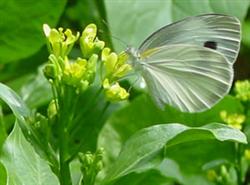
How to grow strong rapeseed seedlings? Master these key seedling-raising techniques
The rapeseed white butterfly, scientific name Artogeia (Pieris) rapae (Linnaeus), belongs to Lepidoptera, Pieridae. Synonym Artogeia rapae (L.). Also known as the cabbage white butterfly, white butterfly. The larva is called the cabbage caterpillar. It is distributed throughout the country. Its hosts include rapeseed, cabbage, cauliflower, Chinese cabbage, radish and other cruciferous vegetables...
-
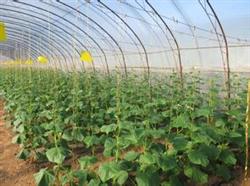
Key Technical Points for Multi-Layer Covered Seedling Raising of Cucumbers in Spring Greenhouses
I. Greenhouse Structure. The best span for the greenhouse is 6-8 m. Put on the greenhouse film in early November. Set up a 1.5 m low tunnel inside the greenhouse and cover it with 3 m wide greenhouse film. At night, cover the low tunnel with a thick straw mat, and add a layer of old greenhouse film over the straw mat, which greatly enhances heat preservation. After seedling raising, cucumbers can still be planted in the greenhouse. II. Nutrient...
条件筛选