-
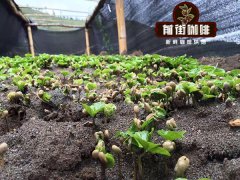
Qianjie Coffee Plantation Summary of Breeding Steps: Seedling Raising, Field Planting and Shading
Before raising coffee seedlings, it should be noted that, under normal circumstances, green coffee beans do not have the conditions to germinate. Therefore, only by using fresh coffee cherries or the current year's parchment beans can coffee seedlings possibly be raised. Use clean river sand for raising coffee seedlings to ensure good
-

What are the key points of the seedling-raising techniques for red maple (Acer rubrum)?
Seedling-raising techniques for red maple
-

Seeding and Seedling-Raising Methods and Key Techniques for Dianthus
Dianthus is a perennial herbaceous plant of the genus Dianthus in the family Caryophyllaceae, with numerous varieties and rich flower colors, and it is mainly propagated sexually. When raising Dianthus seedlings, choose a flat, dry site, apply 15 kg of compound fertilizer, deep-plow, break up the soil, and level it, then form beds 1 m wide. Irrigate once thoroughly, and sow immediately after the water seeps in. After sowing, cover with a thin layer of fine soil, set up a small arch shed, and cover with plastic sheeting. The temperature inside the shed should preferably be 20°C to 26°C, so that seedlings emerge in about 10 days. After emergence, pay attention to ventilation to prevent excessive growth, so as to achieve the purpose of hardening the seedlings
-
Detailed Explanation of Seedling Raising Methods and Techniques for the Golden Tree Species Robinia pseudoacacia 'Idaho'
Robinia pseudoacacia 'Idaho' (RobiniapseudoacaciaCV.ldaho) is a variety of black locust, a deciduous tree of the legume family Papilionoideae, with a tree height of 5-8 m, a straight trunk, and two full blooming seasons per year. The first is in May, with a flowering period of about 20 d, and the second is in July-August, with a flowering period of 40 d. The flowering period is long, the number of flowers is large, the flowers are large, and the flower shape is beautiful. It is a landscaping tree species introduced to China in recent years. It has vigorous growth, a well-developed root system, and strong stress resistance. It grows noticeably better than black locust on dry mountain land, and
-
How to grow black locust seedlings? Detailed explanation of the seedling-raising techniques for the landscaping tree black locust
Black locust, also known as false acacia, is relatively drought-tolerant and can grow normally on dry sunny slopes and sandy land in North China and Northwest China. It is a good tree species in North China and Northwest China for timber, soil and water conservation, windbreak and sand fixation, and "four-side" greening. The seedling-raising techniques for black locust are introduced here: black locust is generally propagated from seed. 1. Seed treatment. Black locust seeds contain varying numbers of hard seeds, which should be treated by gradually increasing the temperature and soaking the seeds multiple times, that is, first soak the seeds in 60°C water, let them cool naturally, leave them for 24 hours, then remove the swollen seeds; for the unswollen
-
Detailed Explanation of Key Techniques for Sowing and Raising Black Locust Seedlings in Mountainous Areas
Black locust (Robinia pseudoacacia) is one of the main tree species for afforestation and greening in mountainous areas. It is not only an important source of timber for mine props, railway sleepers, vehicles and boats, and farm tools, but also a good nectar plant. 1. Nursery site selection and land preparation. The seedling-raising site should be a sandy loam plot with flat terrain, good drainage, and deep, fertile soil, and should have irrigation conditions. After the seedling-raising site is selected, plowing should be carried out in autumn to a depth of 30 cm. In early spring, harrow finely and level while the soil is still frozen, and at the same time pick out grass roots and stones. In conjunction with land preparation, apply 3000-5000 kg of decomposed stable manure per mu.
-
Key Techniques for Raising Southern Yew (Taxus wallichiana var. mairei) Seedlings from Seed
The southern yew (Taxus wallichiana var. mairei) combines medicinal, timber and ornamental value, and has high development and utilization value. Because its seed coat has poor permeability and the dormancy period is long, propagation from seed is difficult. But as long as you grasp the biological characteristics of the southern yew and strictly follow the technical procedures, seedling raising is certain to succeed. The specific operations are as follows: 1. Nursery site selection and fertilization The nursery site should preferably be a paddy field with deep soil, loose structure, rich organic matter, good drainage and no exposure to afternoon sun (it must be paddy field soil from that year's harvest). After harvesting the mid-to-late rice, once the soil is dry, plow deeply once
-
Detailed Explanation of Seed Seedling-Raising Techniques for Taxus yunnanensis
Taxus yunnanensis Cheng et L. K. Fu is a rare evergreen tree under first-class national protection, suited to the high mountain zones of northwestern Yunnan at 2000-3500 m. Because its branches, leaves, bark and roots can all yield the expensive anti-cancer drug taxol, the Taxus market has boomed in recent years and prices have soared all the way up. World annual demand for taxol exceeds 4800 kg, while actual annual production is only about 250 kg. In China, Beijing, Shanghai, Liaoning, Yunnan and Sichuan
-
Detailed Explanation of Key Points for Raising Northern Chinese Parasol Tree Seedlings
The Chinese parasol tree, also known as green paulownia (Firmiana simplex), is a deciduous tree of the genus Firmiana in the Sterculiaceae family. Its crown is oval, the trunk is straight and upright, the bark is fresh green and smooth, and its emerald leaves cast dense shade. It has strong adaptability and grows rapidly, and is mostly planted as a street tree and in courtyards. At present it is recognized by more and more people, and has high promotion value and good market prospects. The seed sowing and seedling raising techniques for the Chinese parasol tree are introduced as follows. 1 Seed collection and preparation: select robust 15-30 year old
-
Detailed Explanation of Spring Sowing and Seedling-Raising Methods for Chinese Parasol Tree
The Chinese parasol tree (Firmiana simplex) is a deciduous tree of the genus Firmiana in the family Sterculiaceae, with a straight trunk and bright green bark. It is an excellent street tree species and has been widely used in urban and rural greening in recent years. Through several years of practice, the author has worked out a set of techniques for spring sowing and seedling raising of the Chinese parasol tree, presented as follows: Sowing time: in the Beijing plain area, sowing can be carried out from late March to early April after the soil thaws in spring. Soil preparation: before sowing, plow the soil deeply to 30 cm, remove weeds, tree roots and other debris, then carry out ridging or bed making and soil disinfection. Ridging and bed making: the Chinese parasol tree should be raised using high beds, wide ridges or containers, especially on loam and clay soils that easily become compacted. On sandy loam, low beds or flat beds can be used for seedling raising.
条件筛选