How to grow strong rapeseed seedlings? Master these key seedling-raising techniques
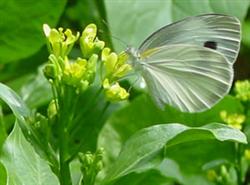
The rapeseed white butterfly, scientific name Artogeia (Pieris) rapae (Linnaeus), belongs to Lepidoptera, Pieridae. Synonym Artogeia rapae (L.). Also known as the cabbage white butterfly, white butterfly. The larva is called the cabbage caterpillar. It is distributed throughout the country. Its hosts include rapeseed, cabbage, cauliflower, Chinese cabbage, radish and other cruciferous vegetables...
 The standard for strong rapeseed seedlings is 6 leaves, 20 cm tall, a root collar 6 cm thick, and many fibrous roots. To cultivate strong rapeseed seedlings, the main technical points are as follows: Carefully select the seedbed. Choose fertile, loose field plots or vegetable gardens as the seedbed. In rice-producing areas, the fertile beds used for dry-raised rice seedlings can be fully utilized so that one bed serves multiple purposes. Prepare the bed soil according to the fertility of the seedbed. Generally, 2000-2500 kg of decomposed human excrement and urine, 15 kg of superphosphate, 15 kg of ammonium bicarbonate and 15 kg of rapeseed-specific fertilizer should be applied per mu.
Sow early at the right time. According to the transplanting period and climatic conditions for rapeseed, keep the seedling age at about 35 days, thereby determining the suitable sowing date. Generally, sowing is done around September 15.
Control the sowing rate. The sowing rate per mu of rapeseed seedbed should be 0.5-0.6 kg. Insist on sparse and even sowing, and press the soil firm after sowing. In case of drought, straw can be used as mulch to preserve moisture and promote emergence.
Do a good job of chemical control. Spray paclobutrazol at the 2-3 leaf stage of rapeseed seedlings to control aboveground growth and promote underground growth. Generally, 50 g of 15% paclobutrazol wettable powder is applied per mu, mixed with 40-50 kg of water for even spraying.
Fertilize scientifically. For topdressing the seedbed, it is best to use dilute human excrement and urine. If rapeseed seedlings grow slowly after the 3-4 leaf stage and the leaf color turns red, topdressing should be applied in time. Apply 1500-2000 kg of dilute human excrement and urine per mu. If the base fertilizer is sufficient and the seedlings are growing vigorously, topdressing should not be applied, and seedling hardening should be carried out from the 4-5 leaf stage to prevent excessive growth and the formation of leggy seedlings.