Detailed Explanation of Key Techniques for Raising Pepper Seedlings in Protected Cultivation
Seedling raising time and seedling stage. For spring cultivation of peppers in protected cultivation, sowing and seedling raising is generally carried out from January to February, with a seedling age of 90 to 110 days. Sow at the appropriate time according to the planting period. Seedling raising facilities. (1) High-efficiency energy-saving solar greenhouse; (2) Insulated improved solar seedbed; (3) Plastic greenhouse, small arch shed plus plastic film mulching and straw curtains. Seed...
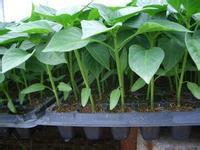
Seedling raising time and seedling stage. For spring cultivation of peppers in protected cultivation, sowing and seedling raising is generally carried out from January to February, with a seedling age of 90 to 110 days. Sow at the appropriate time according to the planting period. Seedling raising facilities. (1) High-efficiency energy-saving solar greenhouse; (2) Insulated improved solar seedbed; (3) Plastic greenhouse, small arch shed plus plastic film mulching and straw curtains. Seed treatment. (1) Chemical seed soaking. To prevent anthracnose and bacterial spot disease, the seeds can first be pre-soaked in clean water for 5 to 6 hours, then placed in a 1% copper sulfate solution (1 part copper sulfate, 99 parts clean water) and soaked for 5 minutes, then removed, rinsed clean with water, and then germinated; they can also be soaked in 150 times diluted formalin (40% formaldehyde) for 15 minutes and then germinated. To prevent viral diseases, first pre-soak the seeds in clean water for 4 hours, remove them, and then place them in a 19% trisodium phosphate solution for 20 to 30 minutes, or pre-soak for 5 to 6 hours and soak for 15 minutes. A 2% sodium hydroxide solution can also be used to soak the seeds for 15 minutes. (2) Conventional warm water seed soaking. Use an amount of water 5 times that of the seeds, pour the seeds into 55°C water and stir immediately, and after the water temperature drops to 30°C, soak for another 8 hours. This method has a sterilizing effect on pepper scab and sclerotinia disease. Germination. Take the soaked seeds, first rub off the mucus on the surface, then wrap them in a wet cloth and place them in a warm place to germinate. Germination should use alternating temperatures, that is, 28 to 30°C for 16 to 18 hours each day, and 16 to 20°C for 6 to 8 hours. During the germination process, the seeds should be turned and rubbed more frequently, turning 2 to 3 times a day. Wet sand equal to 3 to 4 times the amount of seeds can also be mixed into the seeds and then put into a container for germination, increasing oxygen to meet the needs of pepper seed germination. Pepper seeds can germinate in 4 to 5 days under a temperature of 28 to 30°C, while below 25°C they need more than 7 days to germinate. When more than 80% of the seeds have germinated, lower the temperature to 10°C for low-temperature hardening before sowing, and prepare to sow. Sowing and thinning. The seedbed soil is best soil that has not grown solanaceous vegetables for three years. The seedbed soil should be sieved, and each square meter of seedbed should be applied with 10 kg of high-quality organic fertilizer. The seedbed should be 10 cm high and leveled. Before sowing, water thoroughly to the bottom, and after the water has completely seeped down, cover with a layer of fine soil, evenly scatter the treated seeds on top, cover with 5 mm of soil after sowing, and promptly cover with plastic film and set up a small arch shed to increase temperature and preserve moisture, promoting early emergence. After 70% of the seeds have emerged, remove the plastic film promptly, and when all have emerged, cover with another 5 mm of soil. When the cotyledons of the seedlings have flattened, thin them in time, removing the overly dense and crowded, diseased, deformed, and weak seedlings with poor growth. After thinning, cover with soil again to protect the roots. Temperature management is 25 to 30°C, and a relatively high soil temperature should be maintained. Ten days before lifting the seedlings, gradually lower the shed temperature and control irrigation to shorten the recovery period after planting. Seedling transplanting. When the seedlings grow to 4 to 5 true leaves, carry out seedling transplanting, planting at a hole spacing of 7 cm × 7 cm, with 2 to 3 plants per hole, covering between holes with prepared fine seedbed soil and filling firmly. Before planting, reverse the seedlings 1 to 2 times to make the seedlings uniform in size. Plant when there are 10 to 20 true leaves.