To grow strong pepper seedlings, you need to change your seedling-raising methods.
Using greenhouses to raise seedlings can advance the pepper marketing time and greatly increase economic returns. During the seedling-raising process, several key steps should not be overlooked: (1) Choose the seedling site well. Choose land that is high and dry, sunny, well-drained, not planted with the same crop repeatedly, and free of disease sources for raising seedlings. (2) Handle the seeds strictly. ...
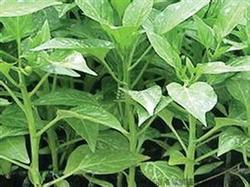 It is once again the season for raising pepper seedlings. Raising seedlings is an important part of pepper cultivation, and the quality of the seedlings directly affects the level of pepper yield. At present, many farmer friends still use traditional methods when raising pepper seedlings, resulting in poor seedling quality. To grow strong pepper seedlings, you need to change your seedling-raising methods.
Change not sunning the seeds before sowing to sunning the seeds. Sunning the seeds can not only increase the germination rate and strengthen germination vigor, but also kill some pathogens on the seed surface, reducing the occurrence of pepper diseases. On a sunny day, spread the seeds on cloth and sun them for 3 days, spreading them evenly and thinly and turning them frequently.
Change not selecting seeds to water-selecting seeds. Use water and salt water to select seeds. The pepper seeds selected this way are uniform and plump, have strong germination vigor, grow robustly, differentiate flower buds early, and easily become strong seedlings.
Change not coating or soaking the seeds to chemical treatment. Seeds that have been coated or soaked have well-developed root systems after sowing and dark green, robust plants, which can enhance their resistance to seedling-stage diseases such as Phytophthora blight, damping-off, Rhizoctonia rot, and anthracnose. Coat with 3% difenoconazole suspension seed coating agent at a 1:300 dilution, or soak the seeds in a 500-fold solution of 75% Daconil wettable powder for 30 minutes.
Change pre-sowing germination promotion to no germination promotion. Although germination promotion has many benefits, such as rapid emergence after sowing and uniform emergence, the germinated seeds tend to stick together at sowing, which is not conducive to thin and uniform sowing, and during handling, the sprouts are very easily broken, increasing the chance of pathogen infection. Soaking the seeds before sowing without promoting germination can reduce the chance of pathogen infection and help prevent disease.
Change preparing the land and making the seedbed in spring to preparing the land and making the seedbed in autumn. Preparing the land and making the seedbed in autumn can improve the effect of soil maturation in the autumn field, enhance the soil's nutrient-release capacity and water retention, reduce the degree of pest and disease damage during the pepper seedling stage, and the seedbed soil does not return to salinity and alkalinity, which is conducive to growing strong seedlings.
Change using chicken manure as base fertilizer to using high-quality organic fertilizer as base fertilizer. Using chicken manure as base fertilizer easily causes seedling burn and soil return to salinity and alkalinity, leads to severe soil-borne diseases, and the procedures for composting and disinfecting chicken manure are complicated, making it difficult for most farmers to meet the technical requirements. Using high-quality organic fertilizer as base fertilizer can not only adjust acidity and reduce alkalinity and eliminate soil-borne diseases, but is also convenient to use, saving labor and effort.
Change raising seedlings in small tunnels to raising seedlings in medium tunnels. Using medium tunnels for raising seedlings provides a large area inside the tunnel and good ventilation and light transmission conditions, which can enhance the stress resistance of pepper seedlings.
Change covering with ordinary colorless film to blue light film. Covering with blue light film for raising seedlings raises the seedbed temperature by 0.5°C to 0.8°C compared with covering with ordinary colorless film, and the light conditions and temperature changes are superior to covering with ordinary colorless film, which is very favorable for growing strong pepper seedlings.
Change dense sowing to thin and uniform sowing. Blindly increasing the sowing rate makes the pepper seedlings easily become "hair-like seedlings," with a low survival rate after transplanting, few branches, and late flower bud differentiation. Thin and uniform sowing can give the pepper seedlings an appropriate vegetative growth area and good ventilation and light transmission, creating a good environment for the growth and development of pepper seedlings.
Change rapid growth in the middle and late stages to steady growth. To grow age-appropriate strong seedlings, you must raise seedlings at the right time so that the pepper seedling age is 55 to 60 days, and keep the pepper seedlings growing steadily. You should not use late-stage topdressing and spraying of growth hormones to promote rapid growth of the pepper seedlings.