What medication works well to prevent and control clubroot in napa cabbage
Clubroot in napa cabbage refers to the formation of tumors of varying sizes and shapes on the roots of the cabbage; the tumors are smooth in the early stage and become cracked and rough later, and after cracking they are prone to infection by pathogens. Clubroot not only harms cabbage but also harms many crops in the cruciferous family. Clubroot can affect napa cabbage at the seedling stage, and in severe cases the plants die. This disease...
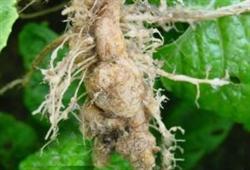
Clubroot in napa cabbage refers to the formation of tumors of varying sizes and shapes on the roots of the cabbage; the tumors are smooth in the early stage and become cracked and rough later, and after cracking they are prone to infection by pathogens. Clubroot not only harms cabbage but also harms many crops in the cruciferous family. Clubroot can affect napa cabbage at the seedling stage, and in severe cases the plants die.
When the pathogen overwinters or oversummers in the soil, the enlarged cells of the main diseased roots of the crop contain large numbers of resting sporangia; after the diseased tissue rots and decomposes, the spores are scattered in the soil and can generally survive for 6-7 years.
Conditions for the onset of clubroot in napa cabbage
Soil temperature and moisture. The pathogen can cause disease within 6-30 degrees Celsius and within a field water-holding capacity range of 50%-98%;
Soil pH. This fungus is suited to an acidic soil environment;
Excessive application of acidic fertilizers to the land.
Chemical control methods for clubroot in napa cabbage
For soil disinfection, use 75% dexon soluble powder plus 50% carbendazim wettable powder at 500-1000 times dilution for seedling bed spraying or drenching disinfection. For acidic soil in the field, adopt measures such as increasing the application of plant ash and alkaline organic fertilizers to improve the acidic soil and alleviate the occurrence of clubroot.
Seed treatment: after sun-drying the seeds, soak them in 50% carbendazim wettable powder plus 58% ridomil MZ at 400 times dilution. Seven days before lifting the seedlings, spray with 50% carbendazim wettable powder plus 75% chlorothalonil wettable powder at 600 times dilution to prevent pathogens from being carried into the field.
Strengthen field management. Drainage ditches must be unobstructed, able to both irrigate and drain, with no excessive standing water, and field water-holding capacity should be controlled at no more than 50%.
Remove diseased plants in time. Once diseased plants are found, remove them promptly and burn them in time, and spread lime around the diseased holes to prevent the pathogen from spreading.
After the onset of clubroot in napa cabbage, promptly drench the roots with 58% ridomil MZ plus 50% carbendazim wettable powder plus 75% dexon soluble powder at 600 times dilution, 0.5 kg per plant.
Because this disease is soil-borne, once it spreads it will cause serious consequences. Therefore, attention must be paid to strengthening prevention and control.