How to prevent and control Chinese cabbage virus disease? These medication guidelines must be remembered
Agricultural control 1. Choose disease-resistant varieties and avoid continuous cropping. Planting experience has proven that varieties with green stems and green leaves are generally relatively resistant to disease. Do not plant near other cruciferous crops and do not practice continuous cropping with cruciferous crops, which can effectively avoid the occurrence and spread of the disease; 2. Sow at the appropriate time but later, and cover to lower the temperature. According to planting experience, appropriately...
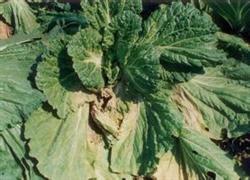
Agricultural control 1. Choose disease-resistant varieties and avoid continuous cropping. Planting experience has proven that varieties with green stems and green leaves are generally relatively resistant to disease. Do not plant near other cruciferous crops and do not practice continuous cropping with cruciferous crops, which can effectively avoid the occurrence and spread of the disease; 2. Sow at the appropriate time but later, and cover to lower the temperature. According to planting experience, appropriately later sowing can effectively avoid the occurrence and spread of the disease. At the seedling stage, use the methods of early thinning, light thinning, keeping more seedlings, and appropriately delaying final thinning. Covering the ground with vegetable seedlings to lower the temperature can also effectively avoid the occurrence and spread of the disease; 3. Fertilize reasonably and strengthen management. Apply sufficient base fertilizer and increase the application of phosphorus and potassium fertilizers. Cultivate strong seedlings and promptly remove diseased plants when found; 4. Irrigate frequently at the seedling stage. Give priority to watering, and when hoeing and raking, reduce friction and injury to plants from people, livestock, and agricultural machinery. Note that in dry years, water frequently with a small amount of water to keep the soil surface from drying out, so that the young seedlings do not suffer from drought.
Chemical control 1. After the seedlings are uniform, spray 20% Virus A wettable powder 500 times dilution plus 10% imidacloprid 2000 times dilution plus 20 ml of sea biotin (foliar fertilizer). 2. Before final thinning, spray Jundu Tongsha 500 times dilution plus 5% acetamiprid 1000 times dilution plus 20 ml of sea biotin (foliar fertilizer). 3. Spray 5% plant Aspergillus water-based formulation 300 times dilution plus 5% acetamiprid 1000 times dilution. 4. Spray Baiduling No. 1 500 times dilution plus 5% acetamiprid 1000 times dilution. The above agents can be sprayed continuously or alternately at intervals of 5 to 7 days, for 2 to 3 consecutive sprays. When there is no aphid damage, acetamiprid or imidacloprid can be omitted.