How to prevent diseases in autumn-planted Chinese cabbage? Early preparation is key
As the saying goes: turnips in the first fu, mustard in the second fu, and Chinese cabbage sown at the start of autumn. The season for planting autumn Chinese cabbage has arrived again, and it should be planted at the right time to ensure good quality and high yield. The key points of autumn Chinese cabbage cultivation techniques are introduced as follows: For variety selection, generally choose tall, late and mid-maturing varieties for plots with good fertilizer and water conditions; for fertile...
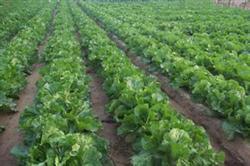 Around the start of autumn is the sowing period for Chinese cabbage in North China, but diseases such as soft rot, tipburn, downy mildew and black spot affect the yield and quality of Chinese cabbage every year, and are a major worry for farmers.
Most farmers spray only after discovering diseased plants, but the results are often unsatisfactory; one spraying at most lasts a week, otherwise the disease continues. As a result, farmers have to spray once a week during a growing season, at least three times, which is time-consuming and costly and also leaves relatively high pesticide residues. In fact, integrated control is the best control plan.
Choose varieties with good resistance and excellent quality. Try to choose cannon-barrel type Chinese cabbage varieties with strong disease resistance and good quality, represented by Beijing New No. 3.
Plot selection and ridge cultivation. Chinese cabbage is neither drought-tolerant nor waterlogging-tolerant, and a high-humidity environment is very conducive to the development of soft rot, downy mildew and black spot. Try to choose sandy loam plots with convenient drainage and watering; ridge cultivation can significantly reduce the occurrence of diseases.
Balanced fertilization is very important. Chinese cabbage likes both nitrogen and potassium. Apply about 100 jin of potassium sulfate type nitrogen-phosphorus-potassium compound fertilizer per mu as base fertilizer, and topdress with high-quality potassium nitrate at the rosette stage, which both supplements nitrogen and increases potassium; you can also topdress with 30 jin of urea and 20 jin of potassium sulfate per mu. Apply as much organic fertilizer as possible, but it must be fully decomposed organic fertilizer.
Sow at the right time to stagger the disease period. Appropriately delaying the sowing date to avoid the rosette stage when high temperature and high humidity make disease likely can significantly reduce the occurrence of diseases. For early-maturing varieties, delay by about a week after the start of autumn; for mid-maturing varieties, delay until three days after the start of autumn; for late-maturing varieties, sow on the day of the start of autumn.
Seed treatment to reduce the amount of carried bacteria. Before sowing, dress seeds with 3% zhongshengmycin wettable powder at 1% of seed weight, or with 40% duo-fu-bromine wettable powder at 0.3% of seed weight.
Spray in advance to prevent diseases. After the seedlings are thinned and recover from transplanting, spray three times in a row, about once every 7 days. For chemicals, you can choose agricultural streptomycin, zhongshengmycin, 30% copper fatty acid emulsifiable suspension concentrate and others to prevent bacterial diseases such as soft rot and black rot.
Spray after disease occurs and pull out diseased plants. When soft rot diseased plants are found, first pull them out, take them out of the field and bury them deeply, and spray immediately for treatment. For downy mildew, you can choose 72% cymoxanil mancozeb wettable powder, dimethomorph and other chemicals; for fungal diseases such as black spot and anthracnose, you can choose difenoconazole, myclobutanil and other chemicals; for tipburn, spray calcium-containing foliar fertilizer plus multi-element micro-fertilizer with zinc, iron and boron, spraying twice in a row.