-
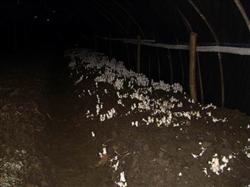
Shaggy Mane Mushroom Summer Cultivation Methods and Key Technical Points
How to cultivate shaggy mane mushrooms in summer? Here is a detailed introduction to the cultivation methods. The shaggy mane mushroom (Coprinus comatus) is a medium-temperature variety, suitable for fruiting at temperatures of 12-25°C. Under natural conditions, it can only be produced in two seasons, spring and autumn. However, as long as you understand its biological characteristics and meet its growth requirements, fresh mushrooms can still be produced in summer....
-
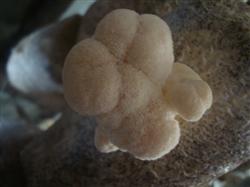
Indoor Cultivation Methods and Key Technical Points for Lion's Mane Mushroom
How do you grow lion's mane mushroom indoors? Here are the cultivation methods. For indoor cultivation of lion's mane mushroom, you can refer to the following methods: 1. Strain isolation and improved cultivation. Lion's mane mushroom cultivation first requires strain isolation. There are two methods of strain isolation: spore isolation and tissue isolation. Spore isolation involves collecting the spores released after the lion's mane mushroom matures under sterile conditions...
-
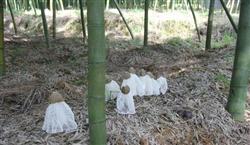
Cultivation Methods and Key Technical Points for Growing Bamboo Fungus in Northern China
How do you grow bamboo fungus in the north? Please give an introduction to the methods. For growing bamboo fungus in the north, you can refer to the following techniques: 1. Site preparation: Choose arable land that faces the sun, is well ventilated, has fertile soil, and has convenient drainage and irrigation. Prepare the land and make raised beds 1 m wide, 30 cm high, and of indefinite length; the distance between beds is 50 cm, and the bed surface is covered with more than 10 cm of fertile soil and leveled. Then...
-
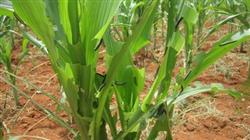
How to control the corn armyworm? These practical methods you need to master
How to control the corn armyworm? What is the corn armyworm? What pesticide should be used against the corn armyworm? Please allow me to explain. The corn armyworm, also known as the five-colored worm, has a mixed diet. The adult hides by day and comes out at night, mostly laying eggs in the withered yellow leaf tips on the middle and lower parts of wheat and inside leaf sheaths, with a single female laying 1000-2000 eggs. The larvae are mostly active in the morning and evening, that is, from sunrise in the morning...
-
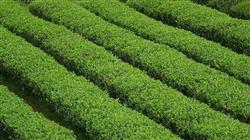
Lily planting technique video, a detailed explanation of cultivation methods and key points
How to manage tea plants well in summer? Please give an introduction to the methods. After continuous picking, a large amount of nutrients in the tea plant's body are consumed. When summer high temperatures arrive, the soil becomes compacted, weeds grow densely, soil fertility declines, and there are many insect pests, affecting normal growth. Therefore, the main task of summer tea garden management is to restore the vitality of the tea plants,...
-

How to plant cold-hardy roses? Detailed guide to rose cultivation methods
How to plant cold-hardy roses? Please explain the planting method. Cold-hardy roses can be planted and managed using the following methods: 1. Planting environment for cold-hardy roses. Cold-hardy roses are highly adaptable and prefer a sunny, wind-sheltered, well-ventilated environment. The suitable growing temperature is 8-25°C, the most suitable relative humidity is 75-80%, and in winter they can tolerate low temperatures of -35°C. Cold-hardy roses are suitable for ground planting for landscaping or for container growing, and prefer fertile, loose loam or light clay that drains and aerates well and is rich in humus.
-
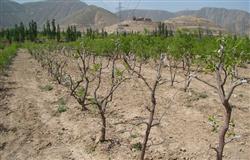
How to graft a jujube tree? Detailed methods and steps
How to graft a jujube tree? What good grafting techniques are there for jujube trees? Is there any netizen who can help explain? There are many grafting methods for jujube trees, and the commonly used grafting methods mainly include: cleft grafting, side grafting, bark insertion grafting, cut grafting and soft shoot bud grafting, etc. Zhongdiwang has compiled the grafting method for jujube trees using chip budding, and the steps are listed in detail below for netizens...
-
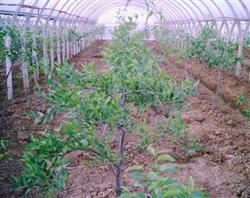
How to prune a jujube tree? Detailed pruning methods and techniques
How to prune a jujube tree? Are there pictures to illustrate? Experienced gardeners are also asked to help guide. During the growth of the jujube tree there are four types of buds: main buds, secondary buds, latent buds, and adventitious buds; the branches include the jujube head (vegetative shoot), secondary branches (fruit-bearing base branches), jujube spurs (fruit-bearing mother branches), and jujube pendants (fruiting branches). During the growth process the jujube tree needs...
-
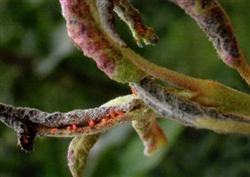
What are the methods for winter pest and disease control on pear trees?
What winter pests and diseases affect pear trees? What methods are there for winter pest and disease control on pear trees? Experienced gardeners, please share your advice. The main winter pests and diseases of pear trees include the pear curculio, pear fruit sawfly, pear gall midge, pear scab, pear black spot, red and yellow spider mites, and scale insects. Based on the above pests and diseases, Zhongdi Network has compiled control...
-
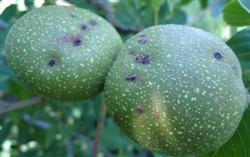
What are the control methods for walnut anthracnose?
What harm does anthracnose do to walnuts? How is walnut anthracnose controlled? We ask experienced netizens to help explain. Zhongdiwang has compiled the harm and control methods of walnut anthracnose, listed in detail below for netizens' reference. Harm of walnut anthracnose: Anthracnose generally develops from June to August, and in orchards with heavy rainfall, weak walnut tree vigor, dense branches and leaves, and extensive management, the disease is severe; the pathogen spores invade through wounds or natural openings.
条件筛选