Shaggy Mane Mushroom Summer Cultivation Methods and Key Technical Points
How to cultivate shaggy mane mushrooms in summer? Here is a detailed introduction to the cultivation methods. The shaggy mane mushroom (Coprinus comatus) is a medium-temperature variety, suitable for fruiting at temperatures of 12-25°C. Under natural conditions, it can only be produced in two seasons, spring and autumn. However, as long as you understand its biological characteristics and meet its growth requirements, fresh mushrooms can still be produced in summer....
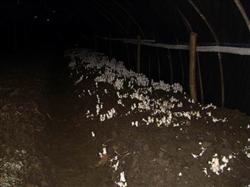 How to cultivate shaggy mane mushrooms in summer? Here is a detailed introduction to the cultivation methods.
The shaggy mane mushroom (Coprinus comatus) is a medium-temperature variety, suitable for fruiting at temperatures of 12-25°C. Under natural conditions, it can only be produced in two seasons, spring and autumn. However, as long as you understand its biological characteristics and meet its growth requirements, fresh mushrooms can still be produced in summer. For summer cultivation of shaggy mane mushrooms, you can refer to the following methods:
Building the mushroom beds:This technique is suitable for large-scale production, with a cultivation field area of 300-1000 sq m. Dig mushroom beds 0.2 m deep, 1.4 m wide, and no more than 20 m long, with a spacing of more than 0.8 m between beds. Leave a 4-6 m wide access path every 6 beds to facilitate vehicle entry and exit.
Setting up a shade canopy:Erect a shade canopy 2.5-3 m above the cultivation field, sealed and opaque. Cover the canopy with a layer of plastic film to prevent rain from entering. Then cover it with a layer of shade netting. The edges of the shade canopy should extend at least 3 m beyond the perimeter of the cultivation field on all sides, so that sunlight from 9:00 to 16:00 cannot directly reach the mushroom beds. In spring, plant climbing plants around the perimeter of the canopy, especially long-vine varieties such as bottle gourd, chayote, loofah, and pumpkin.
Setting up humidification equipment:Install water spray pipes and one-way spray nozzles above the perimeter of the shade canopy. Inside the shade canopy, install a row of dual-nozzle pipes every 4-5 m. The purpose of these nozzles is to spray water into the space inside the shade canopy and maintain humidity. Installation should be tested on site to ensure that spraying leaves no dead corners. Pipes on each side should be fitted with a valve so that nozzles on the downwind side can be shut off when it is windy.
Insect prevention measures:Enclose the perimeter of the shade canopy with insect-proof netting to prevent insects from entering.
Casing soil material:Use fertile garden soil or rich soil from the cultivation layer of a vegetable greenhouse. For every 1000 kg of soil, add 200 kg each of fermented cow manure and chicken manure, and 10 kg of urea. Mix thoroughly, then spray with a 600-fold dilution of phoxim solution. Cover with plastic film. After about 5-7 days, open the soil pile, add 30 kg of lime powder, mix well, build into a pile again, and cover with film. After 7 days, it is ready to use. The casing soil material can be applied at a rate of 2 cubic meters of casing soil per 100 sq m of bed.
Cultivation management:Process the base material according to conventional methods, using bag cultivation for spawn running. Efforts should be made to extend the spawn-running time, generally by more than 30 days. Then remove the bags, transfer to beds, and apply casing soil according to conventional methods. Under natural humidity conditions, maintain an average relative air humidity of 80%% under the shade canopy.
Precautions:The relative air humidity under the shade canopy should not be too high. The highest humidity in the central area should be 95%%, while the relative humidity around the edges should be maintained at around 75%%. Spray water to maintain humidity in multiple small amounts, and try to avoid water droplets accumulating on the fruiting bodies. The casing soil thickness should preferably be 2 cm, but if you want to produce larger mushrooms, you can apply casing soil up to 4-5 cm. When natural wind is strong, you can set up windbreak straw mats or plastic film on the windward side of the shade canopy. When wind force is level 3-4, no measures are needed.
Click to get more shaggy mane mushroom cultivation techniques
Click to get more edible mushroom cultivation techniques